German Ambassador: Iran's exports to Europe have increased 10-fold since the JCPOA
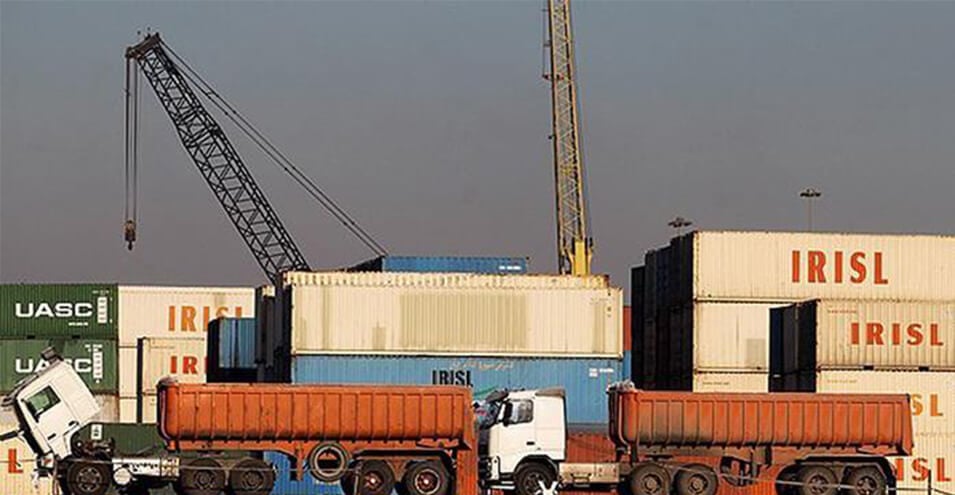
According to the German ambassador in Tehran, Iran's trade with Europe has grown significantly since the JCPOA. The Iranian ambassador in Berlin also criticized the politicization of economic instruments in the Islamic Republic and said that three Iranian banks are opening branches in Germany.
Michael Kloer-Berchtold, German Ambassador to Iran, stated at the "Iran-Europe Trade and Banking Conference" held in Tehran that European exports to Iran have increased by more than 60 percent since the implementation of the JCPOA, and European imports from the Islamic Republic have increased tenfold.
Clore Berchtold continued his speech by emphasizing that one of the prerequisites for Iran's full integration into the global economy is to improve the country's status in the Financial Action Task Force (FATF).
This international organization, whose most important duties are combating money laundering and terrorist financing, has prepared a list of countries that do not support the organization's goals and are therefore not suitable for investment.
Iran's name was first added to this "blacklist" in 2009, and later it was placed in a worse position than the "blacklist" and joined the countries against which the "Financial Action Task Force" is demanding "countermeasures."
The Rouhani administration is trying to improve Iran's standing on the list, but opposition groups oppose the move, arguing that Iran should not hold itself accountable to international institutions in economic matters.
Currently, 188 countries are following the recommendations of the Financial Action Task Force, and if Iran joins them, it could strengthen the incentive for investors from some of these countries to go to Iran.
“Economic pressures are more effective”
Ali Majedi, Iran’s ambassador to Germany, also criticized the “politicization” of economic tools at the “Iran-Europe Trade and Banking Conference,” emphasizing that his country’s monetary and banking system must be updated. In this regard, he said: “For example, the Financial Action Task Force is an economic tool and I don’t know why we are politicizing it.”
Majidi stated that the political tools used in the international arena are “comprehensive,” but economic tools are more effective. In this context, he raised the issue of sanctions, which have an impact on the situation of the countries that are subject to sanctions, but are not as effective as resolutions of the members of the United Nations, which is the most important global political body.
The Iranian ambassador to Germany, who is also an economic expert, expressed hope that Europeans could reduce their dependence on the US dollar and "think about establishing banks that work only with euros."
He also referred to the fear of European countries from punitive measures by the United States, saying: "I spoke with German officials about this, and they practically said that they do not have the tools and solutions to counter American sanctions in the monetary and banking fields, and they cannot do anything in this regard."
Establishment of branches for three Iranian banks in Germany
Emphasizing that Iran has not achieved success in the JCPOA discussion in the banking sector, Majedi stated: "We have been able to convince banks with a low dollar share, which are mainly small banks, to work with Iran."
According to the Iranian ambassador in Berlin, currently the main burden of about 85 percent of Iran's monetary and banking transactions is the responsibility of the "Commercial Bank of Iran and Europe" in Hamburg, Germany, and the branch of Bank Melli in this city.
He said that Iran's "Middle East" Bank is scheduled to open a branch in Munich, "Saman" Bank in Frankfurt, and "Sina" Bank in another German city.
Source: DW