Prosecutor threatens to hit female cyclists on the streets of Isfahan

On May 14, 2019, the Isfahan prosecutor banned women from cycling in the province . He cited the “ law, ” “ religious fatwas, ” the dissatisfaction and protest of “ Friday imams and the families of martyrs ,” and the request of the “ Headquarters for the Revival of Righteousness and Forbidding Evil ” in Isfahan. Ali Isfahani, the public and revolutionary prosecutor of Isfahan, stated that “ women cycling in public spaces is forbidden, ” and suggested that bicycles with appropriate coverings be designed for women so that they can travel around the city. However, the Isfahan prosecutor did not provide an explanation for his proposal.
Previously, the Friday prayer leader of this city had repeatedly protested against women cycling, describing women riding bicycles as provocative to men on the streets.
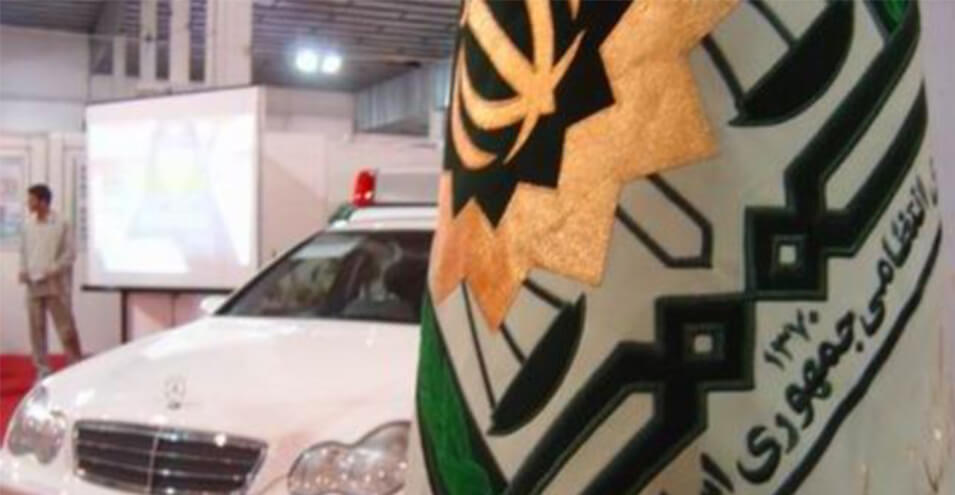
Ali Esfahani, the prosecutor of Isfahan, said that violators will be held accountable in two or three stages, banning women from cycling. He said that the police have been instructed to first “ respectfully ” warn female cyclists, then take their identity documents and confiscate their bicycles. After that, the female violator must go to the security police and give a written “ commitment ” that she will no longer ride a bicycle in the city. After receiving the commitment, her identity documents and bicycle will be returned.
According to the Isfahan prosecutor, if this violation continues for the second and third time , " it will be considered a forbidden act and will be dealt with according to the Islamic Penal Code. "
Ali Isfahani said : " According to the fatwa of the scholars Also, according to the law, women cycling in public spaces is forbidden. In addition, for a long time, Friday prayer leaders, congregations, and families of martyrs had been protesting against women cycling in public spaces, and there had also been attacks and harassment against these women. " He added : " In addition, the Headquarters for the Promotion of Righteousness and the Prevention of Evil, which was established according to the law and its resolutions are binding, has requested that women cycling in public spaces be followed up and dealt with ."
The Isfahan prosecutor also said that women who attempt to remove their hijab in public places will be dealt with across the city.
From the sabotage of the Imams of Jamgha to the Leader's fatwa
Ayatollah Yousef Tabataba'inejad, the Friday prayer imam of Isfahan, had said in September 2018 that the Isfahan municipality should not encourage women to ride bicycles in public spaces. Referring to his 10-year opposition to this issue, he said : " About 10 years ago, I said that women's cycling in public spaces is not correct, according to the opinion of most religious authorities. "
Isfahan Friday Imam had said that women should not ride bicycles on the streets. It creates the ground for " further corruption " : " It is stated in Islamic traditions that an unlawful gaze is a poisonous arrow from Satan, and without a doubt, this gaze creates the ground for further corruption. "
In September 2008, when the Isfahan Municipality encouraged women to ride bicycles, this Friday Imam said in his sermons before Friday prayers : " We should not allow women to ride bicycles to become common. " He considered women's bodies on bicycles to be a consequence of social corruption : " In addition to inappropriate clothing and hijab due to the movement of the body on the bicycle, women's cycling has consequences and social corruption. "
In the discussion of women's cycling, some religious authorities have expressed their opposing views. Ayatollah Nasser Makarem Shirazi, in a book he published in 2010 in the book "Arah Ahakam Zanan" (The Laws of Women), wrote about women's cycling and skating: "Given the adverse consequences of such things, it is necessary to avoid them. And they should not pay attention to the temptations that this and that cause."
The issue of women cycling has reached a point where even Ali Khamenei, the Supreme Leader of the Islamic Republic of Iran, issued a fatwa about it. The Supreme Leader's Information Center announced on May 17, 2016, that according to Ali Khamenei's fatwa, women cycling is forbidden : " Women cycling in public gatherings and also in places where It is forbidden if it is in the sight of a non-mahram. If it is not in the sight of a non-mahram, there is nothing wrong with it in itself .
The Supreme Leader’s fatwa was issued some time after the Marivan women’s cycling. In June 2016, the head of the Marivan City Council’s Cultural Commission asked citizens to use bicycles instead of private cars to have clean and healthy air. Naturally, a number of women also appeared in the city on bicycles, after which the Marivan police on August 20, 2016, prevented the presence of female cyclists in the city by confiscating the bicycles of a number of female cyclists and demanding that they no longer ride bicycles in the city. After this action, a group of citizens of Marivan in Kurdistan Province formed a group on Telegram and published a letter addressed to the governor of the city, protesting the arrest of a number of female cyclists in the city for several hours and the police’s prevention of their cycling.
Teacher Mustafa Shirzadi, the Friday imam of the Grand Mosque in Marivan, also said during Friday prayers on August 28 , in response to women cycling in the city : " Cycling for women in public is a crime ." " It is a sin , and it is necessary for the authorities and the Sports and Youth Administration to provide a suitable , covered space for women . "
Some time later, the Supreme Leader put this problem to rest for a while with his fatwa. But women and their love for sports did not prevent them from hiding their bicycling in their homes forever, and some time later, they continued to ride the bicycles again in Tehran and other cities, including Isfahan.
A challenge called women's sports
Women's sports in Iran have faced the challenge of conflicting with Islamic law since the 1979 revolution. In the first half of the 1960s, no sports news about women was broadcast, and after that, Iranian state television often only broadcasts news about women's sports without any images of them. The clothing worn by Iranian female athletes in international competitions has been a topic of discussion many times and has even been a serious obstacle to their presence in the global arena. With the emergence of social networks, more opportunities have emerged for women to raise their demands in the field of sports and also to cover their successes or problems. Many female athletes or those interested in sports have created their own personal media outlets by joining social networks and providing information about the status of women's sports, including the demand for women to ride bicycles.
However, there are still many cultural, social, family and, most importantly, political obstacles in the way of Iranian women interested in sports. Many Shiite religious authorities and Qom scholars have explicitly declared women cycling in public as corrupt, and some have declared it haram. Although women cycling is not prohibited by law and is not criminalized in any part of the constitution or penal code in Iran, it is limited to single-sex parks and away from public view based on an unwritten law and rarely has a place in everyday life. This is while in many countries around the world, in order to protect the health of society and the environment, male and female citizens are encouraged to ride bicycles instead of using private cars, and city administrations provide special cycling paths for citizens.
Ayatollah Alam al-Huda, the Friday prayer imam of Mashhad, said in June 2011: "It is not haram for a young woman to close the door in her own house and ride a bicycle in her yard for 10 hours, but when this young woman comes out into the alley and rides a bicycle in cycling clothes, that clothing and that movement have the effect of corrupting society."
Iranian women have also achieved some successes in these years. For example, women cyclists in the city of Yazd, although they have faced many prohibitions and opposition from the city's security and religious institutions, were finally able to force the authorities to establish a cycling track for women. However, in June of this year, the Friday Imam of Mohammadabad Yazd, in protest against the ritual of cycling by women and men to protect the environment, considered such actions to be a cause of "sadness to the people" and "pain to the hearts of believers."
Although many government and religious officials in Iran have banned and prevented Iranian women from exercising and attending public gatherings wearing sportswear, moderate figures have also supported women's sports. Among them is Akbar Hashemi Rafsanjani, head of the Expediency Discernment Council, who last week addressed extremist groups and said, "Some extremists consider sports to be incompatible with the female character, which is an awkward patchwork in Islamic thought, and our religious elders emphasized the importance of sports without discrimination, of course, in accordance with women's physical conditions."
Iranian President Hassan Rouhani, who began his term with the slogan of achieving civil rights, has also repeatedly spoken about observing justice in sports and has called for providing appropriate conditions for women's sports. However, women in Marivan still have to walk on their bicycles instead of riding them!
Source: Iran Human Rights Campaign