Reprimand without change in prison conditions: Dismissal of two officials responsible for Alireza Shirmohammadi's death
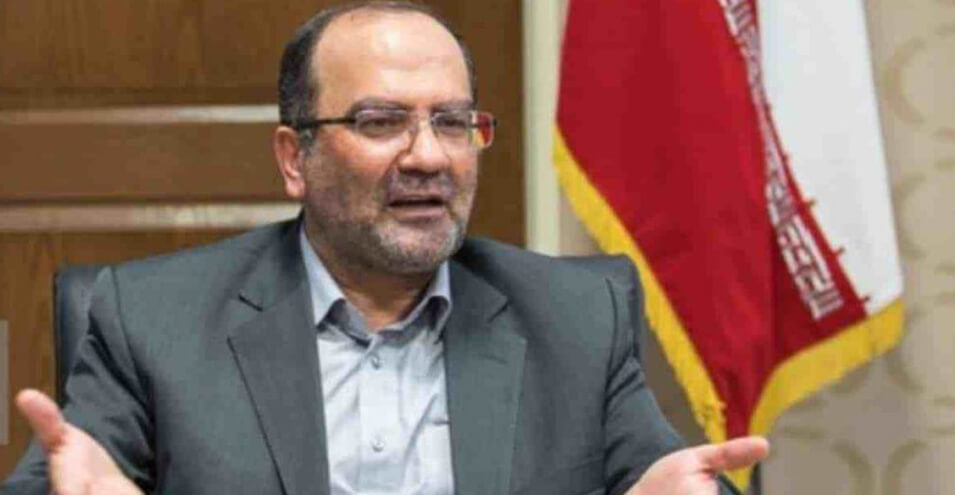
31 days after the murder of Alireza Shirmohammad Ali, a prisoner of conscience, in Fashafoyeh Prison, and following widespread protests over the numerous deaths of political prisoners in prison, Mostafa Mohebi, the director general of Tehran Province Prisons, was dismissed. Heshmatullah Hayat Al-Ghayb, who was previously the director general of prisons in Fars province He took his place on Tuesday, July 1, but none of the judiciary officials have commented on ending the failure to implement the principle of separation of crimes in prisons, and in many prisons, prisoners of conscience are still held alongside prisoners with "dangerous" crimes.
In addition, the results of the investigation conducted by order of the head of the judiciary into this murder have not yet been published, and it is not clear who is responsible for this murder and whether any policies have been considered to prevent the recurrence of prisoner deaths.
A day earlier, on July 1, Farzadi, the head of the Greater Tehran Prison (Fashafoyeh), was also dismissed from his post. Protests over the death of Alireza Shir Mohammad Ali in Fashafoyeh Prison due to non-compliance with the law on segregation of crimes have so far had only two consequences: the replacement of the head of the Greater Tehran Prison and the director general of Tehran Province Prisons. However, no decision has yet been made to fully implement the law on segregation of crimes, which is criticized in the regulations of the Iranian Prisons Organization.
A lawyer who did not want to be named for security reasons, indicating that dismissing the head of Tehran provincial prisons would not solve the problem, told the Campaign for Human Rights in Iran: “Basically, it is not very understandable that instead of reprimanding the head of the prison and forcing him to answer, the head of a province’s prisons would be changed. Unless the failure to separate prisoners based on crime was ordered by the head of Tehran’s prisons, which of course, given my years of work and my visits to prisons, basically the head of a province’s prisons does not have an executive role, and it is the head of each prison who makes decisions and gives instructions regarding the affairs of the prisoners in that prison.”
This lawyer, who focuses more on human rights cases, told the campaign: "The question is, if this issue of lack of segregation has been addressed, why is there no immediate action to separate political prisoners in the prisons? What is important here is the implementation of the rules and regulations related to separating political prisoners from other prisoners. Of course, the impression that Mr. Esmaili, the spokesman for the judiciary, has that we do not have political prisoners in Iranian prisons, is that they are probably right not to separate them. Of course, he does not pay attention to the fact that the law defines who political criminals are, not his personal opinion and perception, which says, "In my opinion, we no longer have political prisoners."
Iranian news agencies, announcing the dismissal of the former head of the Tehran Prisons Organization, wrote that this decision was made due to the murder of Alireza Shir Mohammad Ali. The state-run IRNA news agency, in a news report introducing the new head of the Tehran Prisons Organization, also stated that the reason for Mostafa Mohebi's dismissal was the result of an investigation by a special committee that was formed by the head of the judiciary to investigate the murder of Shir Mohammad Ali in prison.
Alireza Shirmohammad Ali, a 21-year-old prisoner of conscience, was stabbed to death on June 10 by two inmates charged with murder and drug possession in Tehran's Fashafoyeh Prison. The reason for this murder was the failure to comply with the law on the separation of crimes in prison and the detention of high-risk prisoners alongside political and conscience prisoners. This was something that political prisoners, and even Alireza Shirmohammad Ali, had repeatedly requested from prison authorities before his death, but it was never implemented.
Mostafa Mohebi served as the head of the Iranian Prisons Organization since 2016 and was dismissed less than three years later. However, it is not clear what new position Mr. Mohebi has been given after being dismissed from this key position. Mostafa Mohebi dismissed Farzadi, the head of Greater Tehran Prison, from his position a day before his dismissal. Farzadi was elected as the head of Greater Tehran Prison in February 2017 but was dismissed less than two years later. Prior to that, he was the director of Kermanshah Central Prison for nine years and the head of Kermanshah’s labor camp for four years.
As for Heshmatollah Hayat al-Ghayb, the new head of Tehran provincial prisons, he was previously the head of the Fars provincial prisons organization, but there is no further information about him. During his presidency, Mehdi Hajati, a young member of the Shiraz city council, was sent to Adel Abad prison, where he is now held alongside prisoners with high-risk crimes. In Adel Abad prison in Shiraz, like Fashafoyeh prison and many other prisons, the law on the separation of crimes is not observed, and political and non-political prisoners, Baha'is and Christian converts are held alongside high-risk, murder and drug-related prisoners.
The murder of a prisoner resulted in the dismissal of two officials.
Alireza Shirmohammad Ali, a 21-year-old prisoner and only child, was arrested on July 14, 2018, and after 36 days in solitary confinement, he was transferred to Ward 11 in Brigade 1 of Fashafoyeh Prison. A source had previously told the campaign that in none of the brigades (wards) of Greater Tehran Prison is the principle of separation of crimes in accordance with the regulations of the Prisons Organization observed, and prisoners of conscience and political prisoners are held alongside high-risk prisoners with drug and murder offenses. In this Dervish prison, prisoners of the January 2017 and August 2018 protests are held scattered in different brigades ( wards ) .
Alireza Shirmohammadi was sentenced to eight years in prison on charges of “ insulting sacred places, ” “ insulting the leadership ,” and “ propaganda against the regime ” through his activities in cyberspace . His appeals court was scheduled to convene on July 8 at Branch 36 of the Court of Appeals, but he was killed before that.
Some time after the death of Shir Mohammad Ali, Abdul Karim Hosseinzadeh, the head of the parliamentary civil rights faction, wrote a letter to the head of the judiciary, calling the deaths of several prisoners over the past years “ a sign of a serious problem ” in detention centers and prisons. However, Hosseinzadeh did not mention what serious problem these deaths were caused by.
In part of this letter, Hosseinzadeh asked the head of the judiciary to issue a follow-up order regarding the murder of Alireza Shir Mohammad Ali in Greater Tehran Prison and the reports that were subsequently published about the conditions of prisoners in this prison and some other prisons .
Mahnaz Sarabi, the mother of Alireza Shir Mohammad Ali, asked the head of the judiciary in a letter, " Why was the prison chief negligent in the death of her son? Where was the guard officer when my child was bleeding for seven minutes, and why did he come with a special guard? Why should my 21-year-old be slaughtered like this? "
In an interview with Jamaran website, Shir Mohammad Ali's mother, in response to the question of where the follow-up by institutions such as the Judicial Commission and the Parliament has led, said that she had no idea, " Because I'm all asleep with nerve pills . They don't keep me informed about the progress of Ali Riqa's case. "
31 days after the murder of Shir Mohammad Ali, the only response from the head of the judiciary is to replace the head of the Tehran Prisons Organization. However, his replacement is someone who was in at least one of the prisons during his previous presidency, " Adel Abad Prison in Shiraz, " and according to some former prisoners of that prison, there is no segregation of crimes and high-risk prisoners are held alongside political prisoners.
However, on July 1, a day before the dismissal of the head of the Tehran Prisons Organization for the murder of Shir Mohammad Ali, Gholamhossein Esmaili, a spokesman for the judiciary, claimed that Iran has no political prisoners. In response to the question of why some political prisoners are held alongside other prisoners, he said in a press conference : “ We have no political prisoners and these are those who have committed crimes against security. The judiciary’s concern is to separate prisoners based on the type of crime, and an acceptable percentage has been achieved and has occurred, and in prisons, especially in Tehran, people with different crimes have been separated in different sections.”
The judiciary spokesman made this claim while many political prisoners are currently held in Evin, Qarchak, Varamin, Fashafoyeh prisons, and in provincial prisons. According to them, no distinction is made between crimes in any of these prisons.
Source: Human Rights Campaign