Details from the UN Secretary-General's report on the human rights situation in Iran; high number of executions and "violent repression" of protests
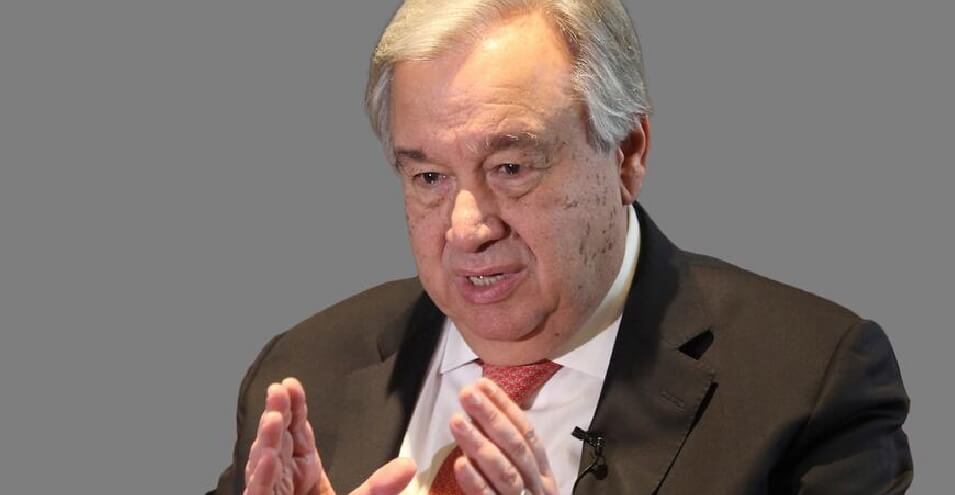
United Nations Secretary-General Antonio Guterres has presented a report on the human rights situation in Iran at the 75th session of the organization's General Assembly.
The information in this report was prepared through the Government of the Islamic Republic of Iran, non-governmental organizations, the media, and based on interviews conducted by the United Nations High Commissioner for Human Rights with individuals, including victims of human rights violations, their families, and lawyers.
This report covers information obtained from October 9, 2019 to June 10, 2020, and includes the following:
Death penalty and the right to a fair trial
In this report, the UN Secretary-General expressed concern about the imposition of the death penalty in the Islamic Republic of Iran for a wide range of cases, some of which include legitimate human rights activities, as well as the high number of executions in Iran.
The report states that under the International Covenant on Civil and Political Rights, the death penalty may only be imposed for "very serious" crimes, while in the Islamic Republic of Iran, consensual sexual relations, drug-related crimes, as well as crimes such as "corruption on earth" that have vague definitions, face the death penalty.
This section of the report also mentions the increase in the number of executions.
In 2019, at least 280 people were executed, 13 of them in public. There were also at least 30 executions for drug-related charges, compared to 24 in 2018. At least 84 executions took place between January 1, 2019 and May 2, 2020.
The UN Secretary-General's report points to shortcomings in criminal proceedings in the Islamic Republic of Iran, including judicial independence, the competence of judicial authorities, inequality before the law, and access to legal counsel.
In this report, the UN Secretary-General expressed concern about the high number of cases of death sentences for child criminals, saying that as of June 11, 2020, at least 90 child criminals were awaiting execution.
Also in 2019, at least four child offenders were executed, all of whom were between 15 and 17 years old at the time of the alleged murders.
The report mentions the execution of Majid Esmaeilzadeh in Ardabil prison following a forced confession under torture, as well as the execution of Shayan Saeedpour - a child criminal who escaped from Saqqez prison - without taking his mental health into account in sentencing.
Reference is also made to the death of Daniyal Zein al-Abedini - a defendant who was under 18 at the time of the crime - in Miandoab prison, which was declared a "suicide" by the government. Mr. Zein al-Abedini had been transferred to Miandoab prison with several other prisoners following protests against the conditions in Mahabad prison during the COVID-19 crisis.
The UN Secretary-General emphasized in his report that the government's responsibility for deaths in custody can only be denied when an independent body conducts a transparent, impartial, and thorough investigation into the matter.
Mr. Guterres expressed regret that the Islamic Republic of Iran has accepted only two of the organization's 39 recommendations on abolishing the death penalty or limiting it to the most serious crimes, and one of the 23 recommendations on the death penalty for child offenders, and that too in a relative manner.
The situation of dual citizens and imprisoned environmental activists in Iran
The UN Secretary-General also expressed concern about the situation of dual nationals who were still imprisoned in Iran as of June 10 (June 11, 2020), including Ahmadreza Jalali, Masoud Mosaheb, Morad Tahbaz, Kamran Ghaderi, Siamak Namazi, and Baqer Namazi, who is undergoing medical treatment and is not allowed to travel.
The report states that the Islamic Republic of Iran only partially accepted one of the three recommendations regarding the situation of dual-national prisoners.
The UN Secretary-General also addressed the situation of detained environmental activists, including Niloufar Bayani, saying: "Ms. Bani has been convicted for her work for the UN, and part of her punishment is to pay a fine equivalent to the income she earned from this organization."
The right to freedom of peaceful assembly
Part of the UN Secretary-General's report refers to the violent suppression of the November protests and the deadly use of force by security forces.
The UN Secretary-General says the protests were rooted in people's dissatisfaction with the political system and economic conditions, but the government described the protesters as "thugs separated from ordinary people."
The report cited the killing of at least 304 people, including 23 children (22 boys and 1 girl) and 10 women, between November 15th and 19th (November 14th to November 19th, 2019) in 37 cities in Iran.
In his report, the UN Secretary-General also referred to the Interior Minister's response to a representative who said, regarding the shooting of the dead protesters in the head, "They were also shot in the legs."
Another part of the report discusses the admission by the governor of Quds City that he ordered the shooting of protesters and the statements of a member of parliament who said that at least seven thousand people had been arrested during the protests.
The UN Secretary-General has cited reports of detained protesters being denied medical attention, tortured and ill-treated, and forced to make false confessions.
Mr. Guterres has expressed deep concern about the detention of children (under 18 years of age) during the protests, saying that a thousand cases of child detention have been reported from Khuzestan province alone.
Part of the report discusses the arrest of protesters in January 2019 after the Revolutionary Guards' missile attack on a Ukrainian passenger plane, and mentions their mistreatment in prison and the issuance of sentences of between six months and five years in prison for at least 13 people for participating in the protests or taking photos and videos of the candlelight vigil to commemorate the victims.
The right to freedom of expression and opinion
This section of the UN Secretary-General's report refers to the incompatibility of the Islamic Republic of Iran's constitution with the right to freedom of expression, as well as the expansion of government control over information available in cyberspace and Internet censorship.
Among the issues highlighted in the report is the widespread internet shutdown since November 16, 2019, in response to the protests, as well as government censorship and harassment of journalists in an effort to limit information about these events.
The UN Secretary-General has also expressed concern about the harassment of families of Persian-language media journalists abroad, saying that the Islamic Republic of Iran has accepted only 4 out of 25 recommendations on the right to freedom of expression and peaceful assembly.
The situation of detainees during the coronavirus pandemic
The UN Secretary-General has expressed concern about the lack of health facilities in Iranian prisons and the failure to address the situation of prisoners to prevent them from contracting the coronavirus, including overcrowding in cells and failure to quarantine those infected with the coronavirus.
Mr. Guterres says that Iran has accepted all the United Nations recommendations to prevent the spread of the virus in prisons and is required to act on them immediately, including by releasing those who are eligible for temporary release during this period, as many of them have not been able to enjoy this right due to high bail conditions, and according to reports, temporary release has not included many political and ideological prisoners.
The UN Secretary-General also pointed out the deprivation of some prisoners, such as human rights lawyer Nasrin Sotoudeh, and dual-national prisoners such as Siamak Namazi, Masoud Mosaheb, Morad Tahbaz, and Kamran Ghaderi, from medical facilities, while some of them have been exposed to the coronavirus.
The situation of women and girls
The UN Secretary-General has noted the persistence of legal and practical discrimination based on gender, including in family matters, freedom of movement, employment, culture and sports, and access to political and judicial positions.
The report states that the government of the Islamic Republic of Iran has fully or partially accepted only 19 of the 85 UN recommendations regarding the status of women and girls.
The status of minorities
In part of his report, the UN Secretary-General expressed concern over the lack of action to revise the constitution and abolish religious discrimination, including against Baha'is, and said that he regretted that the Iranian government had only fully or partially accepted 9 of the 25 recommendations regarding religious freedom.
Economic challenges
The final section of the UN Secretary-General's report refers to the chaotic economic conditions in Iran and the government's inefficiency in controlling the spread of the coronavirus in the country.
Mr. Guterres stressed the importance of assessing the human rights situation in the context of the severe economic crisis, including deteriorating living conditions, high inflation, unemployment, corruption and mismanagement of public finances, which have led to public discontent since December 2017.
Source: Voice of America