The presence of British diplomats at the Iranian embassy: from defending the government to a new wave of political protests
The presence of British diplomats at the Iranian embassy has intensified reactions in London's heated political atmosphere following the recent protests in Iran, the deaths of many people, and recent attacks against Iran.
The presence of a number of British Foreign and Commonwealth Office staff at ceremonies related to the Islamic Republic at the Embassy of the Islamic Republic of Iran in London has become one of the controversial issues in the British political atmosphere in recent days; an issue that has led to different reactions, as tensions surrounding Iran increase.
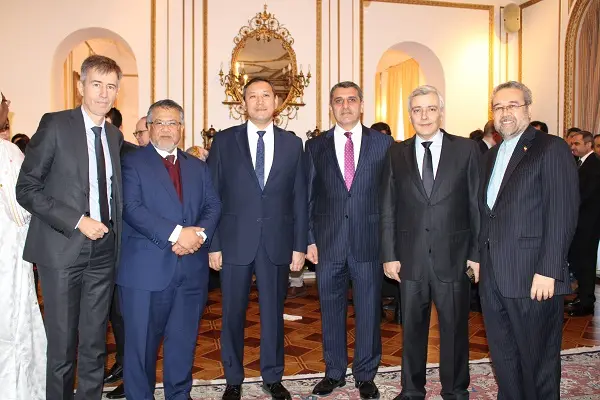
According to British media reports, the ceremony was held in February to celebrate the victory of the Islamic Revolution and was attended by a number of British government employees. At the ceremony, Seyyed Ali Mousavi defended the performance of the Islamic Republic and criticized Western sanctions.
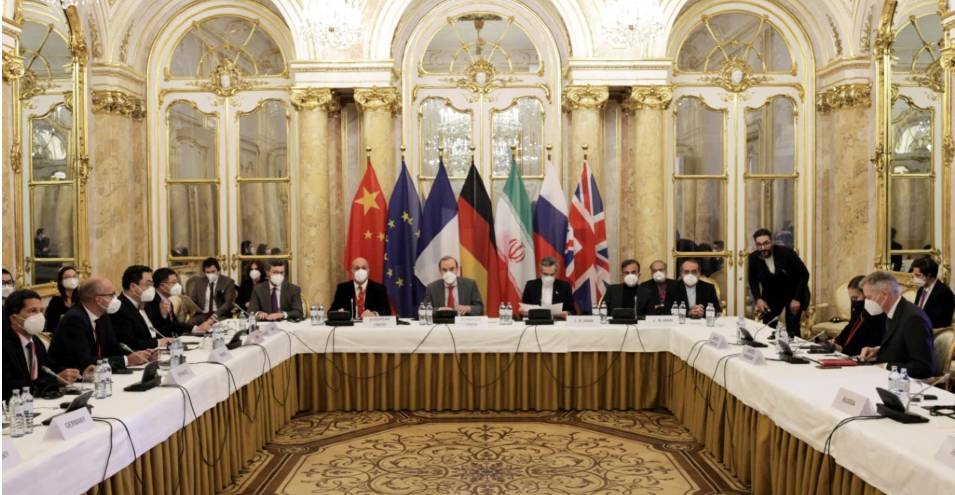
In response to criticism, the British Prime Minister's Office defended the move, calling it part of normal diplomatic practice. The government's official explanation stressed that "diplomatic engagement is an important part of protecting British interests and citizens."
Government officials have also stated that attending official embassy events, even with countries with which London has disagreements, is standard in international relations. This stance shows that the British government continues to emphasize maintaining channels of communication with Tehran, even in a situation where relations between the two sides face serious challenges.
However, this move has been criticized by a number of politicians, analysts, and civil society groups. Critics believe that participating in a ceremony that is seen as a symbol of the political legitimacy of the Islamic Republic is inconsistent with Britain's stated positions on human rights.
In the same context, a group of Christian activists have also sent an open letter to David Lammy, protesting this action and describing it as an “attempt to legitimize” the Iranian government. The letter raises demands such as transparency about the decision-making process, a review of the level of participation of officials, and even the suspension of relevant officials.
The activists have also called for increased political pressure on Tehran, including imposing new sanctions and expelling the Iranian ambassador from London.
The importance of this issue is heightened when viewed in the context of recent developments in the UK. In recent months, London has become a major hub for Iran-related protests. In January 2026, protests outside the Iranian embassy led to clashes and several arrests. This was followed by a wave of widespread protests by Iranians abroad in support of protesters inside Iran.
In one case alone, more than 50,000 people gathered in London to protest developments related to Iran. At the same time, the British government has even been forced to impose restrictions on some marches due to the risk of street clashes.
In such an environment, any diplomatic action related to Iran, including attending embassy ceremonies, quickly becomes a sensitive and controversial issue.
The incident has once again highlighted the gap between two approaches in British foreign policy: "on the one hand, the emphasis on maintaining diplomatic relations for crisis management and, on the other, the growing domestic and international pressure to adopt a tougher stance against the Islamic Republic."
In this regard, the British government recently summoned the Iranian ambassador in response to regional developments, a move that indicates continued tensions at the official level.
Overall, the presence of British diplomats at the Iranian embassy ceremony, although justified by the government as a routine measure within the framework of diplomatic relations, has in practice become a controversial issue in the British political and media space.
The continuation of this situation could increase pressure on the London government to reconsider its approach to engagement with Tehran, especially in a situation where public opinion, civil society activists, and some politicians are calling for a tougher stance towards Iran.