Will Iran become a dumping ground for other countries' nuclear waste?
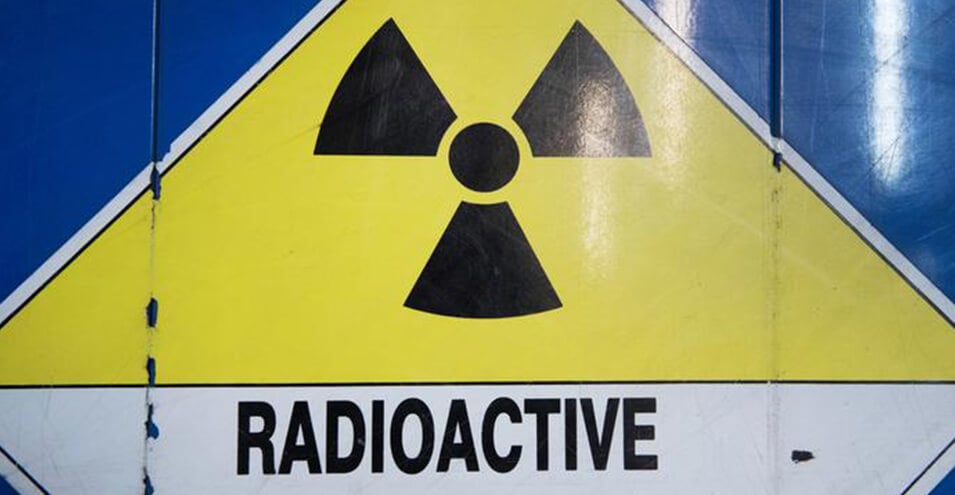
The Guardian Council has not approved Iran's accession to the Nuclear Waste Management Convention. Does accession to this convention pose a risk to people and the environment? Or is the real danger elsewhere? Interview with Behrouz Bayat, an expert on nuclear issues
The Guardian Council did not approve the parliament’s resolution on Iran’s accession to the Joint Convention on the Management and Safety of Nuclear Waste. The Guardian Council’s argument is that “the convention contains ambiguities and it is not clear whether its terms are binding or not.”
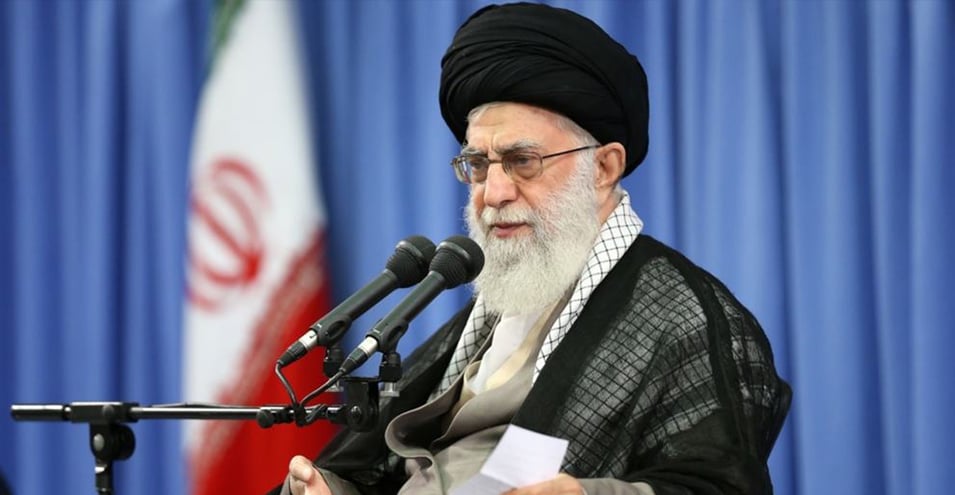
A few days ago, Ayatollah Yazdi, one of the jurists of the Guardian Council, expressed concern in this regard and said: "Recently, a plan that had been approved by the parliament was brought to the Guardian Council. This plan is that arrogant governments can bury their nuclear energy waste in the country; arrogance always bury this waste in backward countries, and we all know that the radiation from this type of waste will be harmful to the people of the country. The parliament had approved that an agreement had been reached, nuclear fuel waste could be buried in the country, but I announced that this was against Sharia, against the law, and against expediency, and others also accepted this."
The Islamic Consultative Assembly approved the bill in late July, arguing that Iran, like many other countries, should “have a suitable cemetery for burying nuclear waste and meet the necessary standards.”
Behrouz Kamalvandi, spokesman for the Atomic Energy Organization, said in this regard: "Joining this convention does not cause concern." According to him, the volume of nuclear waste in Iran is increasing, and for this reason, action must be taken to bury and store it within international frameworks.
The spokesman for the Atomic Energy Organization emphasized that nuclear waste management should be centralized and in the hands of a specific institution, and that the approach to the aforementioned convention should not be "political" because this accession "is purely to promote safety for individuals and the environment."
However, the Guardian Council’s insistence on concerns about the passage of this bill continued until, on August 11, Heshmatollah Falahatpisheh, a member of the National Security and Foreign Policy Commission of the Majlis, announced in an interview with “Khabar Online” that the Guardian Council “is planning a mechanism to resolve the ambiguity.” He said: “There is no mention in any of the provisions of this convention that member states are required to accept waste from other countries.” He pointed out that “a large part of other countries that use this energy have also joined it.”
The Nuclear Waste Management Convention recommends that countries with this energy use the experiences and information of other countries to prevent, as much as possible, the disasters that this waste can cause for the environment and citizens.
Is joining the Nuclear Waste Convention dangerous for Iran?
Behrouz Bayat, an expert on nuclear issues, said in an interview with DW that he does not believe that Iran's goal in joining the aforementioned convention is to leave the hands of other countries free to transfer nuclear waste.
But doesn't the ratification of the Convention on the Management and Safety of Nuclear Waste also mean that Iran has not yet implemented the necessary measures to ensure security in this area? For example, has Iran created a suitable cemetery for nuclear waste?
Behrouz Bayat says: "This convention was created to implement an international standard in different countries of the world for the burial and protection of this waste. There are many countries that have nuclear programs but have not yet joined this convention, but their non-joining does not mean that they have not observed the fundamental issues in the field of waste burial safety in the past."
According to Behrouz Bayat, this waste is not yet on a large scale in Iran. Referring to the Bushehr nuclear power plant, he says: "The waste from Bushehr is also being returned to Russia, and this is part of the agreement between Iran and Russia. In this regard, no large-scale waste has been generated in Iran. What has been generated is from the Tehran Research Power Plant and waste from the use of radioactive materials in industry, agriculture, medicine, and various other fields, both of which are smaller in volume and pose less risk."
Behrouz Bayat points to a center near Isfahan that is apparently built to protect nuclear waste, stressing that he does not have precise information about the size of the center. He adds: "If such news is true, it is very important that it is properly protected. Because the entry of radioactive materials into the environment is dangerous for the people around it, and moreover, if we go beyond the level of small waste, the storage of waste that is produced from reactor fuel on a very large scale is a huge problem for which no final solution has yet been found anywhere in the world, even in advanced countries such as Germany."
Preservation on a scale of several thousand years
The nuclear expert told DW about the serious dangers of nuclear waste: "The problem is that this waste has to be stored for thousands of years. This has not been practical so far. This waste is protected in underground cavities. But these cavities are not capable of storing nuclear waste for thousands of years. Water may penetrate them. It is possible that an earthquake will occur and for various reasons these materials will both come to the surface of the earth and contaminate groundwater."
He emphasizes that nuclear waste is a very big problem, "but Iran is not facing it that badly yet. Because it does not have much nuclear fuel. But if the country wants to expand its nuclear program, then it faces a serious danger."
Nuclear energy is neither clean nor cheap.
Behrouz Bayat points out the false belief that nuclear energy is “clean” and “cheap,” saying, “As soon as you have to build a center that can store nuclear waste for several thousand years, you have created a very heavy cost. Moreover, the safety costs of nuclear power plants must be taken into account, which are very high. Therefore, if we consider all aspects of nuclear energy, nuclear energy does not have the advantages that are attributed to it.”
According to this expert, it may be possible to discuss the “cost-effectiveness” of nuclear energy in some countries. But in the case of Iran, “it can be said with certainty that this country, given its abundant renewable energy resources, absolutely does not need to spend a lot of money on nuclear energy. This energy is neither useful nor cheap for Iran.”
Source: DW