Despite continued repression and censorship of news, internet shutdowns, and arrests of activists, the government has failed to stop nationwide protests.

After more than a week since the start of widespread protests in Iran, the process of escalating security and law enforcement clashes, violent repression of the people by government forces, and scattered reports of the killing of a number of protesters, The increasing number of arrests of civil and political activists and the adoption of strict decisions and orders to the media to censor news related to these popular protests indicate the government’s determination to implement unprecedented and comprehensive repression against the protesting community throughout the country. The arbitrary arrest of Saeed Madani, a sociologist who had previously and repeatedly considered the emergence of widespread popular protests to be imminent given the state of society, and the arrest of Reza Shahabi and Reyhaneh Ansari, veteran labor rights activists, along with the arrest or intensification of security pressures on the artistic community, including four female documentary filmmakers and photographers (Mina Keshavarz, Firoozeh Khosravani, Shilan Saadi, and Reyhaneh Tarawati) for unknown reasons, including security and judicial clashes with civil activists, have been reported. At the same time, reports have been published of meetings held at the Supreme National Security Council of Iran and the Ministry of Intelligence with a number of journalists, newspaper managers, and editors about the cost and manner of covering the news of the recent protests.
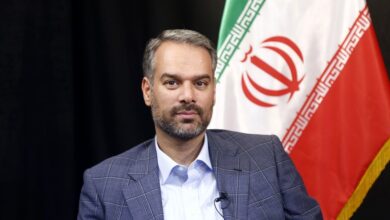
Hadi Ghaemi, director of the Human Rights Campaign in Iran, pointed to signs of more and more stringent and multi-faceted crackdowns on recent nationwide protests, saying: "The continuation and expansion of nationwide protests in Iran and the intensification of government repression have not only increased concerns about a repeat of the killing of protestors in November 2019, but have also become an opportunity for the government to suppress dissenting and critical voices."
According to Hadi Ghaemi, "Closing the internet, imposing orders to censor news, and arresting activists who were in any way the voice of popular protests, are all aimed at cutting off the connection of the protesting community in Iran with the outside world. A path that provides the government with the opportunity to suppress nationwide protests."
The Human Rights Campaign in Iran believes that the responsibility for the lives and health of all those killed or injured in popular protests lies directly with the authorities of the Islamic Republic of Iran, and considers the continued immunity of the perpetrators and commanders of the repression of popular protests and the killing of protesters to be an example of the continued suffering and double oppression of families who have lost their loved ones for participating in the protests. Arbitrary arrests and filing of cases against civil society activists, and the imposition of the most severe forms of censorship, from cutting off the internet to ordering journalists to reflect the current reality, have increased the need for the international community to pay close attention to the current situation in Iran. The government of the Islamic Republic of Iran wants to silence and neutralize all voices of opposition and criticism of itself, and in these circumstances, these different voices should not be allowed to reach the world and remain silent.
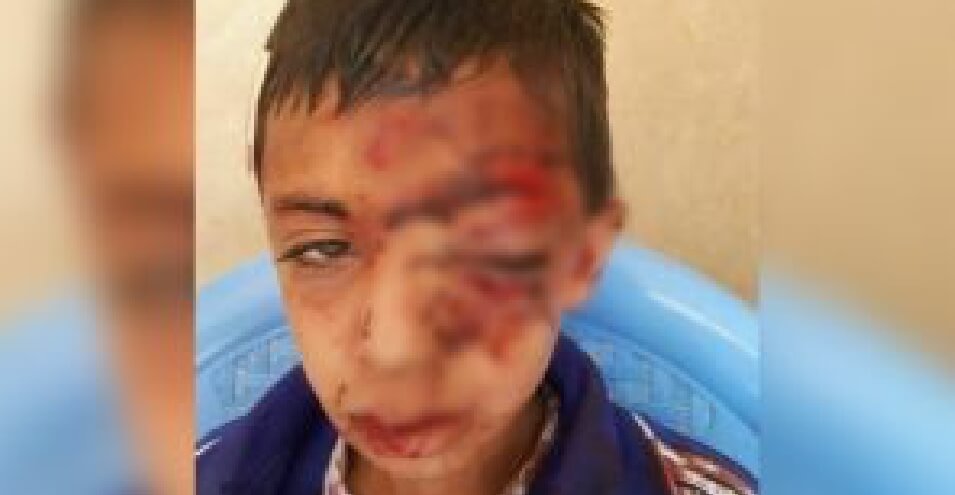
The protests against inflation in Iran first began on May 5 in several cities in Khuzestan province, including Susangerd and Izeh, and parts of Ahvaz. Gradually, people held protest rallies in more than 20 cities, which were suppressed by government forces. The cities of Dezful, Shahrekord, Andimeshk, Izeh, Jonghan, Khorramabad, Fashafoyeh, Farsan, Borujerd, Dehdasht, Dorud, Ardabil, Neyshabur, Souq, Rasht, Ahvaz, Yazd, Shadegan, Shahinshahr, Babaheydar, Hafeshjan, and Yasuj, as well as parts of Mashhad and Tehran, have witnessed public protests, which are still ongoing in some cities. Internet disruptions and outages that began on the first day of the protests are still being reported in some parts of the country. In recent days, protests against inflation have occurred in several small towns and 2 villages in Chaharmahal and Bakhtiari province, and the intensity of repression by government forces in these areas has been very high. In some videos and photos published from protests in cities in Chaharmahal and Bakhtiari province, it is clear that security forces and police attacked protesters, in some cases using direct fire of shotgun pellets, which caused serious damage and injuries to protesters.
According to non-governmental sources and information published on social media, five people have been killed in nationwide protests so far, two of whom have been confirmed by government sources. Hadi Saadatpour in the city of Hafeshjan and Pish Ali Ghalibi Hajivand in the city of Andimeshk were the citizens whose deaths were confirmed by the authorities. According to unofficial reports, Omid Soltani in Andimeshk, Hamid Ghasempour and Behrouz Eslami in Farsan were also killed during the protests against high prices.
Reports have also been published about the increase in the number of arrests in various cities, indicating the arrest of hundreds of people in the city of Izeh, Khuzestan Province, and at least 50 people in Shahrekord, Chaharmahal and Bakhtiari Province.
Source: Iran Human Rights Campaign