US Government Condemns Execution of Mohammad Eslah Dervish, Iranian Prisoner

The United States government described the execution of Mohammad Eslah Gonabadi dervish, a prisoner in Iran, as “cruel and unjust,” and while condemning it, called on American allies around the world to also condemn this action by the Iranian government.
The execution order for Mohammad Eslah was carried out on Monday, June 18, at Rajaei Shahr Prison, despite ambiguities in the case regarding the deaths of several police officers during the winter clashes between Gonabadi dervishes and police in Tehran.
Hedayu Waqufi, spokesperson for the US State Department, in a statement published on the Farsi-language Twitter account of the department, wrote that reports indicate that the suppression of dervishes has continued since the February clashes.
Ms. Waqufi described the “expedited” execution of Mohammad Eslah as the latest example of the Iranian regime’s disregard for the rights of its people, and said that carrying out death penalties without fair trial and without ensuring the right to appeal is a clear violation of Iran’s international human rights obligations.
Continuing in the statement, she called on Iranian authorities to release hundreds of dervishes who are imprisoned for their beliefs, including their leader Dr. Noor Ali Tabandeh, who has been under house arrest for at least the past four months and is in urgent need of medical care.
The US State Department spokesperson also emphasized that the Iranian people deserve the rule of law, transparent and accountable governance, and respect for human rights and fundamental freedoms, not cruel punishments that have always been intertwined with the nature of this regime.
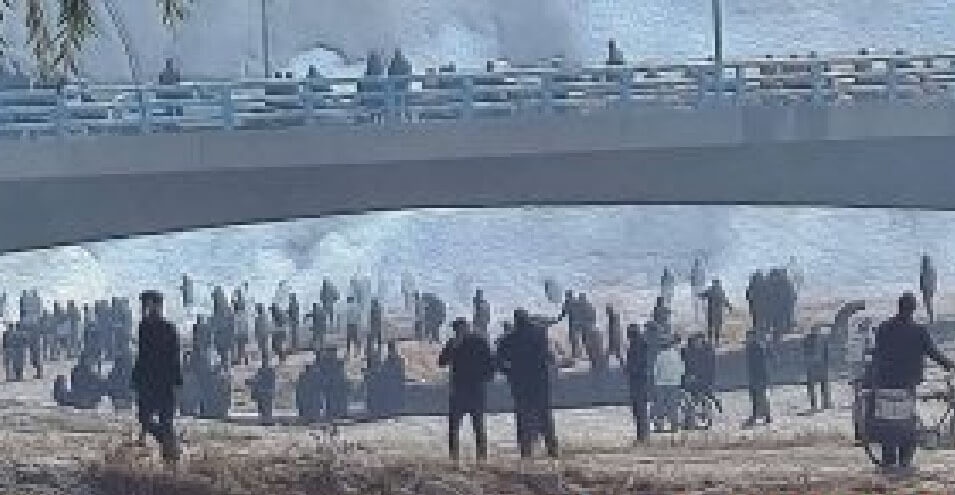
A gathering of Gonabadi dervishes in front of the Pasdaran police station on February 4, 2018, in protest of the detention of an elderly dervish, turned violent with the intervention of plainclothes officers and police forces. During these clashes, several police and Basij members were killed, and hundreds of Gonabadi dervishes were arrested.
Mr. Eslah was accused of hitting a row of officers with a bus, causing the deaths of three people.
The announcement of his execution triggered widespread reactions from human rights organizations, political figures, civil activists, and social media users.
Amnesty International, in publishing a tweet stating that hearing about Mohammad Eslah’s execution was shocking, wrote that his trial was unjust. The organization had previously called for efforts to prevent Mohammad Eslah’s execution.
The Iran Human Rights Center also reacted to Mohammad Eslah’s execution in several tweets, writing that Mr. Eslah had been tortured and forced to confess against himself.
The center reflected statements from his lawyer, who said that Mr. Eslah was severely beaten and injured during interrogation and was unaware of what was happening during the interrogation.
The daughter and son of this condemned dervish on Saturday, June 7, in a video published on social media, again emphasized their father’s innocence and asked all domestic and international bodies to leave no effort unspared in seeking a retrial of his case.
Narges Eslah, the daughter of this condemned dervish, said on Saturday in an interview with the Farsi section of Voice of America that a retrial of his case will be filed again.
Late on Saturday evening, prison officials had asked Mohammad Eslah’s family to visit him for a final meeting. Previously, Mohammad Eslah’s lawyer announced that officers severely beat his client and forced him to confess against himself.
In this regard, Kasra Nouri, one of the imprisoned dervishes, in an audio file reported on the sit-in of dervishes held in Tehran’s main prison, in protest of Mohammad Eslah’s execution order and injustice in the proceedings of dervishes’ cases.
The suppression and imprisonment of Gonabadi dervishes prompted criticism from human rights organizations and the US State Department. Prince Reza Pahlavi was also among those who protested Eslah’s verdict.