Nearly Two-Thirds of Iran’s Dam Reservoir Capacity Remains Empty
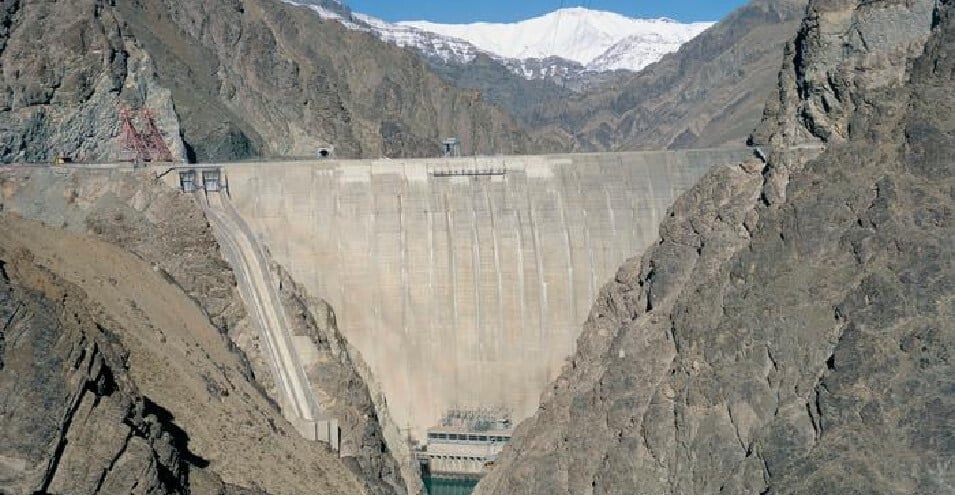
Iran’s dam reservoir capacity is slightly over 50 billion cubic meters, and currently holds only 38 percent of this amount. Water inflow to Iran’s dams in the current water year has decreased by 30 percent compared to the previous year.
A prolonged drought continues in Iran, with water inflow to dams behind declining at an alarming rate, and consequently, water outflow from dam reservoirs has also decreased proportionally.
The Director General of the Water Information and Data Office of Iran’s Water Resources Management Company stated that in the current water year, which began in Mehr, until December 9, total water inflow to dams was approximately 6.5 billion cubic meters, representing a 30 percent decrease compared to the same period last year.
Firuz Ghassem-Zadeh told ILNA news agency that Iran’s dam reservoir capacity is approximately 50.5 billion cubic meters, and currently 62 percent of these reservoirs are empty.
28 Percent Decline in Water Storage
According to official statistics, the average water storage behind Iran’s dams shows a 28 percent decrease compared to last year. Additionally, water discharge from dam reservoirs in the current water year has been 38 percent less than the comparable period in the previous year.
While nearly two-thirds of Iran’s dam reservoir capacity is empty and only about 38 percent contains water, dam capacity levels vary across different regions.
According to the Director General of the Water Information and Data Office, the Zayandeh Rud Dam has the lowest capacity level at 13 percent, while capacity levels in Khuzestan and Tehran dams are approximately 45 and 18 percent, respectively.
New Water Year Begins Following Rainfall Decline
The current water year began with a deficit in dam reservoir balance compared to the previous year. Youssef Reza-Pour, CEO of the Tehran Regional Water Company, stated in Mehr that the new water year started when last year’s rainfall was 37 percent below the long-term average.
He stated that in the watershed basin of dams supplying drinking water to the megacities of Tehran and Karaj, only 2.3 millimeters of rainfall occurred in Farvardin this year, which was the lowest amount in over half a century.
Reza-Pour, citing the Meteorological Organization’s forecasts for below-normal precipitation in Mehr and Aban months and a 0.5 to 2-degree temperature increase compared to long-term statistics during the autumn season, expressed concern that with the declining trend of water inflow to dam reservoirs, there would be a difficult year ahead in terms of ensuring reliable and sustainable water supply.
In the Islamic Republic, rampant dam construction with justifications such as controlling runoff, preventing floods, and ensuring reliable drinking water supply became widespread, but evidence shows that this measure, in which all factions were involved, has turned more into a lucrative business.
Dam Construction Business and “Water Bankruptcy” in the Islamic Republic
Isa Kalanteri, who was Minister of Agriculture in the final year of Prime Minister Mir-Hossein Mousavi’s term and from the beginning of President Akbar Hashemi Rafsanjani’s presidency until the third year of Mohammad Khatami’s first government, and head of the Environmental Protection Organization in Hassan Rouhani’s second government, said several years ago: “Every disaster that has befallen the environmental sector has occurred over the past four decades. Before that time, many of the country’s environmental indicators, such as water, were in a proper state.”
He, who himself was one of the officials in water-related sectors, severely criticized the policies that led Iran to “water bankruptcy” and added that these policies have resulted in there being “no single living wetland and lake” in the country today.
According to a list published on the website of Iran’s Water Resources Management Company, currently 647 small and large dams are in operation in Iran, and 683 other dams are in the implementation or study phase.
Before the 1357 Revolution, fewer than 30 dams had been built in Iran. A look at the map of Iran’s dams reveals that the construction of many of them could not have been conducted solely with the goal of controlling runoff and optimal use of water resources.
Sistan and Baluchestan Province is considered an arid and desert region, with annual rainfall in different sections ranging between 70 to 130 millimeters. In this province, 23 dams are in operation and 25 other dams are in the implementation and study phase. The average annual rainfall in Iran is 250 millimeters.
Source: DW