Rouhani: We have no decision to hold bilateral talks with the US
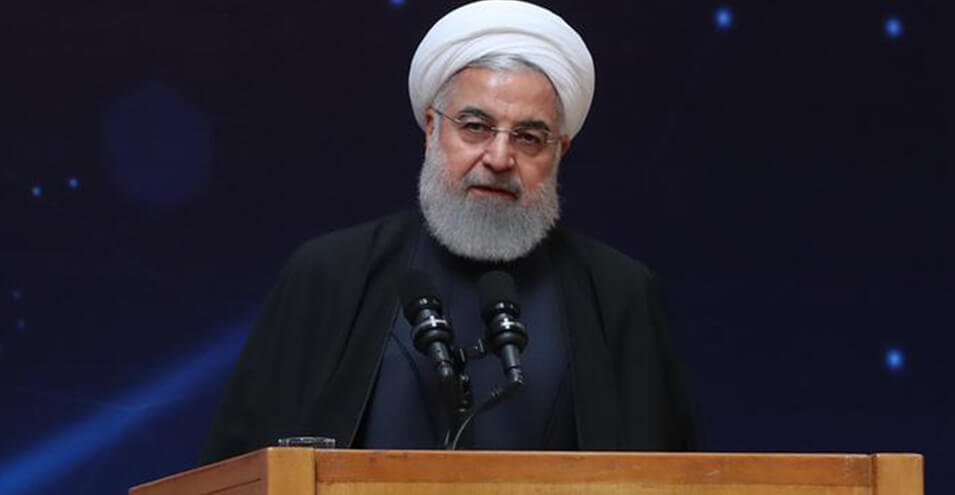
During the vote of confidence session for the two government ministers proposed, the Iranian President spoke about Iran's "one year of strategic patience" and at the same time "open doors to diplomacy." Hassan Rouhani considered "returning to the right path and commitments" a prerequisite for negotiations.
On Tuesday (September 3), at a meeting to review the qualifications of the proposed ministers of education, cultural heritage, tourism, and handicrafts, Iranian President Hassan Rouhani spoke of the need for the country's "exceptional role of the parliament, government, and judiciary in the current circumstances" and once again addressed the issue of negotiations with the P5+1 countries.
In this meeting regarding negotiations with the United States, the Iranian President said: "If the United States lifts all its sanctions, it is still possible for it to attend the 5+1 meeting as before."
Referring to his previous statements and the perceptions that were expressed from these statements, Hassan Rouhani continued: "Some people think that the purpose of negotiation is a bilateral dialogue. Foreigners usually have their own perceptions, but the principles of our policies are determined by the leadership; we all follow the same path and there are no differences on national issues."
Rouhani said in a session of the parliament on September 12: "We have said many times and we will say again, although the interpretations may be misinterpreted, that we do not have and have not had any decision to hold bilateral negotiations with the United States. The issue of bilateral negotiations in private is not on the agenda."
Hassan Rouhani had spoken in a speech on September 25 of his readiness to negotiate if Iran's interests were served. Rouhani had declared in a meeting: "If I know that if I meet someone in a meeting, national interests will be served and the country will become more prosperous, I will not hesitate because the national interests of the country are the main thing." These words of Rouhani were interpreted by international media as Iran's message for negotiations with the United States. A message that French President Macron also welcomed in a press conference with Donald Trump and did not consider a meeting between the presidents of Iran and the United States impossible. Rouhani's statements brought a wave of reactions in Iran.
The third step comes.
Rouhani added today, in a meeting to review the qualifications of his proposed ministers, referring to the steps Iran has taken within the framework of reducing its commitments under the JCPOA, as well as the lack of results from the first step and the start of the second step: "The second two months are also entering their final days. During these two months, we had various negotiations with some heads of state directly and spoke with some by phone."
On the first anniversary of the US unilateral withdrawal from the JCPOA on May 8, 2018, Iran took the first step in reducing its commitments under the JCPOA, which means a gradual withdrawal from the agreement. In the first step of reducing its commitments, Iran announced that it would no longer export its excess low-enriched uranium and heavy water abroad. Iran had simultaneously threatened that if the remaining countries in the agreement did not fulfill their commitments under the JCPOA, facilitating oil sales and banking transactions, it would initiate the second stage of reducing its commitments.
In his remarks on Tuesday, Hassan Rouhani spoke of Iran’s “one year of strategic patience” after the US withdrawal from the JCPOA and considered the “policy of counter-reduction of commitments” as Iran’s plan for the era after “strategic patience.” The Iranian president emphasized: “If Europe or the 4+1 countries can fulfill some of their important commitments, we may reconsider the discussion of reducing commitments, but if they do not do anything important, we will definitely take the third step in the coming days (Thursday).”
Iran recently initiated the second phase of reducing its commitments; increasing the level or concentration of uranium enrichment is one of Iran's actions in this phase. The European members of the JCPOA also rejected this 60-day deadline. Iran's third 60-day deadline to Europe ends on September 5.
Open Doors of Diplomacy
Rouhani explained the “basis of the discussion with Europe” as follows: “If they buy our oil in cash or on credit and the money is available, the conditions for steps to reduce commitments will be facilitated.” Regarding the policy that the United States has previously adopted towards Iran on the JCPOA issue, he said: “They should return to the right path and commitments so that we can witness different conditions.”
In another part of his speech, the Iranian President, referring to “constructive engagement with the world” as the policy of the 11th and 12th governments, continued: “We have never closed the door to diplomacy and we will never close it. We do not believe that we should use one of these two tools, either diplomacy or resistance. We do not believe that national resistance is in conflict with active diplomacy. We consider the two to be complementary.”
The 12th head of state called on the mass media in Iran not to create "contradiction and duality" in Iran and considered the country's conditions "conditions for unity and a single voice."
“Imposed economic war”
Rouhani said in a meeting to review the qualifications of the proposed ministers of education and cultural heritage that “the world’s view of the Iranian nation has changed after 16 months of resistance.” He called the “imposed economic war like the imposed military war 30 years ago” against Iran fruitless, saying: “They have also come to the conclusion that they cannot bring the Iranian nation to its knees with maximum pressure.”
The Iranian president referred to the exchange rate, which has “enjoyed relative stability in the last two months.” He considered this “relative stability” a sign of “market calm and people’s hope for production.” Rouhani spoke of an agreement with several major countries in the world to trade in national currencies, adding: “[This] means a blow to the dollar and America’s conspiracies against our country’s economic plans.”
Rouhani called Iran's current economic situation a "100% embargo from May."
Source: DW