Female prison guard reveals sex trafficker's secret
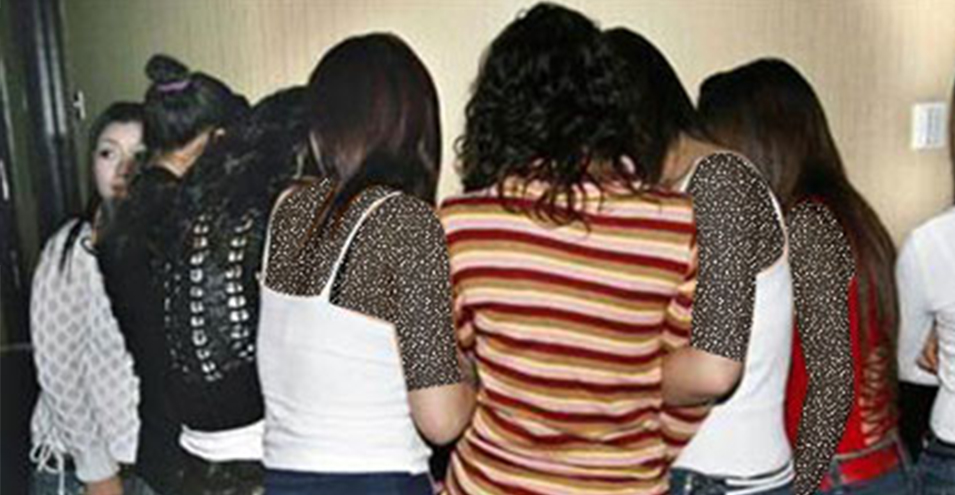
Soheila.S. FCNN News Agency: An informed source revealed a secret in a conversation with FCNN that strengthens the possibility of some Iranian judicial and security officials being involved in trafficking young girls and women from the country to other countries.
About three months ago, the US State Department, in a report titled "Human Trafficking 2017," claimed that organized groups were targeting Iranian youth for sex trafficking.
In response to this report on June 19, Bahram Qassemi, spokesman for the Islamic Republic's Ministry of Foreign Affairs, accused the US government of preparing and announcing these reports with the aim of tarnishing the image of the Islamic Republic of Iran.
With Iran ranked third in the report, it was announced that the country does not have even the minimum laws to combat the phenomenon of human trafficking, and these minimum laws are not being implemented properly due to government policies and widespread corruption at various levels of the Islamic Republic.
The complicity of prison officials and smuggled prisoners
Now, an informed source has claimed in a conversation with FCNN that members of gangs trafficking young Iranian girls and women are operating in Iranian prisons and courts, and are using various tricks to prey on sex victims and helpless individuals.
This middle-aged woman, a prison guard at the central prison in one of the country's major cities, who does not want to be named, described the bitter fate of runaway girls who are abandoned by their families.
He added in an interview with FCNN: "After several prison terms, these young girls are a good prey for traffickers because they have no protectors and no shelter. They can easily be taken out of the country with the desire to live in the West. Without any legal guardianship. Of course, many of the young girls who escape fall prey to human trafficking gangs in the first case of arrest and before the court's verdict is issued and they find their way into foreign brothels."
This prison guard believes that the inability to classify prisoners and the lack of sufficient and standard space in prisons are the reasons for establishing relationships between people with a history of leading corruption and prostitution gangs in the country's prisons.
He continues: “These experienced women, some of whom have been in prison for up to ten years, have their own way of going and coming. They receive a lot of money and spread colorful tables in prison. In this way, they look attractive to young and runaway girls and easily seduce them. To the extent that these girls are handed over to members of the trafficking gang immediately after their release. I witnessed cases where they were waiting for these girls at the exit of the prison and I was not able to stop them at all. They had just made promises and threats. Unfortunately, the conditions in our country are such that the families of these girls, in order to protect their reputation, ask God for them not to return home so that they can tell their acquaintances that their daughter died suddenly or that she got married abroad. For this reason, no one follows up on the absence of these girls. Meanwhile, influential prison officials also give these leaders of corruption and prostitution gangs a platform. I have witnessed many times how several women prisoners with financial crimes end up working for these experienced women and protest. "They did, but with the coordination of the prison guards, they suffered a severe beating from their fellow prisoners in the women's ward."
This woman reveals another unfortunate situation that exposes the corruption in the judicial system. She continues: “In some cases, these young girls who run away disappear after appearing in the first court session. I even witnessed the judge in the case acquitting them, taking the girls with him and never hearing from them again.”
According to the prison guard, who has been in charge for more than two decades, this group of women and girls resort to any excuse to improve their conditions because they have no shelter, family, or legal support, and they can easily be deceived by promises of a better life.
He also recounts other bitter memories related to the uncertain fate of illegitimate children who are born in prison but have no known father, and the family of the runaway girl is unwilling to accept the baby.
Under legal circumstances, such children should be handed over to the welfare organization, but according to this prison guard, the involvement of members of human trafficking gangs in legal centers, including prisons, provides the basis for the abuse and sale of these infants, so that they can be sold to foreign customers at an exorbitant price when they are teenagers.
This Iranian woman, citing the memories of her friends and colleagues in other metropolitan cities of the country, claims that similar incidents are occurring in other central prisons and have been going on for years, without any authorities taking legal action.
Long-term planning for human trafficking in Iran
A sociologist who worked for a while at the Shiraz Welfare Center for Social Damage also emphasized in an interview with FCNN that official authorities in Iran are ignoring events that indicate the growth of trafficking in Iranian women, girls, and children, and by doing so, they are fueling the possibility of officials making a profit through this means.
He believes that the activities of human trafficking gangs in Iran are pursued with long-term planning. According to this expert, the purchase of babies from addicted women, the neglect of adjusting the capacity of centers for the care of orphans and runaway girls in welfare, and the release of street children collected after a day or two in centers of corruption are part of this planning that easily identifies the prey of traffickers.
Citing official welfare statistics in Tehran, this sociologist speaks of the growth in the number of runaway girls in the capital, and that about 15 percent of girls aged 14 to 18 in our country run away from home every year.
The US State Department's annual report also indicates a growing trend in the number of Iranian women and girls who are taken by organized groups to Dubai, neighboring countries, and even Iraqi Kurdistan for forced sexual services.
According to this sociologist, the authorities of the Islamic Republic do not even pay attention to the fact that Iran has been the destination and origin of sex trafficking of men, women, and children for the past five years, and the age of girls targeted by trafficking gangs in Iran has reached 13 to 17 years. However, ignoring these bitter realities imposes irreparable costs on Iran and Iranians, and perhaps none of the authorities of the Islamic Republic have taken any measures to eliminate these costs and do not consider themselves responsible. Because these costs will only be a burden on the shoulders of Iranians.
Predicting risk with a thumb rule
Of course, the current situation in our country was easily predictable.
Mostafa Jangholi, a pathologist, predicted in 2015 that starting in 2016, the unfortunate phenomenon of runaway girls in Iran would begin to grow uncontrollably, which would pave the way for huge profits to flow into the pockets of sex traffickers.
According to Salamat News, Jangholi said: “Two decades ago, the ratio of female to male offenders was 4 percent, but now it is close to 11 percent. On the other hand, street children from the 1965s to 1975s were born in the 1950s, whose puberty marked the phenomenon of runaway girls; in the years 1979 to 2003, 22,000 children were collected from the streets, who will reach puberty in 2016 and are exposed to harm due to the chaotic social environment. On the other hand, we should have 20 million school children now, but according to official education statistics, about 13 million people go to school. A simple question is, where are the other 7 million? These are working and street children, some of whom are runaway girls. Therefore, by examining this information, it can be predicted that from 2016 onwards, social harm, especially runaway girls, will increase in Iran.”
Evasive statements from officials and confirmation of the danger
Unfortunately, in the current situation, Iranian officials continue to refuse to accept reality, and they resort to labels such as "foreign enemy and global arrogance" in response to any type of information that points to undeniable facts and gives them a seal of approval.
That is why they are unwilling to respect international laws in this regard and make effective efforts to uncover human trafficking networks and sex trafficking networks. Of course, there is also the possibility that this resistance to reality is aimed at protecting the hands behind the scenes in the growing phenomenon of trafficking in women and girls in Iran.
This is while the realities in every corner of our country are easily visible. The dispersion of street children, both boys and girls, and the increasing number of runaway girls are part of these realities. But the authorities simply ignore these and from time to time talk about promises to fix these conditions.
Meanwhile, from time to time, some officials announce statistics or issue vague warnings that do not have the necessary strength or follow-up and have no effect because they are ignored by other officials.
It would be good to examine one of the official statistics to show this disregard. According to the latest statistics, the capital of the Islamic Republic has nearly 20,000 homeless people, nearly 3,000 of whom are women. And 90 percent of them were pregnant at the time of the census. Unofficial statistics also indicate that the age of women in Tehran to sleep in cardboard boxes has now reached 18 years. At the same time, we see that the only safe reception center for women in cardboard boxes in Tehran has a capacity of only 150 people. The latest statistics also indicate that there are at least 20,000 street children in Tehran who have been abandoned. All of them are good prey for sex traffickers. This situation is rampant in most of the country's major cities, especially Mashhad and Shiraz. Unfortunately, local and provincial media do not dare to announce statistics in this regard.
According to the Jahan Sanat magazine, not long ago, the head of the country's government penal organization reported on the situation of human trafficking and ultimately the degradation of human dignity in this process, namely the trafficking of Iranian girls and young women to neighboring countries.
In these circumstances, the reality is not hidden from view. The growth of profiteering and corruption among some institutions and departments of the Islamic Republic threatens girls and young women, and even helpless, unaccompanied or abused children in Iran. This is especially true in a situation where these victims have no legal status.
Accordingly, one of the serious problems facing victims of sex trafficking in Iran is the legal consequences and various punishments that they face.
Because labels such as fugitive, committing an illicit relationship and even defaming the name of the Islamic Republic and harming this sacred system in the international arena apply to these victims. Which also entails appropriate punishments. This is where this group of victims do not even have the courage and motivation to assert their human and legal rights. Meanwhile, a small group of these victims, after their expiration date, have the chance to re-enter the homeland. But due to the lack of support and legal centers, they are forced to avoid their human and legal rights for the oppression that has befallen them. And continue to live an unwanted life in centers of corruption.