Exiled prisoners reject Iranian judiciary official's claim: We are all in exile by their decree
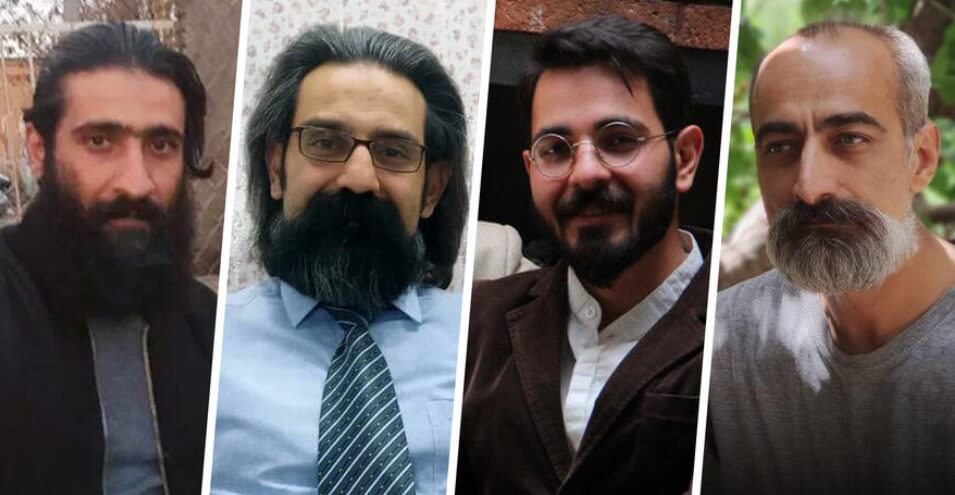
Gonabadi dervishes, all of whom have been sentenced to exile in deprived cities in Iran by the Iranian judiciary, reacted to the recent statement by the spokesperson for the Islamic Republic's judiciary, denying reports that a number of Iranian cities have been designated as places of exile for convicted criminals.
Gholamhossein Esmaili, spokesman for the Judiciary of the Islamic Republic of Iran, in a press interview on Wednesday, September 25, in response to news reports that some cities were being called places of exile by the media, claimed that this news was "untrue and fabricated" and said that "based on the new Article 23 of the Islamic Penal Code, we no longer recognize any city as a place of exile." This is while many political and ideological prisoners are spending their time in exile in deprived cities in Iran on the orders of the Judiciary.
Saeed Sultanpour, a Gonabadi dervish who has been in exile with two other dervishes, Rasoul Hoveida and Akbar Beiranvand, in the city of Zahak in Sistan and Baluchestan province since early May, told VOA that the Judiciary Spokesperson is making these remarks while Gonabadi dervishes are serving their exile in various cities, especially border cities with limited resources and poor people, and it has been explicitly stated in the issued rulings and written judicial orders that the person named has been introduced to a place of exile, or forced residence.
Reza Entesari, a former director of the Majzooban Noor website and a Gonabadi physician who is currently serving his exile in the city of Khaf, also told VOA that these statements by the judiciary spokesman were made in a situation where Chapter 6 of the executive regulations of Article 23 of the Islamic Penal Code defines exile, the conditions of exile, and even places of exile. They even specify whether or not places that are not suitable for exile due to political, security, and social conditions are eligible for exile, and this shows that we have both exile and places of exile in the regulations.
Mr. Entesari continued to tell VOA: "If what the judiciary spokesman said is true, why aren't the convicts deported to large cities with good weather, such as Shiraz, Mashhad, or even Bushehr? Why do they specifically choose deprived places? So we can say that the law's statement contradicts the practice and implementation of their own law."
In recent years, the Islamic Republic’s judicial authorities have issued deportation orders for political and ideological prisoners to remote and deprived cities, aiming to keep critics and protesters away from their homes and families in order to prevent civic activities. According to Sina Entesari, who has been exiled to the city of Mirjaveh in Sistan-Baluchestan province, “the intention of the authorities, despite what they claim, is not simply to keep them away from a specific location to prevent a criminal act.”
Referring to the deportation orders issued to Gonabadi dervishes over the past years, Sina Entesari told VOA: "I have heard many lies from Iranian executive and judicial officials in the past. Such denials have become a routine in our country. Otherwise, why are all the cities that send exiles to be poor, marginal, border, and deprived cities? Cities that, according to the executive regulations of Article 23 of the Islamic Penal Code, are the responsibility of the Ministry of Intelligence, and due to the residence of Kurdish and Baluch tribes, and Sunni citizens, a strict security atmosphere prevails in them."
Saeed Durandish, another Gonabadi dervish who is spending his exile in Zabol city with Ehsan Malekmohammadi and Hadi Shahreza, told VOA that after five months of exile, this contradictory statement by the judiciary spokesperson is more like a show in front of the camera than reality. He said: “Given the judicial orders that were issued to each and every dervish in exile, they insisted that we introduce ourselves as soon as possible to the cities where we are exiled, despite the spread of the coronavirus in Iran; deprived cities that lack basic facilities and people in these cities live in difficulty.”
Previously, the Voice of America had announced in several reports that some political and ideological prisoners, including Ebrahim Firouzi, a Christian convert, and Reza Yavari, a Gonabadi dervish who was arrested and sentenced to prison after the Golestan 7 incident, have been sent to deprived and border cities in Iran to serve their exile sentences.
The US State Department has repeatedly and on various occasions condemned the violent confrontations and widespread repression of protesters, as well as the repeated and persistent violations of the rights of Iranian citizens by the ruling regime in that country.
Source: Voice of America