Organized repression of Christian citizens and the government's creation of a security narrative
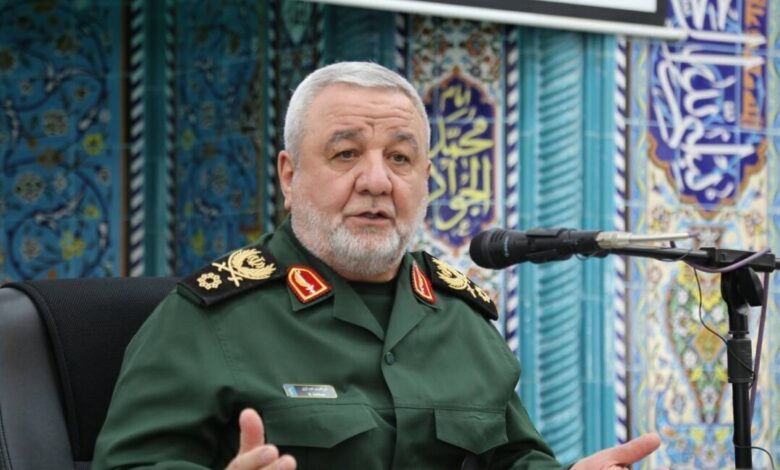
The security narrative and organized repression of Christian citizens were once again revealed in the recent remarks of the advisor to the Commander-in-Chief of the IRGC.
The recent remarks of Sardar Jabbari, advisor to the Commander-in-Chief of the IRGC, once again revealed a clear picture of the government's security perspective towards parts of society; a perspective that has for years placed citizens of different religious affiliations under constant pressure, accusations, and repression.
In statements made at the 11th "American International Conference on Human Rights from the Perspective of the Revolutionary Leader," Jabbari claimed the widespread presence of Jewish and Christian minorities who "sympathize with the regime," but immediately, in a clear contradiction, spoke of the arrest of a group that he described as "Christian converts."
In his speech, he stated: "Our intelligence service arrested a number of Christian converts who were previously Muslims and had been recruited by the enemy."
This phrase, which goes beyond a claim, reflects a systematic security approach against citizens who do not recognize their personal religious choice. The government talks about “coexistence of religions” on the surface, but in practice, any citizen who deviates from the official religious framework is quickly placed under security charges.
While government officials constantly talk about freedom of religion and the peaceful life of religious minorities, filing cases against citizens under vague titles such as "contact with the enemy" or "recruitment" has become a recurring trend.
Independent international reports have repeatedly emphasized that citizens who decide to change their religion, especially citizens inclined to Christianity, face extrajudicial detentions, informational pressures, and heavy sentences.
Adding these citizens to the list of "security threats" not only violates freedom of opinion, but also replaces security cases with civil rights.
Jabbari continued by lumping together a large group of groups, from monarchists and Kurdish parties to ISIS, and claiming that they had a 12-hour meeting in Europe led by Trump and Netanyahu. This style of security narrative has been used for years as a tool to justify domestic pressure and suppress dissent.
Meanwhile, citizens who have chosen religious dissent are the easiest targets for the security apparatus because, unlike political groups, they do not have the possibility of media or organizational defense, and any personal tendency they have is presented as a "tool of the enemy."
The claim of "spending $25,000 to train thugs" or "planning ISIS to attend a joint meeting with government opponents," without providing any evidence, along with the claim of arresting what he calls "converts," is part of a repeated pattern that deliberately blurs the line between real crime and government accusations.
In such an environment, a citizen who simply has a different religious choice is, in the eyes of the security apparatus, considered a fundamental threat to the country; a process that is not consistent with any human rights standards, even those claimed by the government itself in official speeches.
Sardar Jabbari’s recent statements show that the Islamic Republic’s security apparatus continues to view citizens who deviate from the official religious framework not as human beings with the right to choose, but as “targets” and “threats.” While the government claims to be “sympathetic to religious minorities,” citizens with different religious orientations are under the heavy shadow of repression, arrest, and case-finding.
This contradiction, more than anything, reflects the government's structural fear of individual freedom and religious diversity, a fear that continues to lead to the production of security cases against these citizens.