Australian Ambassador to Tehran Meets with Moore-Gilbert
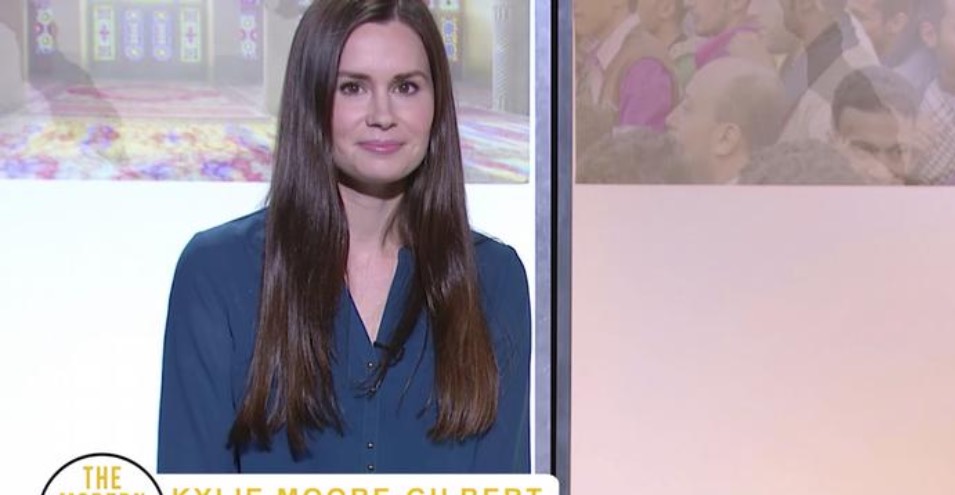
The Australian Ambassador to Tehran met with political prisoner Kylie Moore-Gilbert in Qarchak Prison, Varamin. He confirmed that the Australian citizen is doing well and has access to medicine and food.
After numerous protests against the conditions of political prisoner Kylie Moore-Gilbert and her transfer to Qarchak Prison in Varamin, the Australian Ambassador to Tehran was able to visit the Australian citizen in Qarchak Prison.
According to the Associated Press, Australian Ambassador to Iran Lyndall Sachs said on Tuesday, August 4, that he had met Moore-Gilbert in Qarchak Prison in Varamin and that he was doing well.
The Australian Foreign Office also said in a statement: "Dr. Moore Gilbert is doing well and has access to food, medical facilities and books."
The statement also emphasized that the Australian government continues to seek consular access to Moore Gilbert.
The Gilbert family said they were relieved after the Australian ambassador visited Kylie Moore in prison. "We will continue to work to bring Kylie home as soon as possible and this is our highest and only priority," the Gilbert family said in a statement.
They have also stressed: "We continue to believe that Kylie's best chance for release is through diplomatic channels and we will remain in contact with the Foreign Office and the Australian Government to find the best way forward."
Concerns about Moore-Gilbert intensified last week when news broke that he had been transferred to Qarchak Prison in Varamin. The Australian government immediately requested consular access to the prisoner, and eventually, the Australian Ambassador to Tehran, Lyndall Sachs, was able to meet him in Qarchak Prison.
Kylie Moore Gilbert is a professor of Middle East studies at the University of Melbourne. She was arrested at Imam Khomeini Airport in Tehran in September 2018 after attending a conference, sent to Evin Prison, and later sentenced to 10 years in prison.
According to some reports, he has attempted suicide several times and is often held in solitary confinement. Gilbert has also gone on hunger strikes several times, calling on the Australian government to do more to secure his release.
Last year, in a letter to the Australian Prime Minister, he wrote about "widespread violations of personal rights as well as human rights principles" and reported "mental torture and prolonged solitary confinement."
Last week, Reza Khandan, a human rights activist and husband of Nasrin Sotoudeh, posted a note on Facebook that Kylie Moore-Gilbert had called from prison to report her very bad conditions, saying that she could not eat anything and was very hopeless and depressed.
According to the Australian Foreign Office, the British-Australian Academy held a meeting with Australian government representatives on Iran affairs on Sunday and discussed Moore-Gilbert with these representatives.
A group of Moore-Gilbert's friends also launched a campaign last week to secure his release, saying the Australian government's "quiet and silent strategy" to free Gilbert had failed.
Campaigners say the Australian government should explore all options and have called on the people of the country to create petitions addressed to Australian parliamentarians and the media to raise public awareness in this regard.
An Australian Foreign Ministry spokesman denied the call for campaign activities, adding that the country's embassy in Tehran would continue to request further consular access for Moore-Gilbert.
Source: DW