Three European countries: JCPOA is collapsing due to Iran's actions
The three European countries present in the negotiations to revive the JCPOA have called the Islamic Republic's recent actions in developing its nuclear program and Iran's approach to the IAEA "meaningless." Iran says it is still seeking to revive the JCPOA.
Germany, France and Britain, the three European countries in the 4+1 group that is leading negotiations with Iran to revive the JCPOA, announced in a joint statement, "Given Iran's actions in developing its nuclear program, we are approaching a point where the JCPOA agreement is becoming practically meaningless."
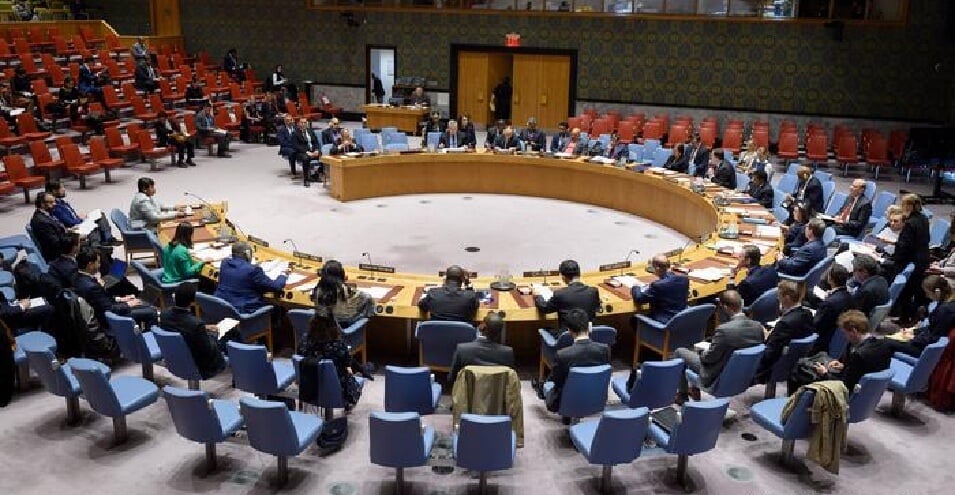
This statement was issued during a Security Council meeting held on Tuesday, December 14, regarding the revival of the JCPOA and the implementation of UN Resolution 2231.
According to the JCPOA agreement reached in 2015 between the Islamic Republic and the P5+1 group of Security Council members and Germany, as well as UN Resolution 2231, which is based on this agreement, international sanctions against the Islamic Republic will be lifted in exchange for limiting Iran's nuclear activities.
In 2018, following the Trump administration's withdrawal from the agreement and the imposition of "maximum sanctions" against Iran, the Islamic Republic reduced its commitments under the JCPOA and resumed enriching uranium to a level above 3.5 percent, stockpiling this material, and rapidly developing its centrifuge technologies.
The statement by the three European countries, read by French Ambassador Nicolas de Rivière at the UN Security Council meeting, criticized Iran's approach of "ignoring the agreements reached in the six rounds of negotiations in the final months of the Rouhani government in Vienna."
The statement said that the new Iranian government “has retreated from the agreements reached after several weeks of difficult negotiations in Vienna and has put even more ambitious demands on the table.”
The statement refers to the six rounds of negotiations that were underway between the 4+1 group and Iran from January of last year until the end of the Rouhani administration in August of this year to revive the JCPOA and return the United States to this agreement, and according to officials in the Rouhani administration, up to 80 percent of the issues and differences between them had been resolved.
Three European countries have said that Iran should take advantage of the open doors of diplomacy and demonstrate its determination to prevent the collapse of the JCPOA and reach an agreement that is in line with the interests of the Iranian people.
German Ambassador to the United Nations Anthea Linderze also said at Tuesday's Security Council meeting that Iran's nuclear actions over the past six months are inconsistent with the provisions of the JCPOA agreements and that "time (to reach an agreement) is rapidly running out."
Takht-Ravanchi: Iran's conditions are in line with the JCPOA and Resolution 2231
The Islamic Republic is accused of drastically reducing its JCPOA commitments in recent months and of placing more and more restrictions on the monitoring of its nuclear activities by IAEA agents.
Ms. Linda Thomas-Greenfield, the US representative to the UN, also called on the Iranian Security Council to first show its seriousness and determination at the negotiating table in order to advance the Vienna talks and to immediately return to compliance with the JCPOA agreement.
Majid Takht Ravanchi, Iran's representative to the United Nations, rejected the accusations of the three European countries and the United States, warning them against "making any mistakes" and saying that "Iran's demands in the Vienna talks are in line with the spirit of the JCPOA and Resolution 2231."
He described Iran's demand as "full, timely, unconditional, and verifiable implementation of the JCPOA, no more, no less," adding: "Any attempt to link the implementation of the JCPOA to unrelated issues or to consider expanding or expanding its clauses is absolutely unacceptable and doomed to failure."
Western countries that agreed to the JCPOA say they expected the 2015 JCPOA agreement to be a catalyst for Iran to reconsider its approach and regional policies and strategies and limit its missile program; an expectation that has not been met.
At the beginning of the Security Council meeting on Tuesday, UN Under-Secretary-General for Political Affairs Rosemary Declaro called on the United States to lift sanctions on Iran. She also called on Iran to abandon actions that are inconsistent with its commitments under the JCPOA.
Grossi's concerns and Iran's optimism about reaching an agreement with him
Hours before the Security Council meeting, the Associated Press published the transcript of a long interview with the Director General of the International Atomic Energy Agency (IAEA), in which Rafael Grossi expressed concern that there was no clear picture of the country's nuclear activities, given Iran's restrictive measures on the work of the agency's inspectors.
The Agency considers, in particular, the Islamic Republic's prevention of replacing the memory cards of the cameras installed at the TESA facility in Karaj, which is engaged in research and production of advanced centrifuges for uranium enrichment, as a fundamental limitation in monitoring Iran's nuclear activities.
Grossi also said in the interview that he does not claim that Iran is building nuclear weapons, but that the level of enrichment that the country is currently doing is mostly done by nuclear-weapon states.
Hours after the publication of this interview with Grossi, Saeed Khatibzadeh, spokesman for the Ministry of Foreign Affairs of the Islamic Republic of Iran, said in an interview with the English-language Islamic Republic Television Network (Press TV) that progress had been made in talks between Mohammad Eslami, the head of the Atomic Energy Organization of Iran, and the Director General of the International Energy Agency.
Without going into details, he added that "the ongoing talks between Islami and Grossi have led to progress and narrowing of gaps on several issues of mutual interest, and the parties are close to an understanding."
Source: DW