The consequences of high gasoline prices dominate the Yalda table
Faramarz Tofighi, head of the wage working group of the Supreme Center of Islamic Labor Councils, says that the increase in gasoline prices has had a 12 to 18.3 percent impact on the increase in the prices of goods and services.
ILNA News Agency, publishing this article and referring to the Iranian authorities' statements in the early days of the gasoline price increase to contain its inflationary effects and then to withdraw them and accept the inflationary consequences of the 2.5 to 4 percent increase in gasoline prices on inflation, writes that field observations indicate that the price increase is much higher than these figures.
About a month ago, the government increased the price of quota gasoline by 50 percent and free gasoline by 200 percent. The Iranian Statistical Center has not yet published inflation for December, but inflation for November of this year was reported to be around 41.4 percent.
Tofighi also told Mehr News Agency that the current minimum wage for workers does not even cover one-third of household expenses.
He said, "With the rise in gasoline prices, the wage cost coverage rate has dropped below 30 percent, and this decline is a disaster. These numbers show that currently, wages do not even cover one-third of costs."
The minimum wage for workers in Iran is set at 2 million Tomans.
ILNA, referring to the dollar's surge from 11,000 tomans to over 14,000 tomans after the increase in gasoline prices, wrote that December is the first month in which gasoline inflation is expected to dominate the basket of goods: Many essential household goods, including vegetables and fruits, as well as bread and whole grain items, experienced price increases of several dozen percent.
So far, Iranian officials have mostly tried to prevent price increases through "orders and words," including Hossein Modarres Khiabani, Deputy Minister of Commerce and Industry, who has said, "Any price increase under the pretext of changing the price of gasoline in the market is illegal, and violators will definitely be dealt with legally."
He claims that the increase in gasoline prices has a "minor effect" on the prices of various goods and services.
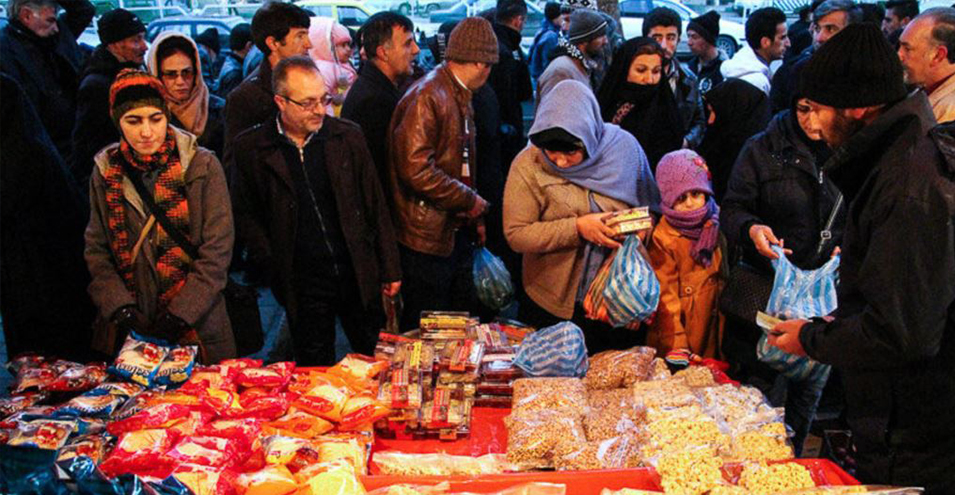
ILNA News Agency has also published another report, calculating that the cost of a Yalda dinner for a group of 6 to 8 people amounts to half a million tomans. In other words, if a worker wants to set aside a regular Yalda dinner, he or she must set aside a quarter of his or her salary.
In this context, Tofighi says that after the wage increase in 2019, at the beginning of the year, wages covered about 45 percent of household expenses, but since the beginning of this year, purchasing power has gradually decreased, so that before the government's decision to increase gasoline prices, the share of wages in covering living expenses reached 32 to 33 percent, and monthly expenses were effectively three times income.
Reports indicate that with the increase in gasoline prices, the price of cars has also increased significantly.
Normally, a rise in gasoline prices should negatively affect car sales, but in Iran, as inflation soars and the value of the rial falls, people are flocking to the coin, currency, and car markets to preserve the value of their rial assets.
In this regard, Alireza Pourhassani, a member of the Automobile Exhibitors and Dealers Union, said that with gasoline rationing, dual-fuel vehicles have become at least 15 million tomans more expensive, and the prices of vehicles whose production has been stopped due to the embargo, such as the Brilliance and Sandero, have increased exponentially.
Source: Radio Farda