Medical staff testify about the government's efforts to turn medical centers "into part of the killing machine"
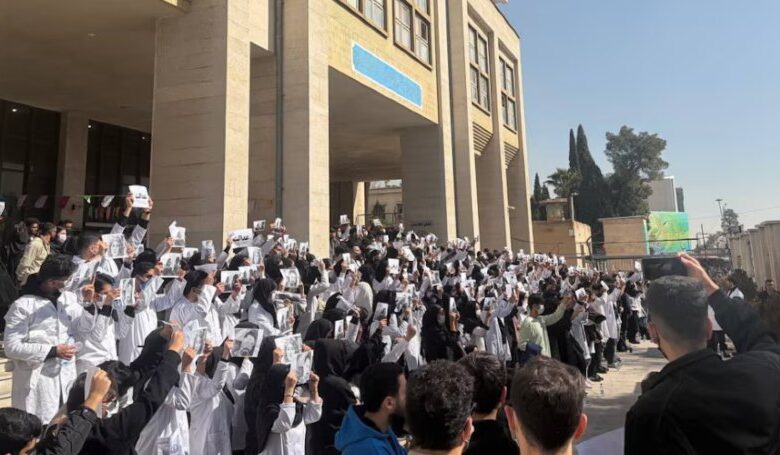
The Norway-based Iranian Human Rights Organization published a report on widespread human rights violations by the Islamic Republic in Iranian medical centers.
The report, published on February 4, says that a collection of direct testimonies from doctors and medical staff from various cities in Iran has reached the Iranian Human Rights Organization, showing that the Islamic Republic had turned hospitals and medical centers "into part of a killing and suppression machine" during the suppression of the January protests.
The report also cited accounts of the deliberate killing of wounded protesters, the kidnapping of the wounded from hospital beds, the arrest of medical personnel, the denial of medical treatment to citizens, and the mass burial of the dead.
In part of the report, a medical staff member was quoted as saying that the situation resembled "real war conditions."
The Iranian Human Rights Organization (IHRO) has cited the testimonies of several medical staff members from different parts of the country in its report. What these individuals have said all points to a severe, bloody, and organized repression against the protesters.
According to this report, a doctor in Lorestan confirmed reports that had been published before the ventilators of protest victims were disconnected in some hospitals, saying, "For example, the injured who had a tube in their trachea and were connected to an oxygen machine had the tube removed from their mouths and were put in the morgue while they were still alive."
An eyewitness from Lorestan province also confirmed that security officers transported the bodies of the dead to the hospital yard in “Mihan ice cream freezers,” an accusation that had been leveled against the Mihan dairy company during previous rounds of nationwide protests in Iran. However, Mihan executives denied involvement in the bloody crackdown on protesters at the time.
Another point that is repeated in the witnesses' accounts is the issue of receiving "shooting money" from the families of protesters, a trend that relatives of a number of protest victims have confirmed in interviews with Radio Farda.
Relatives of those killed in the January protests have said in an interview with Radio Farda that the Islamic Republic's security agencies have demanded exorbitant sums of money in exchange for the return of the bodies of their loved ones.
According to those interviewed, government officials told them to sign a document stating that the deceased was a security or Basij officer or was killed by protesters in exchange for the body being handed over. According to these individuals, if the family refused, the body could only be handed over by paying a large sum.
The human rights organization's report states that an eyewitness told the human rights organization that the families of the killed were told that if they did not accept the declaration of their loved ones as "Basijis", they would have to pay "seven hundred and fifty million to one billion tomans in compensation."
The Iranian Human Rights Organization also cited a doctor working in several hospitals in Tehran as pointing to the registration of fake medical records. According to the doctor, “If the wounded shot during the protests are admitted to the hospital, they are treated for fake causes, such as accidents or tumors.”
The report mentions a high number of deaths caused by bullets to the head.
The aforementioned report states that many of the wounded have abandoned their treatment process and sought secret and unofficial treatment for fear of being attacked by security forces.
Another point raised in the recent report is the enforced disappearance of injured and treated protesters. Accordingly, a number of injured patients have been transferred to unknown locations by security forces, and their fate remains unclear.
The Iranian Human Rights Organization has also provided statistics on doctors, nurses, and other medical staff who have been arrested for insisting on carrying out their duties of treating and assisting the wounded. The organization writes that security forces have raided the homes and clinics of medical staff, violently arrested them, and destroyed their property.
The report mentions the names of 35 detained medical staff members.
The Iranian Human Rights Organization has also reported that in addition to medical staff members who have been targeted for violence due to their loyalty to professional and ethical principles, some government-affiliated management elements in medical centers have also collaborated in the killing of protesters.
Mahmoud Amiri Moghadam, director of the Iranian Human Rights Organization, has considered the testimony of doctors in the organization's recent report as evidence of the Islamic Republic's systematic use of hospitals as a tool of repression and murder.
Mr. Amiri Moghadam stated in the introduction to this report that "deliberately cutting off respiratory systems, preventing treatment of the injured, and detaining patients from hospital beds are examples of crimes against humanity and a sign of the complete collapse of any moral and legal standards in this government."
The Iranian Human Rights Organization has called on the World Health Organization to investigate reports of widespread human rights violations in Iranian healthcare facilities. According to the organization’s director, “these findings are essential to protect human lives now and to ensure accountability and justice in the future.”
Earlier, the Supreme Council of the Iranian Medical System had issued a statement expressing "serious concern about the physical, psychological, and occupational safety of medical staff" in the process of suppressing the January protests, and had called on relevant authorities and institutions to prevent "threatening or interventionist" actions.
During the bloody crackdown on the January protests, in addition to thousands of deaths, tens of thousands of protesters were injured and wounded in every corner of Iran, but official statistics on the number of injured have not yet been published. The human rights website HRANA has announced the number of people injured in the January protests as at least 11,000. Human rights organizations say the real number could be much higher than these figures.
Source: Radio Farda