Judicial verdicts issued against 285 dervishes despite protests over lack of respect for their rights
While the Tehran prosecutor announced that judicial sentences had been issued for many of the arrested dervishes, reports indicate that the dervishes did not attend the court session and that heavy sentences were issued against them.
Abbas Jafari Dolatabadi said at an administrative meeting of the Tehran Prosecutor's Office on Monday, July 15, that sentences had been issued for 285 people "involved in the March riots of last year."
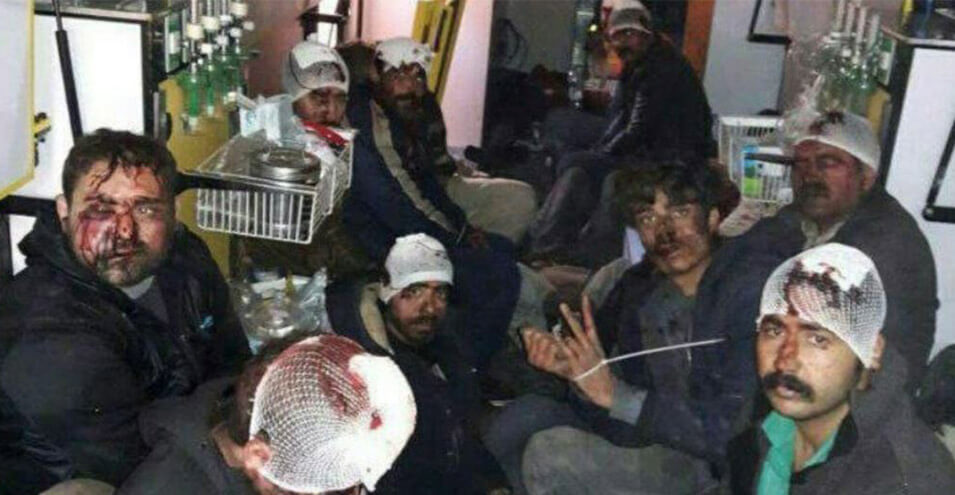
A gathering of Gonabadi dervishes in front of the Pasdaran police station on the last day of February last year to protest the arrest of an elderly dervish turned violent with the intervention of plainclothes officers and police forces.
During these clashes, which continued until March 1, several police and Basij officers were killed and hundreds of Gonabadi dervishes were arrested. Security and judicial authorities call those arrested elements of the unrest.
In recent days, there have been numerous reports of harsh sentences being handed down to arrested dervishes; including Amin Soleimani, Reza Nematollahi, and Hesam Moeini, who were each sentenced to 7 years in prison, 74 lashes, a 2-year ban on membership in groups, media, and online activities, and a 2-year ban on leaving the country. Akbar Dadashi was sentenced to 6 years in prison and 74 lashes, Musa Fazlipour, Hossein Jashan, and Omid Mahdavi were sentenced to 2 years in prison, and Kian Nejad Hasani was sentenced to 1 year in prison.
Also, according to the ruling of the Revolutionary Court, presided over by Judge Ahmadzadeh, Nazila Nouri, Avisha Jalaluddin, Sima Entesari, and Shima Entesari were each sentenced to five years in prison.
The rulings come as many Gonabadi dervishes have protested in recent months over beatings during interrogation, lack of access to a lawyer, and lack of a fair trial. A number of dervishes also refused to appear in court because their legal rights were not respected. Other dervishes also considered the ideological questions and some of the issues raised in the indictment to be examples of inquisition and refused to appear in court.
In recent months, alarming news has been published about the violation of the rights of imprisoned dervishes, which has drawn reactions from international organizations. For example, on May 16, the International Federation of Human Rights Societies, referring to the trial of the detained Gonabadi dervishes with "undercover work," called this action a "farce of justice" and a "blatant violation of international standards."
In March of last year, the US State Department, while condemning the repression of the Gonabadi Dervishes, reacted to the suspicious death of one of these dervishes in detention, describing it as worrying.
Source: Voice of America