Arsham Ebrahimi’s Uncle: We Paid a Price for the System, But Our Innocent Child Was Killed
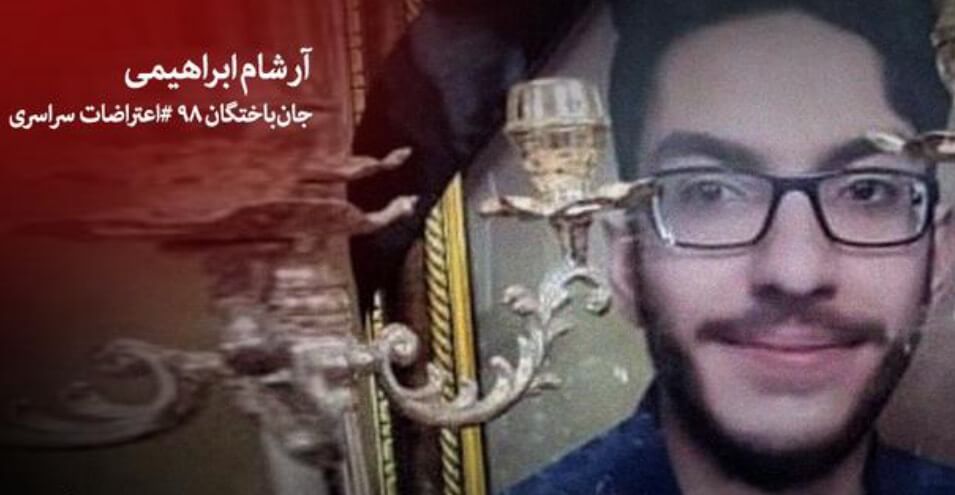
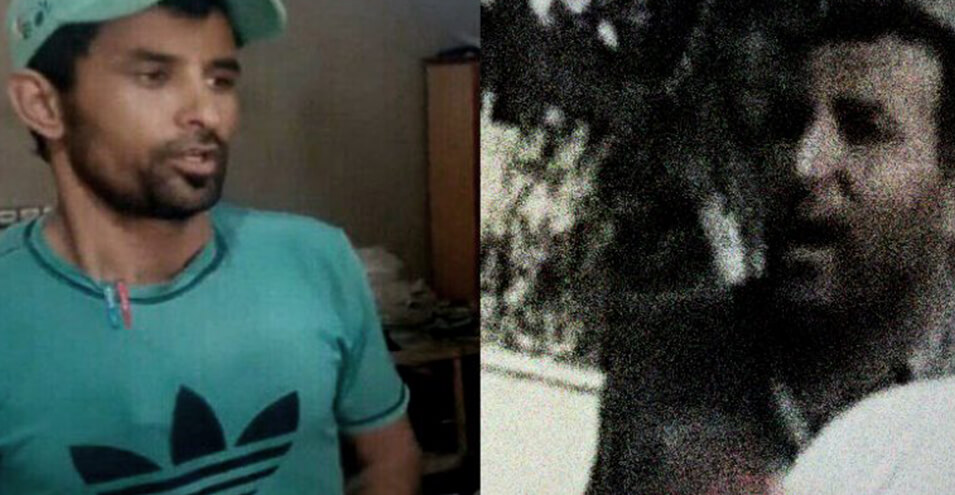
Arsham Ebrahimi was one of those killed on November 25 in Isfahan. His father was a prisoner of war in Iraq for eight years. Arsham’s uncle has many unanswered questions that he has shared with Deutsche Welle Persian Service.
Arsham Ebrahimi was 21 years old and dreamed of studying dentistry. However, on November 25, he was killed by a gunshot to the lower back area.
Behzad Ebrahimi, Arsham’s uncle, tells Deutsche Welle Persian Service that his nephew was not political at all. He was on his way home when he encountered the crowds on November 25 in Isfahan. He got stuck in road blockages caused by street protests and, upon his worried father’s phone call and advice, abandoned his car in the middle of the congestion and began walking toward home on foot.
But he never made it home.
Four days later, on Wednesday, November 29, his body was handed over to his family only after receiving a commitment that he would be buried at night.
Arsham’s father was 17 years old when, despite his parents’ objections, he went to the Iran-Iraq war front and was captured that same year. He was a prisoner of war in Iraq for eight years. Arsham’s uncle says the marks of torture and beatings are still visible on his brother’s body.
Behzad Ebrahimi, Arsham’s uncle, was also 16 years old when he went to the front. He says: “We paid a price for this system. We paid a price for our country. It was not right that our innocent child should be killed this way.”
He recalls the time when, without his parents’ permission, he went to the front with his brother (Arsham’s father) to defend their homeland. He believes he cannot question his past, which was full of efforts to preserve the country: “We cannot question our own past, but we do not approve of the system’s current performance.”
Behzad Ebrahimi says nothing is in its right place now. He says: “They have poured iron filings in front of the carpenter and put wood in front of the blacksmith. This must change, it must be reformed.”
He says that because of his job (building stone production), he deals with many people and witnesses what economic pressure and inflation have brought upon people: “Those who have money, if gasoline costs ten thousand tomans, it wouldn’t hurt them, but ordinary people found even one thousand toman gasoline difficult, let alone now that it has tripled.”
Nevertheless, he believes people do not want to change the system: “Much blood has been spilled for this system. If the system is to be changed, much more blood will be spilled again, many more losses will occur. People don’t want this. We demand reform of this system.”
Arsham’s parents had only this one son and two daughters. His uncle says the condition of these parents is indescribable. He says he has no doubt that many innocent people were killed during the recent protests, “our Arsham is an example.”
Now they have hired a lawyer to file a complaint. Against whom? He doesn’t know. He says it is still not clear to us how this happened and who fired the shots, but immediately says that the handling of protesters in recent events was not the right approach at all.
Hidden in his words are dozens of questions: Why should his brother’s son, who was a prisoner of war in Iraq for eight years, have to be killed by security forces of the “military” system that he and his brother paid so much to preserve? Why should his young nephew be buried at night? Why should the response to people’s protests, whose grievances about inflation and rising prices he witnessed with his own eyes, be answered with bullets? Why should the future of the system, for which blood has been spilled, turn out this way?
But Arsham Ebrahimi’s uncle has no answers to these questions. He only says: “Our family did not fall apart during my brother’s eight-year captivity, but with Arsham’s death, we have fallen apart.”
Source: DW