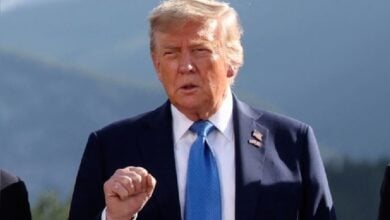
A cry from Evin, a direct accusation from a imprisoned lawyer against Ali Khamenei
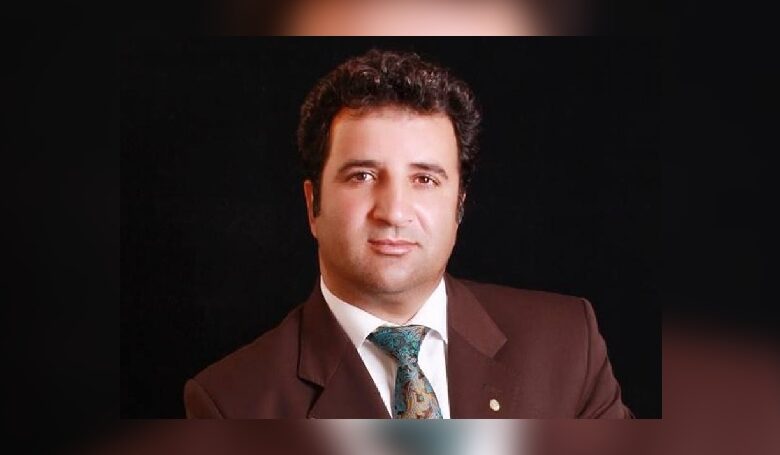
The outcry of Mohammad Najafi, a lawyer imprisoned in Evin, exposed Ali Khamenei's role in the bloodshed by rejecting the referendum.
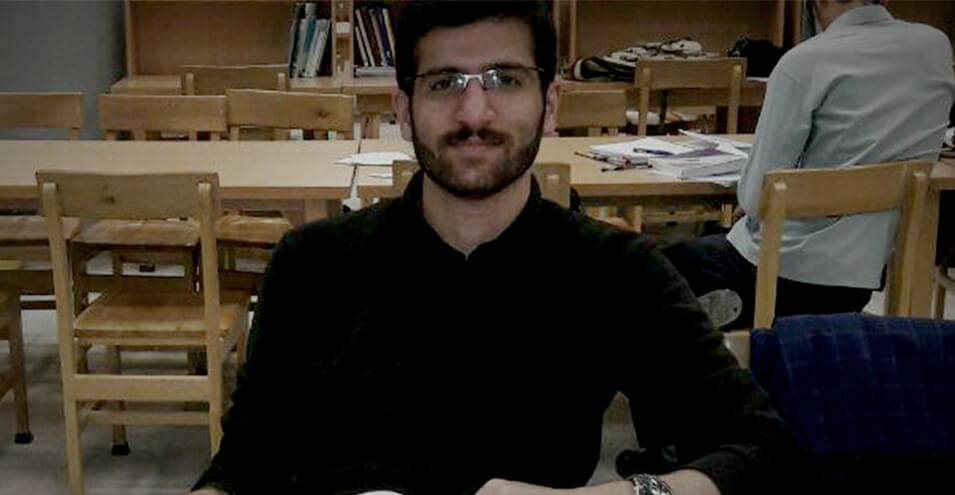
A short audio message from inside Evin Prison once again revealed the deep divide between the Iranian government and society; a message in which Mohammad Najafi, a lawyer for the prisoner and human rights activist, in an unprecedented and frank tone, holds Ali Khamenei directly responsible for the country's descent into violence, bloodshed, and political collapse.
In this message, which was released from inside Evin Prison, Mohammad Najafi identifies the government's refusal to accept the public demand for a referendum as the root of the widespread protests and current crises in the country. Addressing the Leader of the Islamic Republic, he says: "I had warned you to make a "big decision" for the sake of Iran and to prevent war and slaughter, and to accept the referendum so that it does not cost the blood and force of the people, but you did not make a decision, you did not die and fight."
These remarks come as Iran has witnessed one of the most widespread and bloody waves of popular protests in recent months, and the violent suppression of protesters has sparked widespread domestic and international reactions. In his message, Najafi emphasizes that the closure of all avenues for reform, civil protest, and political participation has brought society to an explosive point.
Mohammad Najafi, a lawyer and prominent human rights figure, has been the target of security pressure for years for pursuing cases related to killings, torture, and violations of the rights of political prisoners. He has been arrested numerous times and sentenced to a total of more than 14 years in prison; sentences that, according to human rights organizations, were issued solely for exercising his right to freedom of expression and performing his professional duties as a lawyer.
In the continuation of this audio message, Najafi, in a much harsher tone, accuses Khamenei of being directly responsible for the bloodshed by abusing religion, saying: "In the name of Islam and religion, he has shed the blood of the youth of the homeland and built minarets from the corpses." A phrase that clearly indicates the depth of the speaker's anger and frustration with the power structure in Iran.
The imprisoned lawyer also describes Khamenei as a leader who is "up to his waist in the blood of the people," and goes on to say to him: "You have turned your fellow countrymen against each other, the blood of both sides is on your shoulders. You are the one who closed all avenues for reform and protest."
At the end of his message, Najafi paints a bleak picture of the country's situation and says: "We must cry blood for a nation whose leader is Khamenei."
Mohammad Najafi's message from prison is not just a personal protest, but a political indictment against a structure that critics say has pushed society toward violence by eliminating the ballot box, suppressing dissenting voices, and closing any peaceful path to change. In recent years, calls for a referendum as a low-cost way to overcome the crisis have been repeatedly raised by civil society activists, lawyers, and even some political figures, but have always been met with a resounding rejection by the government.
Now, the voice of a prisoner's lawyer from Evin Prison has brought this question back to the forefront of public opinion: "When all roads are closed, who is responsible for the blood that is shed?"
Mohammad Najafi's message from inside Evin Prison cannot be considered merely a personal protest or an emotional outcry; it is the naked formulation of a political reality: "Violence is a direct product of political obstruction, not a sudden reaction from the street."
In all political systems, the referendum is the last safety valve before a social explosion. When the power structure cannot withstand even this minimal tool, it effectively confronts society with a choice: either absolute surrender or costly protest. The Iranian experience has shown that the government not only does not encourage surrender, but even criminalizes peaceful protest.
What Najafi refers to as the “great decision” is precisely this historical point, the moment when the leader of a system must choose between maintaining power at all costs and preserving the lives of the people. Refusing to hold a referendum, especially in a situation of widespread crisis, is not indecision, but a conscious decision; a decision for which the cost is paid not by the rulers, but by the citizens themselves.
A government that closes all avenues for reform, stifles the media, eliminates parties, suppresses protesters, and imprisons human rights lawyers can no longer speak of “chaos.” In such a structure, protest is not a deviation, but a natural reaction of society to complete blockage.
The importance of Najafi’s message is that it shifts responsibility from the level of “street incidents” to the top of the power pyramid. When he says, “You have caused your fellow countrymen to die, the blood of both sides is on your neck,” he is actually referring to a fundamental principle of politics: “He who closes the legal avenues is the mastermind of violence, even if he does not personally take up arms.”
The bloody suppression of protests, the imprisonment of critics, and the complete elimination of the possibility of political participation all demonstrate that the problem in Iran is not “intermittent mismanagement” but a crisis of structural legitimacy. In such circumstances, the call for a referendum is not a radical demand, but at least a political rationality; a demand whose rejection is effectively a green light for continued bloodshed.
Najafi's voice from Evin is a bitter reminder of the fact that prisons in Iran are no longer places to silence voices, but have become unwitting platforms for exposing the truth. A truth that says: "When voting is banned, the street takes the place of the ballot box, and when the ballot box is removed, the one responsible for the bloodshed is clear."
#Mohammad_Najafi
#Evin
#HumanRights
#Referendum_banned
#political_oppression
#Iran_Protests
#Khamenei
#IranProtests
#HumanRightsIran
#PoliticalCrackdown