Internet shutdown, collapsed economy, Iran on the path to digital blackout and billions in damages
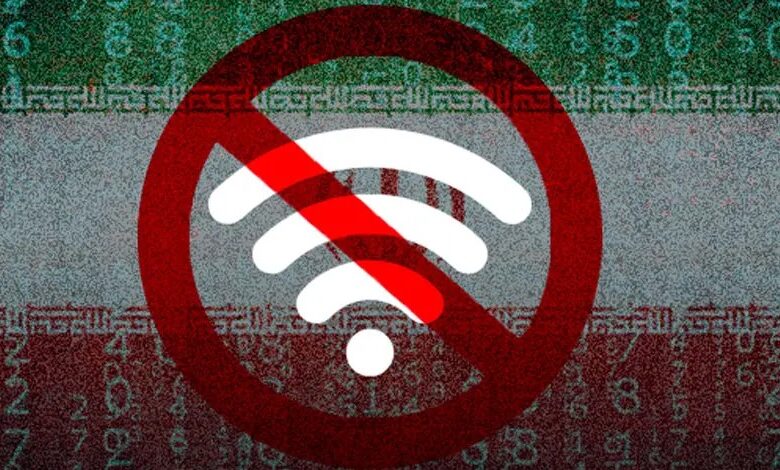
The internet outage, the collapsed economy that followed, and reports of a long digital blackout and heavy damage to the economy and citizens' lives.
The ongoing disruption and widespread outage of the global internet in Iran has now become one of the longest periods of communication restrictions in recent years; a situation that has not only disrupted the daily lives of citizens, but its economic consequences have also become increasingly worrisome.
According to estimates, the duration of the global internet outage or serious disruption has reached dozens of days, and the total hours of this restriction have exceeded 1,000 hours. During this period, users have been able to access the free internet only through filtering bypass tools, which are expensive and of limited quality.
In addition to the social and psychological consequences, economic activists warn of the heavy losses this situation will cause. Afshin Kolahi, head of the Knowledge-Based Commission of the Iranian Chamber of Commerce, has announced that each day of internet outages causes direct losses of between $30 and $40 million to the country's economy, and when indirect effects are taken into account, this figure reaches about $80 million per day.
To make these damages more tangible, he explained: "The cost of building the Karaj "B1" bridge is about $20 million, and the cost of building each megawatt of a power plant requires about $3 million in funding. In practice, we witness the destruction of several large bridges and power plants every day; but because this destruction is not tangible and visible, there is no necessary sensitivity to it."
According to experts, this amount of damage can be compared to the economic consequences of major crises or even military conflicts, which demonstrates the importance of internet infrastructure in the modern economy.
Internationally, reports from organizations such as NetBlocks and Access Now show that internet shutdowns in various countries, including Iran, have become a tool for controlling unrest in recent years, while simultaneously causing billions of dollars in damage to economies. These reports emphasize that the digital economy, online businesses, and even basic urban services have become heavily dependent on stable internet access.
In Iran, despite weeks of restrictions, there is still no clear vision for the return of a free internet. Government spokeswoman Fatemeh Mohajerani responded to the situation by saying, “Reopening the internet is not a matter that is in our hands, and as soon as we receive official news from official sources, we will definitely announce it.”
Meanwhile, debates about unequal access to the internet have also intensified. There have been reports of special internet services being provided to specific groups, including business people and certain users, although officials have denied this. Minister of Communications Sattar Hashemi has rejected these claims, saying that fair access to the internet is the right of all people, but has not provided details on when restrictions will be lifted.
In contrast, some other officials have announced that they are actually creating limited access for specific groups. Mohsen Pasha, deputy director of the National Cyberspace Center, also announced: "A list of businesses has been received from five main institutions and organizations, including the Nasr Organization and the Chamber of Commerce, and the process of connecting them is underway. Consultations are underway to reopen IPs related to essential public needs."
At the same time, digital activists are warning about the changing nature of the internet in Iran. Hamed Bedi, an activist for free internet access, said: “What is happening in Iran today is not a partial shutdown of the internet, but its complete replacement with the national information network and the transformation of the free internet into a secondary and exceptional service.”
He also emphasized: "Today, we no longer have anything called the Internet. What we have now is a national information network on which domestic services are available, and sometimes, at the discretion of the authorities, part of the Internet is made available to the public in a filtered form."
According to the digital activist, the spread of the Internet in the social class and the increase in the price of filtering circumvention tools have deepened the digital divide. He also explained about the new plans: "The Internet in Peru continues the same path of restriction. To receive it, you must first qualify. Ordinary people practically do not have access to the Internet in Peru."
Bedi added, warning about the future of this trend: "Even if the war ends and the internet is connected in the coming days, there is no guarantee that it will not be cut off again in the following weeks or that it will not be disrupted, slowed down or restricted. So basically, we will not have the internet in the same way as before."
He concludes with a worrying picture of the future: “It’s not just about the loss; it’s about the destruction of the entire ecosystem. No investors are interested in entering this field anymore, and no young people see a positive outlook. Society is returning to a pre-internet era by losing the right to free speech, and even worse, these restrictions have spread to domestic spaces. The magnitude of this disaster is such that focusing solely on the economic damage ignores its broader dimensions.”
Overall, the continuation of this situation has not only exposed Iran's digital economy to collapse, but also seriously jeopardized the future of technological development, employment, and even social communication in the country.