Mohseni Ejei: Accelerating repression, declaring judicial war against protesters
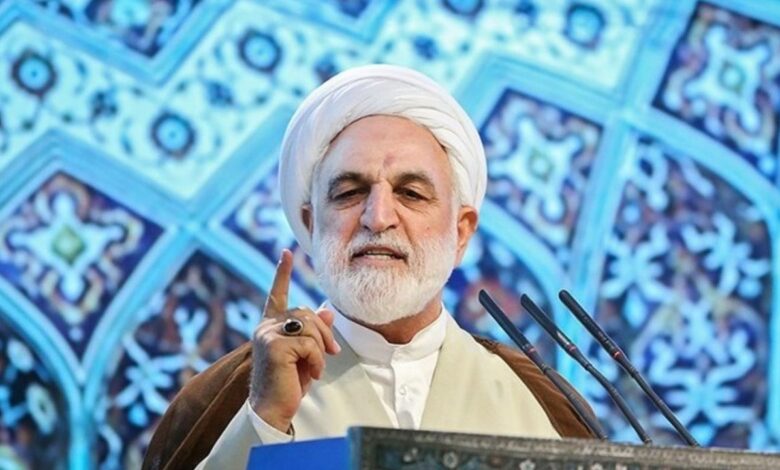
Mohsen Ejei's open threat to "accelerate repression" comes as the Iranian protests have entered a new phase.
In recent days, the Islamic Republic’s judicial wing has made its stance on how to deal with the nationwide protests in Iran clearer than ever by issuing clear and warning messages. The head of Iran’s judiciary, Gholamhossein Mohseni Ejei, has publicly announced the acceleration of the trial and punishment of detainees, a stance that has raised widespread concerns among protesters, analysts, and the international community.
In remarks broadcast on state television, Ejei stressed: "If we want to do something, we have to do it now. If it is done in two or three months, it will not have the same effect."
This sentence, which many observers see as a clear statement of the government's judicial strategy to apply maximum pressure, has an operational message at its core: Iran's judiciary intends to investigate, try, and punish protest-related cases in a short period of time, a process that could include issuing heavy sentences and even executions.
This effort to expedite trials is not just a domestic message, but appears to be part of a response to international and domestic pressure. Ejei also said during a visit to Tehran prisons that some of the defendants, “elements who are responsible for the violence on the streets…,” should be tried as quickly as possible.
State media have also announced that some of these trials will be held in public, with priority given to those who, according to officials, were "armed."
Nationwide protests in Iran, which began with economic demands, have quickly turned into a political and social movement calling for structural changes to the government. Various sources, activists and human rights groups, have reported that thousands of people have been killed and hundreds of thousands arrested so far.
Meanwhile, human rights unions and international media have repeatedly warned that hasty trials can be associated with violations of legal principles, especially if death sentences are issued for protesters or if the hearings lack transparency and compliance with international standards.
Ejei's comments come as the protests and their repression have drawn the attention of international institutions. The United States and its allies have repeatedly warned of the possibility of executions of protesters, and even the US president has announced that any execution of the death penalty will be met with "very strong action."
At the same time, news has also been published that cites American sources claiming that the execution of protesters is not planned at this time, although this has not yet been independently confirmed by official sources.
Human rights experts and political analysts believe that mobilizing the judicial system to "expedite" the handling of the protesters' cases could have two messages:
- Creating psychological deterrence and suppression: Attempting to influence society and protesters with the message that the judicial system can issue the broadest sentences in the shortest time.
- Responding to pressures and reducing the space for protest: By speeding up trials, the government may hope to quell the wave of protests at the community level and facilitate the elimination of potential social force.
At the same time, human rights organizations and experts have warned that such trends could lead to blatant violations of fair trial rights, the emergence of political executions, and increased obstruction of civil space, issues that the Islamic Republic has been repeatedly accused of in recent decades.