"Health activists" sentenced to prison with the cooperation of security agencies for complaining against senior government officials

Three lawyers and two civil society activists have been sentenced to prison for attempting to sue the leader and officials of the Islamic Republic of Iran for their negligent handling of the COVID-19 pandemic in the country.
Referring to the verdict issued against the health advocates, Hadi Ghaemi, director of the Human Rights Campaign in Iran, said: "The punishment of these lawyers and activists sends a message to the Iranian people that if you try to hold the government accountable, the Islamic Republic will throw you in prison."
According to Hadi Ghaemi, "This ruling shows that the Iranian judicial system is constantly cooperating with the government's security apparatus to suppress dissent; Iranians who seek justice and demand justice are treated as enemies, while in return, those in power and the founders of the status quo enjoy complete immunity."
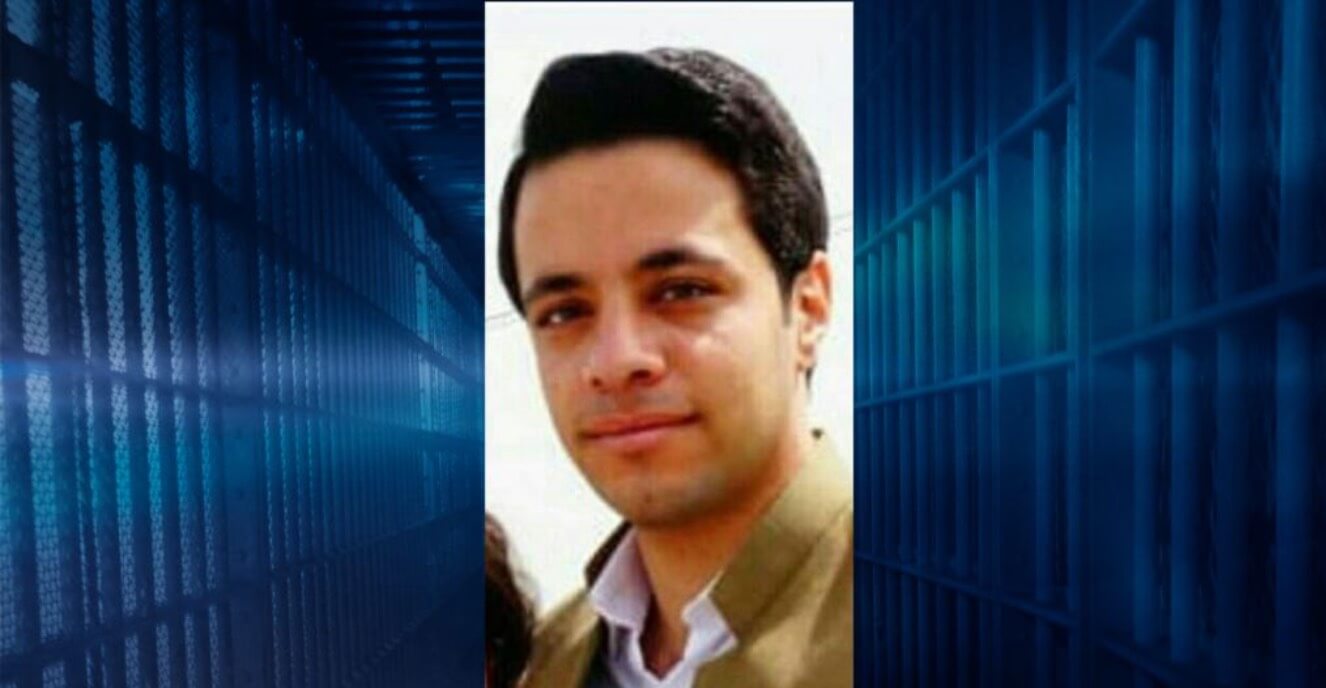
The Tehran Revolutionary Court has sentenced lawyer Mostafa Nili and civil activist Mehdi Mahmoudian to four years in prison each, lawyer Arash Kaykhosravi to two years, and lawyer Mohammad Reza Faghihi to six months in prison. Civil activist Maryam Afrafraz has also been sentenced to 95 days in prison.
Babak Paknia, one of the lawyers in the case, announced the verdicts and said that he will definitely appeal the case.
These rulings come at a time when the Islamic Republic of Iran's government is increasingly cracking down on any peaceful civil activity, hindering activists' efforts to hold authorities accountable for their actions.
Government forces have been violently suppressing protests across the country for months, arresting a large number of civil society activists and protesters, including workers and teachers.
Health advocates were punished as enemies of the government.
Three lawyers and two civil society activists, known as “health advocates,” have attempted to file a lawsuit against senior government officials, including Ali Khamenei, the leader of the Islamic Republic of Iran, who banned the import of American and British COVID-19 vaccines into the country for political purposes. The lawsuit also cited issues such as concealing the true number of infections and deaths among citizens due to the coronavirus outbreak and mismanagement by responsible officials in dealing with the crisis.
Previously, some officials from the Iranian Ministry of Health, who were involved in policymaking to combat the coronavirus pandemic in the country, told The New York Times that they were constantly being interrogated by security and intelligence agents.
It should be noted that according to Article 34 of the Iranian Constitution, which states: “The right to seek justice is an inalienable right of every individual, and everyone can appeal to the competent courts for the purpose of seeking justice.” Basically, the legal prosecution of litigants is also against the Iranian Constitution.
On the other hand, it should be noted that there is no law against "intent to commit a crime" in Iranian law, but health advocates were prosecuted for "intent to file a complaint."
Complaining to government officials is also a legal "right" under Iranian law, but the health advocates were convicted on charges of "gathering and colluding against national security" simply for holding private meetings on the social network "Clubhouse" and discussing and exchanging opinions about this complaint.
On the other hand, the court's ruling disqualifying two attorneys from practicing law was issued despite the fact that the court does not have the legal authority to impose this disqualification (prohibition of practicing law).
According to the court ruling, Mostafa Nili has been banned from practicing law for two years and Arash Keykhosravi for one year. This is despite the fact that according to Article 17 of the Law on the Independence of Lawyers in Iran, only the “disciplinary courts of the Bar Association” have the authority to issue a “suspension of practice” order.
At the same time as the court issued the verdict against the health advocates, the "Human Rights Headquarters of the Islamic Republic of Iran" claimed in a statement that the activities of lawyers in Iran are free and without any threats from the government, and that "a handful of lawyers have been prosecuted not for practicing law, but for committing criminal acts that have no connection to their job and profession as lawyers."
Khamenei's order to ban the import of Western coronavirus vaccines caused serious delays in helping people
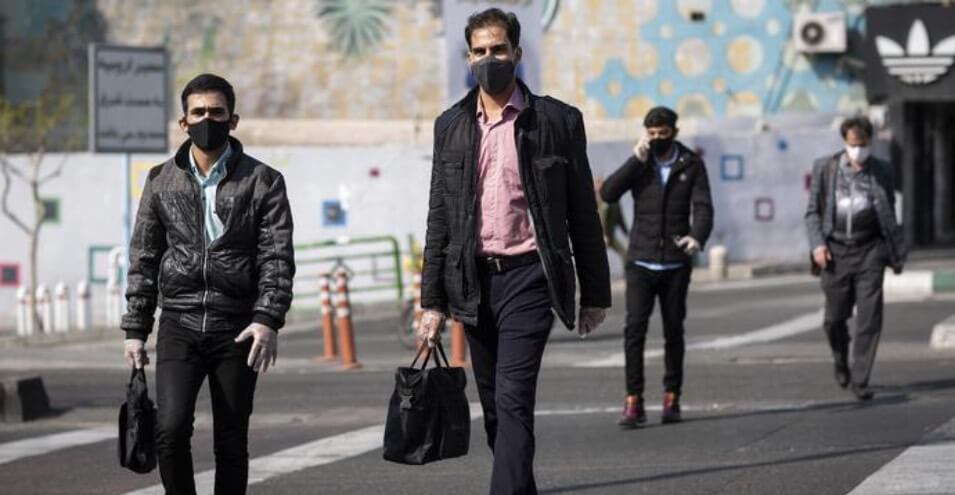
Ali Khamenei's decree banning the import of US and UK-made coronavirus vaccines, as well as Iranian officials' claims of producing domestic vaccines, have intensified the spread of the coronavirus in the country and, consequently, increased the number of deaths from the disease.
The Supreme Leader of the Islamic Republic of Iran’s order to ban the import of vaccines into the country also applied to the COVAX project, an international project to ensure access to COVID-19 vaccines for low-income countries. However, due to the order to ban the import of COVID-19 vaccines, government officials rejected offers to receive vaccines from various countries.
Previously, Ali Akbar Mousavi Khoeiniha, a former member of the Islamic Consultative Assembly, told the Campaign for Human Rights in Iran that "due to the continued ban on the import of vaccines produced in the United States and the United Kingdom by the Iranian Supreme Leader, the import of vaccines from Pfizer, Moderna, Johnson & Johnson, and AstraZeneca has faced a severe and dangerous slowdown."
According to official government statistics, as of July 2, 1401, 141,377 people have lost their lives due to the coronavirus. However, according to many reports, this figure is much lower than the actual figure.
Hadi Ghaemi, director of the Human Rights Campaign in Iran, referred to the order to ban the import of vaccines by the Leader of the Islamic Republic of Iran, and said: "The Leader and senior officials of the Islamic Republic of Iran banned the import of Western vaccines for political motives and in line with their conspiracy theories."
According to Hadi Ghaemi, "The Iranian people died due to the government's gross mismanagement in dealing with the coronavirus pandemic crisis, and now those who tried to hold the responsible officials accountable for this disaster should go to prison."
Hadi Ghaemi emphasized that "the international community must take a strong stance on this injustice and blatant discrimination. The main direction of the international community's approach should be to strengthen the voice of the people and nothing else."
Source: Iran Human Rights Campaign