“Bahai Burial Ban” in Part of Khavaran Cemetery
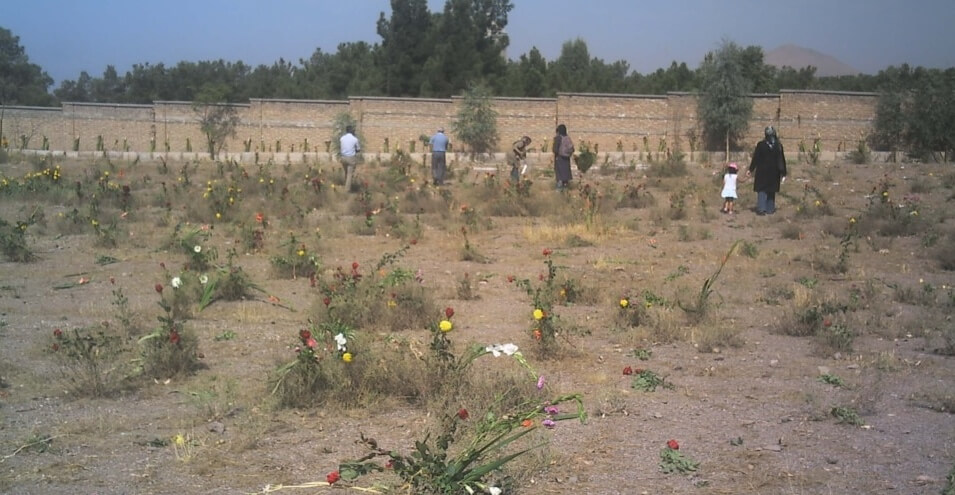
Simin Fahndezh, spokesperson for the Bahai World Community at the United Nations office in Geneva, has announced that Bahais in Tehran have been prohibited from burying their dead in a section of Khavaran Cemetery that is not related to mass graves.
Ms. Fahndezh stated on Twitter that representatives of Behesht Zahra want to “force” Bahais to bury their deceased in the section of mass graves of those executed during the revolution, instead of the usual section of Khavaran Cemetery (known as Golestan Javid), while that usual section has “space for at least the next 50 years.”
Khavaran Cemetery in eastern Tehran is recognized as a symbol of those executed in the 1980s, and some Bahais have been buried there as well.
Simin Fahndezh told Hrana news agency that representatives of Behesht Zahra claim that Khavaran’s mass graves, which were the burial site of many who died after the revolution in the 1980s, have been completely destroyed and emptied.
Cemeteries of Bahai citizens in Iranian cities and villages are being systematically destroyed, and in some cases graves have been desecrated and bodies removed. For example, in November 2018, the body of Shamsih Aghdassi, a Bahai citizen, was buried in the Gilavand area of Damavand, but four days later her family was informed that her body was found in the deserts around Jaban in Damavand’s outskirts.
Previously, security forces had warned Bahais in Gilavand that they no longer have the right to bury their dead in this city.
This prohibition has been applied repeatedly in other Iranian cities, and Bahais have been prevented from being buried in cities such as Tabriz, Kerman, and Ahvaz. In 2014, the Bahai World Community reported that local authorities closed the Bahai cemetery in Ahvaz and built a wall in front of it.
Following the death of a Bahai citizen in Sanandaj, in June 2015, security personnel prevented his cremation in the city and argued that according to a National Security Council resolution, only one cemetery is allocated to Bahais in each province.
Bahai deceased who were previously buried in their own cities must be transferred from throughout the province to a provincial cemetery and buried there under this resolution.
Source: Radio Farda