Billions in Hidden Costs for Yazd’s ‘Missile City,’ Yet People Face Economic Hardship and Human Shield Status
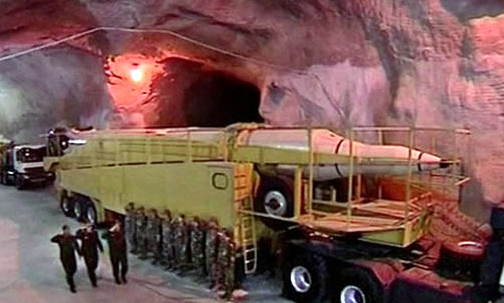
Revealing the hidden costs of Yazd’s “Missile City” tells a story of emptied pockets and the transformation of residential areas into a human shield in the heart of Iran.
In recent years, the development of networks known as “Missile Cities” in Iran has become one of the main pillars of the Islamic Republic’s military strategy; projects that, according to official sources, are designed to enhance deterrence capabilities, but have simultaneously been accompanied by widespread criticism over heavy costs and social consequences. Meanwhile, the facilities known as the “Missile City” in Yazd Province have again come into focus following reports about it being targeted.
The Islamic Revolutionary Guard Corps has repeatedly reported the creation of “Missile Cities” in various locations across Iran in recent years and introduced them as part of the country’s “strategic defense capabilities.” According to officials, these facilities are built deep underground in a network of complex tunnels to remain protected against potential attacks.
However, details regarding construction costs, budget allocation methods, and even the precise location of many of these centers have never been disclosed transparently. This very lack of transparency has fueled mounting criticism; especially given that a significant portion of society is struggling with economic and livelihood problems.
Independent experts believe that constructing such complexes, given their depth, engineering complexity, and required infrastructure, demands enormous capital investments. While no precise official figures have been released, many analyses emphasize that these resources could have been spent on sectors such as healthcare, education, and public infrastructure.
These criticisms have also been widely raised in public discourse and on social media networks. In one published reaction, it stated: “Millions are starving, the country’s money is worthless, there is neither water nor a future; yet billions are being spent on digging 500 meters under a mountain for a Missile City.”
“Saeed Shemirani,” a political activist and human rights civil society activist in America, also reacted to Yazd’s Missile City by writing: “What we didn’t know about the ‘Demonic City’ is that wealthy people have been kept impoverished. The Islamic terrorist criminals knew it well, but the people did not. One of the greatest symbols of the expansion of poverty in Iran is the Missile City in the depths of southwestern Yazd. With a metro system for ballistic missiles within massive granite rock formations.
Automated rails transport warheads and launchers between assembly halls, storage facilities, and approximately 10 explosive exit doors. The missile rises from a 500-meter depth on rails to the surface, is launched, and returns to the depths before bombers can strike the launcher.
The Missile City’s portals have collapsed. Ventilation systems and surface facilities are destroyed. But invisible infrastructure remains untouched. Each missile launch uses a separate exit. Whenever a gate is destroyed, the rail on the underground railway shifts to another route. With each destroyed gate, the Guards fills it with earth and concrete so that after bombing stops, it can be excavated and reopened again.
Now half of Iran’s most expensive city’s infrastructure has been destroyed. 50 percent remains because no bomb can penetrate 500 meters through granite (formed before mammals existed). That is 12 times the maximum weapon penetration depth. This expensive crime has not only consumed Iran’s material wealth but carries other destructive layers.
The enormous amount of water consumed for building the Missile City has been falsely attributed to Yazd farmers for years, placing the people of two provinces against each other. Desiccation, destruction of underground water resources, and land subsidence are among the costs that the “Demonic City” has imposed on Iran, gradually making Isfahan uninhabitable.
Environmental specialists in the 1990s discovered ecosystem collapse, habitat destruction, and ecocide. Through hidden cameras in traps used for wildlife monitoring, species surveys, and protection of natural areas, they saw everything and were widely arrested, tortured, and accused of espionage. “Kavous Seyed Emami” also lost his life.”
These types of reactions reflect the dissatisfaction of parts of society regarding the prioritization of national resources; where military security is placed against public welfare.
In recent days, reports have been published about targeting these facilities near Yazd. Some media outlets reported explosions in mountainous areas surrounding the city, although official authorities have provided limited details and no independent confirmation from international bodies has been released.
Nevertheless, these reports have been sufficient to increase concerns about the location of such facilities, especially in cases where these centers are situated near residential or urban areas.
One of the most serious criticisms raised in this regard is the indirect use of citizens as a “human shield.” Critics say that establishing military infrastructure near urban areas, in the event of conflict, directly exposes civilians to danger.
In this context, one analysis emphasizes: “When military facilities are built next to cities, ordinary people are effectively placed on the front line of danger, without having any choice.”
These concerns have increased especially as regional tensions have risen and the possibility of such centers being targeted has become more relevant than ever.
Projects like “Yazd’s Missile City” have now become symbols of a fundamental question: Have the country’s major priorities been properly defined?
While official authorities emphasize the necessity of strengthening defensive capabilities, critics say that true security only makes sense in the shadow of welfare, satisfaction, and social security of citizens. The lack of transparency in costs, increased economic pressure on people, and potential dangers to residential areas have all made this question more pressing.
What is currently being discussed in Yazd and other parts of Iran is not merely a military facility; it is a symbol of the gap between macroeconomic policies and the daily needs of people who expect the country’s resources to serve their lives and futures first and foremost.