Half of the world's imprisoned journalists are in Iran, China, Egypt and Eritrea.
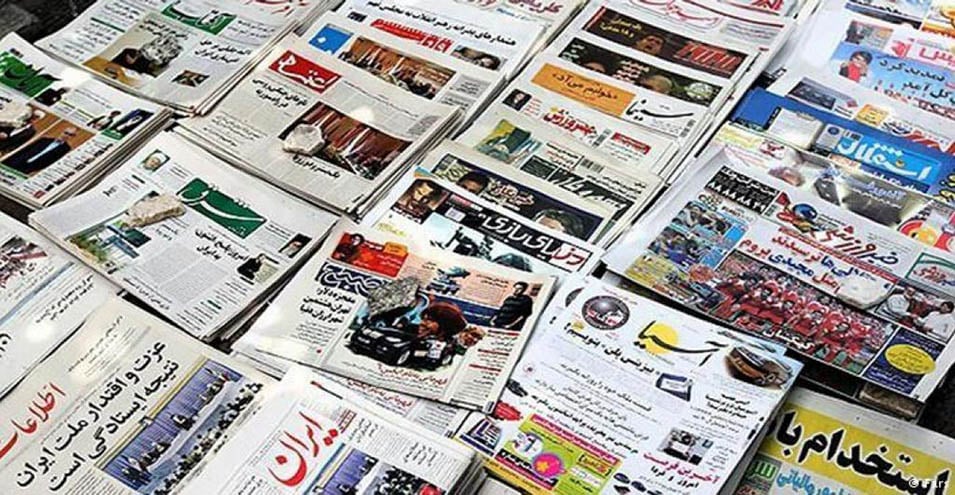
Reporters Without Borders has released a list of the number of journalists imprisoned worldwide and those taken hostage in the past 12 months. There are 153 journalists and 161 citizen journalists behind bars worldwide.
The latest report on the status of press and media freedom in countries around the world
Working conditions for journalists have become more dangerous in some parts of the world. Reporters Without Borders published the first part of its annual press freedom report on Tuesday, December 15.
This section includes statistics on journalists imprisoned for doing their job. As of the publication of this report, in mid-December, 153 professional journalists were behind bars around the world.
Half of this number are in prisons in China, Egypt, Iran and Eritrea. Reporters Without Borders has described this situation as indicative of the poor conditions for press freedom and media in these four countries.
Read more: Human rights experts: Iran must end harassment of journalists
The organization has also criticized the increasing government pressure on journalists in Turkey, which accounted for 11 percent of all journalist arrests in 2015.
In addition to professional journalists, there are currently 161 citizen journalists and 14 media workers behind bars around the world.
Hostage-taking and suppression of independent reporting
According to the non-governmental organization Reporters Without Borders, 54 journalists have been taken hostage in various countries around the world in the past 12 months.
This figure is one-third more than the number of journalists held hostage by armed militant groups by the end of last year.
The annual press freedom report states that the kidnapping of journalists is concentrated in countries that are engaged in civil war.
These kidnappings have occurred in Syria, Yemen, Iraq, Libya and other places where armed militias "seek to gain power and silence critics to achieve it."
In addition to the 54 journalists held hostage as of mid-December, eight others have disappeared around the world with no reliable information about their fate. Reporters Without Borders stressed that the lack of information about the fate of the missing journalists is having a “terrible effect” on the morale of their colleagues.
Michael Rediske, spokesman for the board of Reporters Without Borders, called the above statistics horrifying and added: "These kidnappings show that armed groups in Arab countries embroiled in crisis are stopping at nothing to suppress critical voices and independent reporting."
Classification of terrorist groups
Militants from the Islamic State terrorist network have kidnapped the most journalists in the past 12 months. The group currently holds 18 journalists hostage. After the Islamic State, Yemen's Shiite Houthi movement is next with nine hostages and Syria's Nusra Front with four.
According to the annual Press Freedom Report, 95 percent of journalists held hostage are citizens of the countries where they were kidnapped, and only 5 percent are foreign journalists.
The report states that 79 journalists were kidnapped during 2015, of whom 25 were released by mid-December.
However, the overall number of journalist hostages this year was lower than in 2014, due to the changing situation in eastern Ukraine. In 2014, the most journalist hostages were reported in eastern Ukraine, but in 2015, no journalist hostages were reported in this region.
The number of journalists killed in 2015 will be published on December 28.