Heavy Sentences of Five to Ten Years Prison for Four Journalists in Interview with Mahmoud Alizadeh Tabatabai, Defense Lawyer
After months of waiting and uncertainty about the fate of the legal case of journalists who were arrested in November of last year following the announcement of the topic of “infiltration” by foreign countries in the country’s media, lengthy prison sentences for four arrested journalists were finally announced today. Yesterday, the spokesperson of the Judiciary, Gholamhossein Mohseni Eje’i, announced in his weekly press conference the announcement of these imminent sentences.
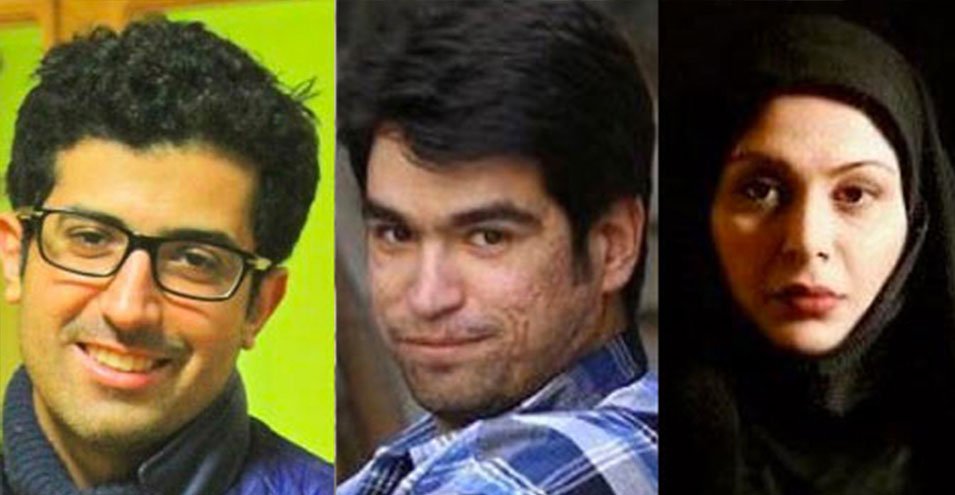
Mahmoud Alizadeh Tabatabai, the defense lawyer for Ehsan Mazandarani and Davoud Asadi, told the International Campaign for Human Rights in Iran that the Revolutionary Court has sentenced journalist Ehsan Mazandarani, editor-in-chief of Farhekhtegun newspaper, to 7 years; journalist Ehsan (Saman) Safarzadeh, international secretary of Andishe Poya publication, to 7 years; Afarin Chitssaz, columnist for Iran newspaper, to 10 years; and Davoud Asadi, brother of Hoshang Asadi, one of the managers of Roz Online website, to 5 years of imprisonment.
According to this lawyer, the court sentenced Ehsan Mazandarani to 5 years imprisonment on charges of assembly and conspiracy to act against national security and to 2 years imprisonment on charges of propaganda activity against the regime. Regarding Mazandarani’s cooperation with foreign media outlets, which some news websites have referenced, he said: “As his lawyer and also Mr. Mazandarani himself, we have not accepted this charge, but the court relied on documents (which we do not accept) and issued this verdict.”
Alizadeh Tabatabai, regarding Davoud Asadi, another political prisoner whose defense he undertakes, said: “He was also sentenced to 5 years imprisonment on charges of assembly and conspiracy to act against national security. Davoud Asadi is the brother of Hoshang Asadi, one of the managers of Roz Online, and received this sentence due to financial connections between him and his brother, while Mr. Davoud Asadi has said that he was unaware of the money his brother was sending and that he was sometimes transferring for what purpose. He was unaware, but unfortunately the court did not accept this.”
Tabatabai also said regarding Afarin Chitssaz: “Ms. Chitssaz was not my client, but I am aware that she has been sentenced to 10 years imprisonment, and her charges, in addition to assembly and conspiracy to act against national security, also included cooperation with foreign governments.” This defense lawyer said he will appeal the sentences issued for his clients and will request a retrial.
An informed source regarding Ehsan Safarzadeh told the Campaign: “The court says he prepared materials that, according to judicial authorities, were against the country’s security, and since these articles were prepared for abroad and payment was received for them, they considered the charge of assembly and conspiracy against national security proven for him, while the lawyer and Mr. Safarzadeh consider these charges baseless. According to this informed source, the lawyer of this political prisoner will also appeal this verdict within the specified deadline.”
Ehsan Mazandarani, Afarin Chitssaz, Ehsan (Saman) Safarzadeh, along with Isa Saharkhiz, journalist and political activist (his verdict has not yet been issued), were arrested on November 11 by the Revolutionary Guards Intelligence Organization personnel, and none of them have been released to date.
Less than a month after the arrest of these journalists, Ahmad Khatibi, a member of the Assembly of Experts, on Monday, December 30, claimed that these journalists had made confessions and spoke of the charge of “complicity with America.” In his speech he claimed: “Recently, journalists who were arrested on charges of complicity with America, in their confessions stated that they took articles from some sources, paid them money, then manipulated the article and handed it over to American newspapers.”
Despite the silence of the Judiciary regarding this case, the Tasnim News Agency affiliated with the Revolutionary Guards also on Monday, February 1, described the charges against the arrested journalists as “cooperation with hostile Western governments.”
Media outlets affiliated with security forces such as Fars had previously claimed that these journalists “were among the agents related to the enemy’s infiltration project in the country who were active in the press and were arrested.” Ali Shirazi, the representative of Ayatollah Ali Khamenei, the Supreme Leader of the Islamic Republic, in the Quds Force of the Revolutionary Guards, on February 1 said: “Soon national media will broadcast confessional footage of individuals arrested in the infiltration plot, and the Iranian people will see behind-the-scenes infiltration.”
Source: International Campaign for Human Rights in Iran