Warning from Former Intelligence Minister About Possibility of ‘Repeating 2009 Events’
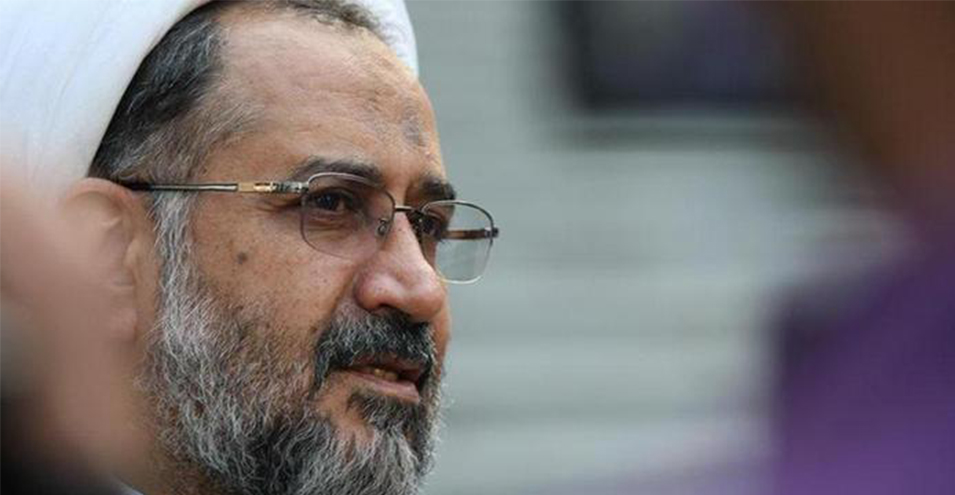
Two former conservative ministers have spoken about efforts by a “deviant current” to prevent the “current aligned with values” from achieving results and registrations for carrying out “sedition.” According to Heydar Moslehi, the enemy this time wants to incite the low-income class.
Mohammad Hossein Safar Harandi, former Minister of Culture and Islamic Guidance, on Monday (April 17) while examining the formation, performance and internal differences of the People’s Front of Islamic Revolution Forces, known as “Jemna,” also addressed the entry of Mahmoud Ahmadinejad and his supporters into the electoral arena.
“Indirect Support for Ahmadinejad from Rouhani”
Safar Harandi, referring to the fact that “the deviant current has separated from the body of the conservative current and been turned into the opposing side’s margins,” said among other things: “The deviant current, given that it cannot achieve results, wants the current aligned with values to fail to achieve results. For this reason, it provides indirect support from the opposing side.”
This member of the Expediency Discernment Council of the System added: “Some of them have explicitly said that if not approved, Rouhani’s presence in the presidency will be certain. For this reason, their organized votes are not cast in the basket of revolutionary forces.” Supporters of Ali Khamenei have called the ninth and tenth presidents Ahmadinejad and his close associates a “deviant current” since the differences between the Islamic Republic’s leader and Ahmadinejad became apparent and escalated.
The former minister of guidance, however, does not believe that the electoral atmosphere will move toward “security or anti-security.” According to him: “Re-entering the electoral arena with a 2009 perspective brings irreparable damage. For this reason, it is unlikely that internal and external enemies will want to carry out a conspiracy.”
Disqualification as “End of Ahmadinejad”
Safar Harandi has meanwhile predicted that Ahmadinejad will not “expose himself to the Guardian Council.” According to this conservative figure, the ninth and tenth president “must save himself from this predicament,” because “disqualification for this person means the end of his career.”
From Safar Harandi’s perspective, if Ahmadinejad “does not reach this stage, there will be opportunity for change and return in the future.”
Mahmoud Ahmadinejad, contrary to the advice of Ali Khamenei, the leader of the Islamic Republic, has volunteered as a candidate in the presidential election. Hamid Baqaei, executive deputy of the tenth president, is also among the most prominent candidates in the election among Ahmadinejad’s supporters. The Guardian Council spokesman previously said that the Islamic Republic leader’s advice to Ahmadinejad could be considered “legal.”
Support for Raisi
Mohammad Hossein Safar Harandi also, while calling the Jemna experience “successful,” evaluated Ibrahim Raisi, one of the most prominent conservative candidates for the presidential election, as “being introduced to public opinion” and claimed: “Mr. Raisi has been well received and the votes of prominent revolutionary figures will be the backing of this person.”
One day before Safar Harandi, Iran’s former intelligence minister spoke of the “enemy’s” plans to influence election votes through “the trick of threatening among people, elites and officials” to create “miscalculation.”
“Inciting the Lower-Middle Class”
Heydar Moslehi, unlike Safar Harandi who considers “enemy conspiracy” “unlikely from a 2009 perspective,” has said: “The enemy has a plan for the social backing of many candidates who have registered, and using the experience of the 2009 sedition, this time wants to incite the lower-middle class, because in 1388 when they brought the upper-middle class to the streets, they were terrified of a simple stirring and fled.”
Supporters of the Islamic Republic’s leader refer to the protest movement against the announced results of the 2008 election as “sedition.”
“Upcoming Sedition”
Heydar Moslehi, while referring to “the design of a long-term plan” by the “enemy,” “intimidation with military option,” and taking advantage of “specific and current infiltration,” mentioned these among the items of this plan and added: “As long as the slogans of the revolution are alive in society, the enemy continues to design sedition and sedition is inevitable.”
The former intelligence minister then referred to the “upcoming sedition” and said: “The sedition that lies ahead must happen during the premiership and guardianship of the Exalted Leader so it can be stopped.”
Moslehi, while wishing longevity for Khamenei, added: “But if this sedition is to happen later, the successor cannot resolve it, like the Montazeri case, which if it had happened after the Imam, no one could have dealt with it the way the Imam did.”
“Calculated” Registrations
The former intelligence minister concluded: “The registrations that have taken place now and some of them for sedition, are frankly calculated. I am saying this based on information I have. Next to a personality, they place a spy to remove him from the running. They did the same thing to Montazeri.”
It appears that Moslehi’s reference to “inciting the lower-middle class using the experience of 2009 sedition” refers to Ahmadinejad and his supporters. “Ahmadinejad’s people” are seeking their best chances among the low-income classes of Iranian society. For this reason, some analysts believe that Hamid Baqaei’s promise to pay a 250,000-tomans subsidy is intended to attract the votes of these people.
Source: DW