Iranian Health Minister: Vaccination will begin on February 11
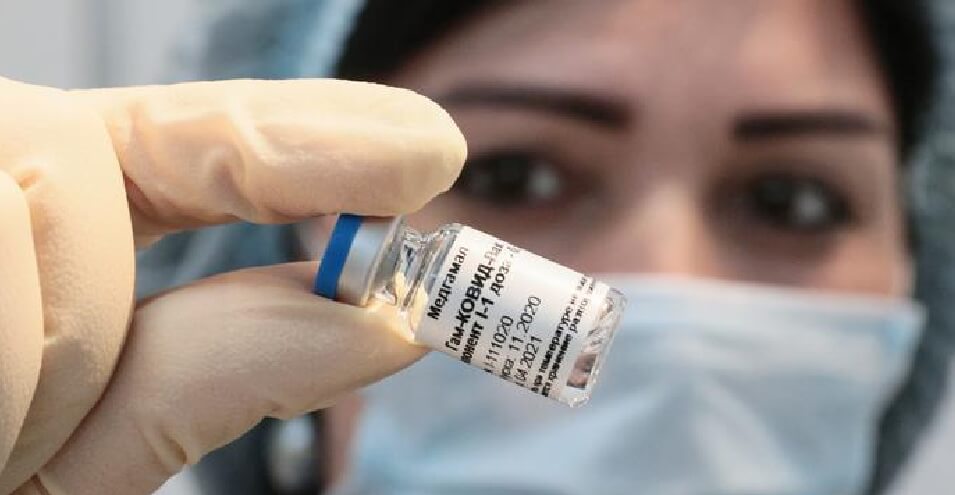
Saeed Namaki, while announcing the start date of vaccination, promised that the Iranian vaccine would also be on the market by spring. Although the clinical trial of the Iranian vaccine has just begun, Namaki described it as "very low in complications."
According to the Minister of Health of the Islamic Republic, vaccination against Covid-19, the disease caused by the new coronavirus (SARS-CoV-2), will begin on Tuesday, February 9.
Saeed Namaki, at the unveiling ceremony of the clinical trial of the "Razi Cove Pars" vaccine, stated that vaccination will begin with people working in the ICU, and then it will be the turn of other health personnel, vulnerable groups in nursing homes, and seniors over the age of 65.
Namaki emphasized that the Iranian government, after evaluating various vaccines, has selected the "healthiest and least risky" ones.
The choice of the Russian vaccine "Sputnik V" has been met with much criticism. In the latest move, 98 members of the General Assembly of the Iranian Medical System Organization declared the administration of this vaccine "unjustified and dangerous."
Earlier, Minoo Mahrez, a member of the scientific committee of the headquarters to combat the coronavirus, said that he considers the import of the Russian vaccine "bad luck for the Iranian people" and is not willing to inject it. However, a test of this vaccine has shown its effectiveness of 91%, but international institutions have not officially confirmed it.
"The Iranian vaccine has few complications"
Regarding research on the Iranian vaccine, Saeed Namaki said, "A vaccine is a vaccine when it has passed various stages of testing," adding, "Today we unveiled a product that is ready for clinical testing on humans."
However, he assured that the vaccine "has very few complications" and "can help a person lose the ability to transmit the virus altogether, which is a very big deal."
After noting that "vaccines have become a political commodity today," the Iranian Minister of Health said: "Our distance with American and Western scientists is due to hegemonic systems that do not allow friendship and affection between the poles of knowledge."
Without citing the source of his information, Ayatollah Khamenei has banned the entry of American and European vaccines into Iran, saying they are ineffective. The Islamic Republic's leader has also called for the production of an Iranian vaccine as soon as possible.
Saeed Namaki hopes that the national vaccine will be available on the market in early spring.
" Empty hospital beds and enough medicine "
The Iranian Minister of Health continued his speech by stating that the Islamic Republic "shone brilliantly in managing the coronavirus, just like other national crises."
He clarified that in Iran, there are "empty hospital beds for both Covid and non-Covid patients, as well as enough medicine."
In recent months, Iranian government officials have consistently emphasized that international sanctions have posed fundamental problems in the fight against COVID-19. They also justify the shortage of medicines to treat many diseases with sanctions.
Statistics of infected and deceased people
According to statistics presented by the spokesperson for the Iranian Ministry of Health on February 10, in the past 24 hours, based on definitive diagnostic criteria, 7,065 new patients with COVID-19 have been identified in the country, of which 544 are hospitalized.
According to Simasadat Lari, the total number of infected people in Iran has reached 1,466,435. 3,789 of them are under care in intensive care units of hospitals.
He announced the death toll from the disease in the past 24 hours at 57. So far, 58,469 people have died in Iran related to COVID-19.
Lari also said that 36 counties are in orange status, 178 counties are in yellow status, and 234 counties are in blue status.