How did Iran's two billion dollars reach the United States during Ahmadinejad's era?
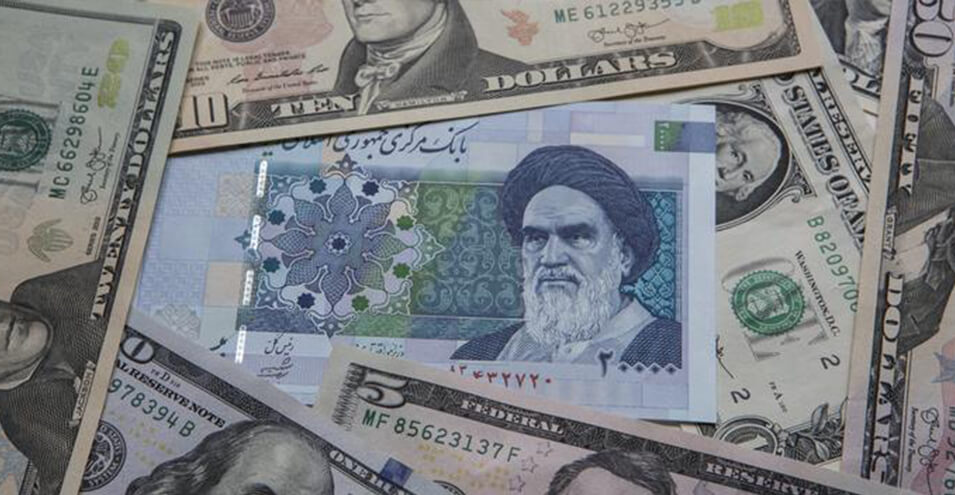
Hassan Rouhani has demanded an explanation from the judiciary about the $2 billion in Iranian money that he says was confiscated by the United States due to the inaction of the Ahmadinejad government. What money is the Iranian president referring to and what is the story behind its confiscation?
Iranian President Hassan Rouhani called for the judiciary to take action and clarify the fate of the $2 billion case, which he said was seized by the United States during the second administration of Mahmoud Ahmadinejad.
Speaking in Yazd today, Sunday, November 10, Rouhani demanded an explanation from the judiciary about "billion-dollar corruption" in Iran, including determining the fate of the Babak Zanjani case. On the other hand, he responded to the claim that "18 billion dollars" had been lost in his government in 2018, calling those making this accusation "immoral."
Referring to the Central Bank report in refuting this accusation, the Iranian President said: "Know that not a single rial or dollar will be lost in this government. It was in other periods that billions were lost and have not been found yet; so do not go the wrong way."
In another part of his speech, Hassan Rouhani also referred to the confiscation of two billion dollars of Iranian assets frozen in the United States in May 2016, and called on all responsible institutions to take action regarding this huge amount of money, which, according to him, was taken out of Iran's hands and appropriated by the United States due to the inaction of the Ahmadinejad government.
The Iranian president called on “all officials” to take action regarding “the two billion dollars of money that went down the throats of the United States, and the government had 10 months to get it back and then gave up.” According to Rouhani, “The Supreme National Security Council approved that the judiciary should quickly handle this case, and there has been no news to date.”
Hassan Rouhani added: "We want this two billion dollar case to be clarified for the people; if today is the day to fight corruption, explain the billion dollar corruption to the people so that the people will be happy and understand."
$2 billion confiscated for "recklessness"
Members of the Rouhani government have previously repeatedly complained about the “delay of Ahmadinejad’s government officials in returning two billion dollars of the Islamic Republic of Iran’s assets to the country.” Among them, Eshaq Jahangiri, referring to the “seizure of two billion dollars of our country’s assets by the US Supreme Court in the course of a legal case against Iran,” attributed this to the “irresponsibility of the previous government.”
In early May 2016, the Iranian president's first deputy absolved the Rouhani government of responsibility for this case, saying: "In the previous government, it was decided at some point that part of the central bank's resources would be managed in Europe. Therefore, with complete recklessness, two billion dollars of American bonds were purchased and kept in a European bank; the United States was also easily able to first freeze these bonds and then confiscate them."
ISNA News Agency, on Sunday, explained the story of the seizure of two billion dollars of Iranian assets by the previous government, writing: "In 2007, from the sale of Iranian oil, the government of Mahmoud Ahmadinejad purchased a quantity of securities through a Luxembourg broker called "Clearstream." This broker kept part of these securities in Europe and another part physically at "Citibank" in New York."
According to the report: "Since, according to the domestic laws of the United States of America, any use of dollars in the banking system anywhere in the world requires obtaining the necessary license from the American banking system, at that time Iranian banks were using dollar services through a type of cooperation called "U-Turn" with non-American international banks, without having a direct connection with the American banking system. After the imposition of new restrictions by the US government against the Islamic Republic of Iran in November 2008 and based on the resolution of the US Treasury Department, Iranian banks were prohibited from using this service."
According to Ali Tayebnia, the first Minister of Economy and Finance of the Rouhani government, since the late fall of 2007, the Luxembourg broker has been warning Iran and announcing that "I can no longer provide security for your resources and it is better for you to transfer these resources from my collection." According to ISNA, at that time, about $220 million of these bonds were sold and their resources were transferred to Iran.
According to the same report, Iranian authorities also had about 10 months after the Luxembourg broker's warning to transfer the remaining bonds into the country after the sale, but "due to reasons including inappropriate market conditions," no action was taken to sell the remaining bonds.
A few months before the end of his ministerial term in the Rouhani government, Ali Tayebnia said on March 8, 2016: "Apparently, as I was told, there was also the inference that since these resources belonged to the Central Bank and not the government, it was not possible to seize them."
Compensation to Americans from Iran's Seized Assets
ISNA writes: "With the implementation of the US Treasury Department's resolution on the prohibition of dollar exchanges (U-Turn) with Iran after November 2008, American banks were prohibited from transferring dollar funds and dollar exchanges with Iran. In 2012, the US Treasury declared all Iranian assets public and an executive order was issued to freeze Iranian assets in the US in cooperation with the government and Congress of this country."
In January 2015, the United States Supreme Court, while accusing the Islamic Republic of playing a role in two bombings, one at the US Marine Corps headquarters in Beirut in 1983 and the other at the Khobar Towers in Saudi Arabia in 1996, authorized Congress and the government to pay compensation to 1,300 Americans totaling two billion dollars from Iran's seized assets in the United States.
On October 23, 1983, a bomb exploded at the US military headquarters in Beirut, killing 241 American and 58 French soldiers. The American soldiers killed and wounded in the attack were part of the international peacekeeping force in Lebanon. On June 25, 1996, a truck bomb exploded at a US military base in the Saudi city of Khobar, killing 19 American soldiers and wounding about 400.
Although US courts found Iran responsible for the two terrorist attacks, and the US Supreme Court upheld the ruling in May 2016, Iran denied responsibility for the attacks. After the Islamic Republic's role in the attacks was revealed, the families of the victims of these terrorist incidents demanded compensation from Iran.
Source: DW