Environmental experts: “They are covering up the cause of death of Miankaleh birds”
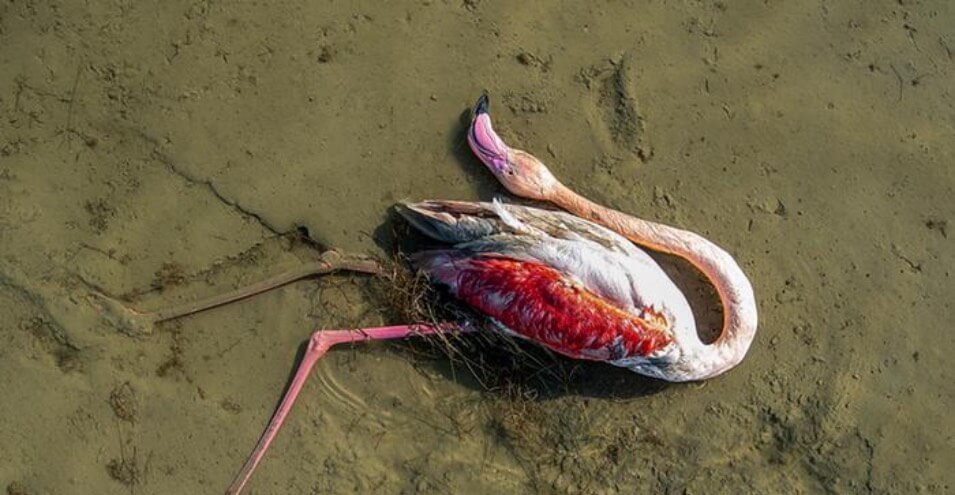
Some sources put the number of birds killed in the Miankaleh wetland at 10,000, while others put it at more than 20,000. Officials are citing botulism as a possible cause of the deaths. Experts are skeptical.
Iranian officials have cited cases such as “botulism poisoning” or “a severe influenza outbreak” as the cause of the death of migratory birds in Miankaleh. The National Veterinary Organization and the head of the Environmental Protection Organization believe that botulism toxin is the cause of the death of birds in Miankaleh.
This answer, however, has not convinced many experts.
In an interview with "Rukna," environmental activist Ismail Kahrom speaks of "signs of intentionality" in bird deaths.
This environmental activist, rejecting the country's veterinary organization's claim that birds are fed botulism toxin that is "naturally produced in the lagoon," says: "Botulism toxin is not formed in the lake, but in canned food that has been left for several years."
Officials from Iran's Veterinary Organization have announced that the cause of death is most likely botulism toxin and have sent samples to a laboratory abroad. "You will never hear the results of this test because it is not botulism," predicts the environmental activist.
“There was a hand in it”
He explains the reason for the “concealment” regarding the cause of bird deaths, referring to the loss of “17,000 wings of flamingos, ostriches, pelicans, and…”: “Who should be held accountable for this volume of bird deaths? In order to avoid being brought before the police, the judiciary, and the courts, they have solved and covered up the issue under the pretext of botulism toxin.”
In this interview, Ismail Kahram refers to the history of poisoning in this area: “There is so much history of poisoning that hunters go to the General Directorate of Environment and say, ‘Change this ranger because he mistreats hunters. Otherwise, we will poison him!’” To prove his point, he refers to incidents in 1994, when “fishermen poisoned the main pond and killed the fish because the rangers had collected the fishermen’s nets.” Referring to these incidents in the past, Kahram believes that “there was a hand in this incident.”
Doubt over botulism as cause of death
Homayoun Khoshrovan, the executive director of the international project on the effects of Caspian Sea fluctuations on the environment of coastal areas, who has been working on this international project for many years and has several articles about this area of the Caspian Sea (Miankaleh Wetland), is one of the experts who is skeptical of the authorities' explanations about the cause of the birds' deaths.
In an interview with the "Aftab" website, Khoshrovan said, referring to the fact that "the largest number of dead birds are flamingos and storks" and the fact that "the habitats of these two species are different," adding: "These circumstances make me hesitant to accept botulism as the cause of the birds' deaths."
Khoshrovan emphasizes: "In the flamingo habitat, there is no algae that would die, become keratinized, or have its shell destroyed and produce botulism toxin," and continues: "How can we accept that the cause of this bird's death is botulism toxin where there is no organic matter at all?"
Regarding the gannets, he pointed out that "the habitat of the gannets is completely different from that of the flamingos," and added, "If there were to be a death or destruction, it would have to be for the gannets because we have a lot of plant material there, and when this material breaks down due to the drying up of the bay, it can create conditions that lead to the production of various toxins, including botulism. But the important thing is that the habitats of these two birds are far apart, meaning you never see flamingos in large numbers in the gannets' habitat."
He also asks, regarding the rumor of "poisoning" by protesting hunters or unscrupulous individuals: "In that case, why did only the bird die? The fact that we don't see any aquatic animals dying requires further investigation."
Citing these cases, the expert concludes: "So this shows that something else is happening in the region that is very important to know."
Source: DW