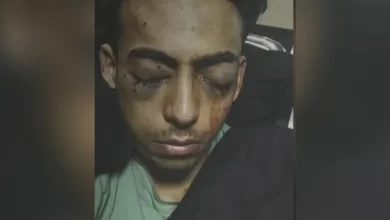
At least 18 Christian citizens killed in crackdown on nationwide protests
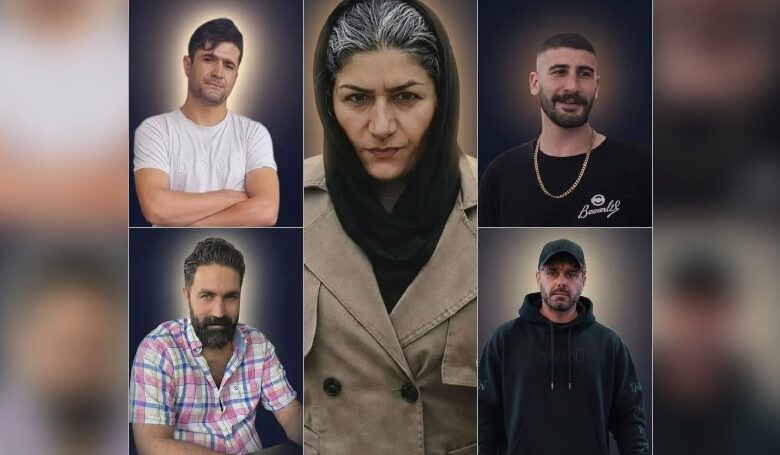
Published reports indicate that at least 18 Christian citizens were killed during the nationwide protests in January, which took place in the shadow of the repression of the Iranian people by the government of the Islamic Republic.
As popular protests in Iran spread and security clashes intensified, new reports indicate that at least eighteen Christian citizens have lost their lives during the recent crackdown; a statistic that reveals new dimensions of the human cost of this crisis and once again puts the fragile state of religious freedom in Iran under the microscope.
Mansour Borji, director of the Article 18 organization, confirmed that eleven Christian citizens were among the dead, and at least seven other Christians from Iran’s Armenian community were also among the dead. This figure, if confirmed, would be one of the heaviest recorded casualties for Iran’s Christian community during a short period of unrest.
One of the victims, Mohsen Rashidi, 42, a father of three girls, was shot in Isfahan province. According to Mansour Borji, he was shot while trying to rescue his injured friend from the scene of the clash. According to the report, security forces prevented him from being admitted to the hospital, and the Christian citizen bled to death.
"Ajmin Masih," a 27-year-old Christian, was also killed on January 8 in the Narmak region by the repressive security forces of the Islamic Republic.
Assessing the severity of the violence, Borji said: "If these statistics are accurate, this was one of the worst massacres not only in Iranian history, but perhaps in modern history, in just two days."
A widespread internet shutdown in the early weeks of the unrest severely limited the dissemination of news and images. As communications have been restored, reports of hospital conditions, missing persons and pressure on families to remain silent have emerged. Human rights activists have raised concerns about the possibility of mass graves and the prevention of official registration of some of the deaths, claims that require international investigation due to the limited access of independent media.
The widespread protests that began on December 28 were initially tied to economic grievances and the collapse of livelihoods, but quickly turned into political and pervasive demands. Calls were issued by figures opposed to the Islamic Republic, including Prince Reza Pahlavi, to take to the streets. There were also international statements.
On January 8 and 13, then-US President Donald Trump warned that if government forces continued to kill protesters, “we will crack down on them severely” and that “help is on the way.” However, Pastor Shahrokh Afshar, founder of the Iranian Christian Association, says: “Many Iranians who took these promises seriously are now disappointed by the inaction of the international community.”
While there was speculation about the possibility of military action or more intense pressure, the course of events showed that negotiations and geopolitical considerations took precedence over immediate responses. This gap between promises and action has meant nothing but isolation and helplessness for grieving families.
The Iranian Christian community has faced structural restrictions for years, from the closure of Persian-language churches to heavy sentences for house church leaders. Reports in recent years show that the arrests of Christians have been on the rise. In 2025 alone, at least 254 Christians were arrested, a figure that is almost double the number reported the year before. According to church sources, a significant portion of these arrests occurred after regional tensions and the prevailing security environment in the summer of that year, and the pressure has continued in 2026.
In addition to arrests, security and propaganda pressures against Christian citizens who have converted from Islam have often been accompanied by accusations such as “acting against national security” or “propaganda against the system.” This is despite the fact that many of these individuals have had no activity other than holding prayer meetings or participating in house churches.
The recent crackdown has sparked deep debates among Iranian Christians about civil disobedience, social responsibility, and the limits of participation in protests. Some church leaders have explicitly defended the right to peaceful protest, while others have emphasized maintaining a strictly apolitical approach. What is common, however, is a deep concern for the lives and safety of believers.
Amid this dangerous atmosphere, stories of steadfast faith are also heard. “I go out into the streets and share God’s love with everyone I meet because people are desperate and that’s the best I can do,” said one member of the church overseen by Pastor Afshar.
This sentence, amidst the atmosphere of bullets and arrests, presents a different picture; a picture of faith that has not been extinguished even in conditions of repression.
The deaths of at least eighteen Christians during the protests are not just a statistic; they are a sign of the overlap between political repression and religious restrictions in a country where religious freedom has always been a contentious issue. If reports of denial of treatment to the injured or pressure on families are true, the international community is facing a crisis that goes beyond a wave of protests: a crisis about human dignity, the right to life, and freedom of belief.
As the protests continue and the arrests continue, the main question remains: Will the voices of the victims be heard, or will their blood be forgotten amid political considerations and diplomatic negotiations?
For the Christian community of Iran, these days are not just a test of survival; they are a test of faith, courage, and resistance against a structure that threatens both protest and independent faith.