Reza Pahlavi’s Trip to Italy: Demands to Pressure the Islamic Republic and Exposing the Human Rights Crisis
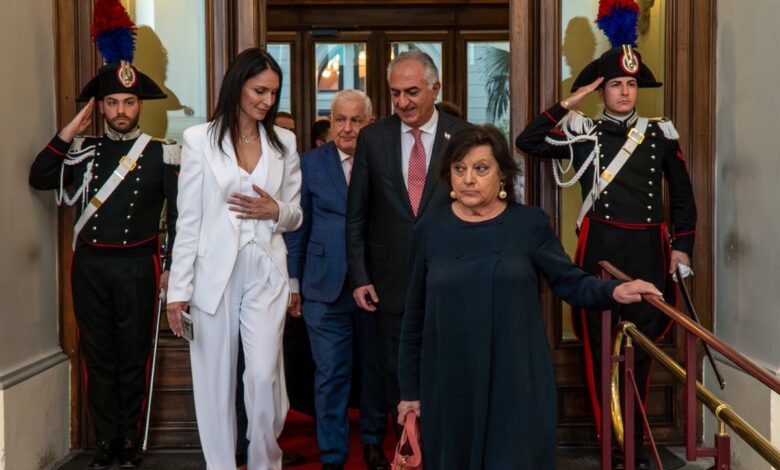
During Prince Reza Pahlavi’s visit to Italy, pressure on the Islamic Republic, the freedom of political prisoners, and ending internet censorship were the main topics of discussions with Italian senators.
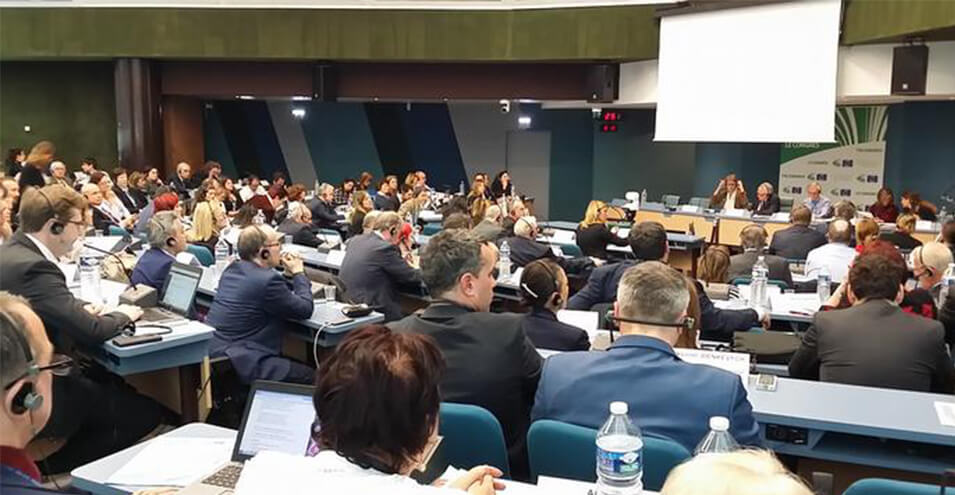
In recent days, Prince Reza Pahlavi’s trip to Italy and his meetings with a number of senators and parliament members from various political streams in the country have become one of the subjects of attention for media and political circles. Based on published reports, these meetings took place in Rome and in the building of the Italian Senate, and their main focus was reviewing Iran’s situation, the role of the international community and particularly Europe in relation to the country’s political developments. According to confirmation from news sources, he also met with Senator Maurizio Gasparri, chairman of the Italian Senate’s foreign affairs and defense committee during this visit.
In the context of these conversations, what has been highlighted is the emphasis on the human rights situation in Iran and the role of European countries in relation to the Islamic Republic. This visit took place at a time when in recent years, the issue of internal repression, the crisis of political prisoners, and widespread communication restrictions in Iran have become one of the focal points of criticism by human rights organizations. In media reports related to these meetings, special focus is placed on the political message of this visit and the effort to draw the attention of European politicians to the domestic situation in Iran.
In this context, Reza Pahlavi, during his meetings, emphasized a set of political and human rights demands that included increasing diplomatic pressure on the Islamic Republic, supporting the freedom of political prisoners, an immediate halt to executions, and also the necessity of ensuring free access for Iranian citizens to the internet. These themes raised in the meetings have been described as part of an effort to gain political support at the European level against Iran’s domestic situation.
Furthermore, in this visit, the political atmosphere of the conversations has also touched on the subject of the moral responsibility of European countries regarding Iran’s situation; a place where critics of the Iranian government hold the current structure responsible for the expansion of human rights crises and widespread civil restrictions. In contrast, these meetings seek to make this issue more prominent in the context of European foreign policy.
In another part of this visit, it has been noted that multiple meetings were held with Italian senators from different parties, in which the subject of the “Islamic Republic’s war against the Iranian people” and its consequences for Iranian society were discussed. These narratives emphasize the effort to change Europe’s political perspective regarding developments in Iran and show that the Iran issue remains on the agenda of some legislative institutions in Europe.
Prince Reza Pahlavi, in a message on his personal social media network, said about this visit: “During my trip to Italy, I met with a number of senators and parliament members from different parties in this country and discussed the Islamic Republic’s war against the Iranian people and the moral responsibility of Italy and Europe in supporting the national revolution of Iranians, with the aim of ending the Islamic Republic and achieving freedom and democracy.
In these meetings, I emphasized the necessity of diplomatic pressure on the Islamic Republic to restore internet access, the freedom of political prisoners, and an immediate halt to executions. Among these meetings was a meeting with Senator Maurizio Gasparri, chairman of the Italian Senate’s foreign affairs and defense committee.”
In view of these developments, Reza Pahlavi’s trip to Italy can be considered part of his efforts in recent years to raise the issue of Iran at the level of international politics; an effort that has been pursued through meetings with European lawmakers and emphasis on the human rights crisis, political pressures, and the situation of political prisoners.
In the narratives published from this visit, some media outlets and social media users have also reacted to the way he was received in Italy (reception with military honors) and have interpreted this as a sign of attention from European political circles to movements opposed to the Islamic Republic. Part of these reactions in cyberspace has been accompanied by support or positive analyses, while other parts have dealt with it from a critical or different perspective.
Reza Pahlavi, as one of the recognized political figures of the opposition to the Islamic Republic, has been active in the political arena outside the country for years and during this time has sought to raise issues related to the human rights situation and Iran’s political structure in international forums. In contrast, regarding the extent of his influence and political role in Iran’s future, there are varying and sometimes contradictory views among analysts and public opinion.
In summary, the reflection of this visit shows that the issue of Iran continues to be of concern in European political circles and social networks, and any meeting or position-taking at this level quickly turns into extensive discussions and interpretations in public opinion.