Sixty-Four Days of Silence; Iran Sinks Into One of the World’s Longest Internet Blackouts
As Iran’s widespread internet blackout enters its sixty-fourth day, international reports indicate an intensification of digital restrictions, crackdowns on VPN usage and satellite internet, and the expansion of tiered internet access. The monitoring organization “NetBlocks” has warned that millions of Iranians remain deprived of free access to the global internet; a situation that has not only disrupted people’s communication with the outside world, but has also inflicted severe damage to the economy, businesses, and information freedom.
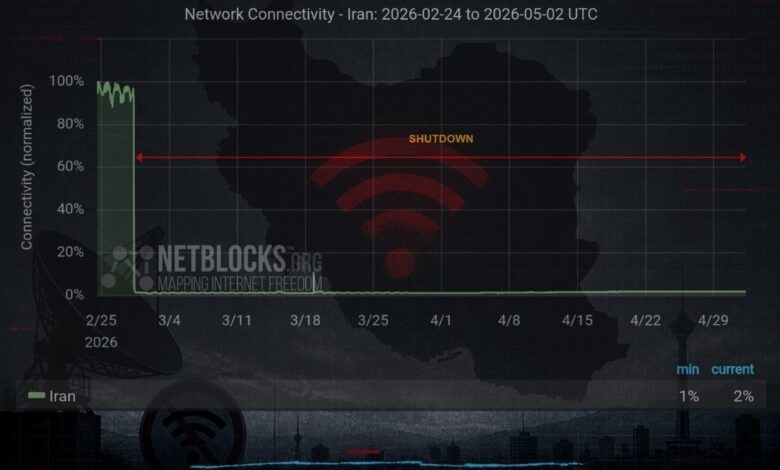
Fresh data released by internet monitoring organization “NetBlocks” shows that Iran’s widespread internet blackout has entered its sixty-fourth day and has become one of the longest cases of nationwide internet shutdown in the world. The organization has stated that a large portion of Iranian users still have access only to the domestic and limited network known as the “National Internet,” and free communication with the global internet has been severely disrupted.
Reports indicate that alongside continued restrictions, the Iranian government has also intensified its actions against tools used to circumvent filtering. According to international media reports, security forces have targeted the use and possession of satellite internet equipment, including Starlink, and operations to confiscate equipment and identify users of these services have increased.
In recent weeks, reports have also emerged of arrests of VPN sellers and increased pressure on users of filtering circumvention tools. Technology experts say that the Iranian government, beyond widespread filtering, has moved toward creating a structure for “tiered internet”; a model in which only specific groups, government institutions, academics, or certain businesses have limited access to the global internet, while the general population is deprived of this capability.
NetBlocks has stated that a large portion of Iran’s population has been effectively cut off from free global internet over the past months. Some reports indicate that internet connectivity levels have reached only one to four percent of normal conditions at certain times.
These restrictions have had severe impacts on Iran’s digital economy. The Associated Press reported that millions of online business owners, internet sellers, freelancers, and content creators have faced sharp income reductions or closure of their activities. Some estimates put the daily damage caused by internet disruptions at tens of millions of dollars.
Beyond economic damage, human rights organizations have warned about the humanitarian and social consequences of this situation. Reports show that many families have lost the ability to communicate normally with relatives abroad, and access to independent information, free media, and social networks has been severely restricted.
Some analysts view Iran’s prolonged internet shutdown as a sign of the Islamic Republic entering a new phase of digital control; a phase in which the government attempts, through a combination of filtering, extensive surveillance, VPN restrictions, and satellite internet control, to bring the free flow of information completely under its control.