Authorities Acknowledge Intensification of Protests in Iran; Admission of Ineffectiveness or Warning to Protesters?
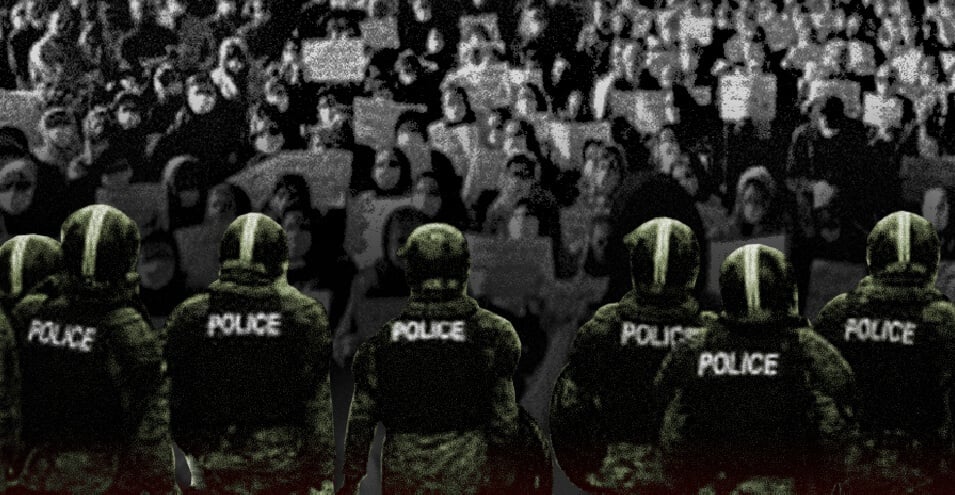
The continuation of protests and strikes by various segments of Iranian society and the acknowledgment by some government officials of increased public dissatisfaction raise questions about what future awaits the demands of various social groups and how the government will handle them.
How does the placement of security and judicial figures, some with dark records of human rights violations, in important and key government positions under Ibrahim Raisi’s administration reflect the prevailing government view of protests? Given Iran’s Islamic Republic’s dark history in dealing with public protests, how should we interpret the government’s acknowledgment of intensified protests and strikes in the near future and their admission of growing public dissatisfaction? What has increasingly caused the government’s fear and anxiety about the continuation of the wave of public protests today more than ever before is the possibility of these protests expanding and connecting with one another; an issue that forms the basis of repressive policies.
Government’s Confrontation with Protests; Expansion and Strengthening of Repressive Apparatus
Tagi Rastmanvandi, head of the Social Affairs Organization and Deputy Minister of the Interior, recently announced an increase in the “desire for fundamental changes in the country” and in explaining this matter, cited the “index of desire to protest” and “reduced resilience of people against economic pressures” as important factors in the intensification of the desire for fundamental change in the country. This acknowledgment by a Ministry of Interior official, one of the regime’s most security-focused institutions, of the intensification of protests by various segments comes while the government’s behavior in response to intensifying protests and strikes in Iran over the past few years has been repressive and coercive. On the other hand, the appointment of individuals who primarily have security and judicial backgrounds to positions that directly play a role in confronting public protests indicates that the regime’s approach in dealing with what it considers intensifying protests in the near future will remain a coercive one. This point is particularly evident in the selection and arrangement of governors in many Iranian provinces.
Tagi Rastmanvandi holds a deputy ministerial position that is in fact one of the most important determining bodies in shaping how protests and strikes are confronted. A ministry that selects the country’s governors, meaning the primary official who plays a key role in confrontation and dealing with protests and strikes in each province. The Ministry of Interior is also the body overseeing the police force, a force that has always been one of the main bodies in dealing with public protests.
The appointment of General Ahmad Vahidi, a senior Revolutionary Guards commander, to the position of Interior Minister paved the way for Revolutionary Guards, security, and judicial figures to take on the position of governor. Of Iran’s 31 provinces, 10 governors are from the Revolutionary Guards, and 10 other governors have security or judicial backgrounds. Forces that have taken responsibility in provinces that have been among the most important provinces of Iran during recent years of public protests.
The importance of governors’ role in dealing with protests stems above all from their key role in the provincial “Security Council.” A council composed of the Guards commander, the intelligence officer, and the police force commanders of each province and headed by the governor, which during public protests is responsible for the main policymaking and determining the shape and manner of dealing with protests.
Looking at the government’s macro approaches, including the Ministry of Interior’s approach in selecting governors, the deputy minister’s statements about the increase in the desire for fundamental changes in the country in light of intensifying protests, in fact more than meaning the government is hearing the voice of public protest and demands, represents a kind of warning to various protesting segments in Iran. A warning in the sense that the government is increasingly prepared for confrontation with upcoming protests and strikes.
Expansion of Protests; Government’s Fear of Connected Demands
The dispersed nature of protests and strikes across many small and large cities in Iran and the resulting severe suppression of protesters is undoubtedly one of the most important forms of human rights violations in recent years. The costs and consequences of these suppressions have each time affected an increasingly wider segment of society, but the government’s failure to resolve existing crises and reliance on coercive and judicial approaches with protesters and civil and professional activists has meant that not only has “street protest” not been forgotten in the path of demands by many segments of society, but we are witnessing the growth and spread of new dimensions of street protests; retirees’ protests are an example of a newly protesting segment that now sees street protest as the only way to secure their rights. Retirees’ protests in Iran have been taking on a more cohesive form for several years. Protests that, linked with one another in small and large cities across the country, have become nationwide protests.
One of the most important concerns of the government apparatus regarding the process of formation of public protests in Iran is the possibility of rapid expansion of protests across all cities in the country. Paying attention to this concern makes our reading of officials’ approach in appointing governors easier, and of course makes explicit attention and emphasis by officials on the necessity of filtering social networks and launching a national internet network meaningful.
Of course, the issue of connected protests in Iran is not only related to the form of their expansion or holding nationwide protests and strikes, but an important aspect of public protests in Iran is the increasing discovery of common points in the protests and strikes of different segments of society.
The increasing prominence of these common points among the demands and desires of different segments of society intensifies the need for the adoption of uniform repressive policies by the government. In this sense, the appointment of governors with military and security backgrounds or efforts to increasingly control virtual space is part of a systematic repressive policy that has a predetermined narrative.
Nevertheless, it appears that the discourse governing the space of demands among different segments is becoming increasingly harsh day by day, and the wishes of protesters are defined and expanded in direct response to the oppression inflicted upon them. Examples of this fearless and bold discourse can be found in recent statements by retirees’ gatherings or statements by the teachers’ professional council during nationwide teachers’ and educators’ protests. Statements that not only emphasize continued, sustained, and connected protests and strikes with emphasis and clarity, but have also directed their critical perspective toward the judiciary and called for the release of their imprisoned colleagues.
Source: Iran Human Rights Campaign