Ban on Legal Representation and Asset Seizure; Fresh Pressure on Iranians Inside and Outside the Country
The ban on legal representation and asset seizure reflects a new wave of restrictions against Iranians outside the country and the expansion of judicial tools for controlling and confiscating property.
In continuation of the escalating trend of legal and judicial pressures on Iranians outside the country, the General Prosecutor’s Office of the Islamic Republic of Iran has issued a new directive that completely restricts the ability to grant power of attorney for transferring and managing the assets and property of Iranian citizens residing outside the country; a measure that effectively blocks a large portion of Iranians from legally managing their assets within the country.
According to this directive, the Ministry of Foreign Affairs is obligated to suspend the provision of services related to preparing and notarizing power of attorney documents for asset transfer in the consular system “Mihak” until further notice. As a result, Iranians residing outside the country can no longer engage in buying, selling, or transferring their assets through their legal representatives in Iran; unless they personally return to the country and complete the legal procedures at official document offices inside Iran.
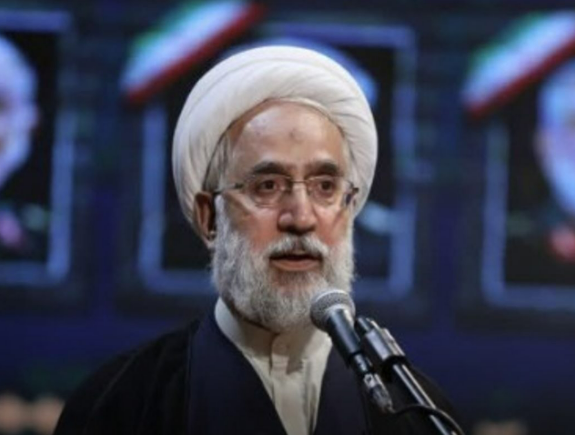
“Mohammad Kazem Movahed-Azad,” the General Prosecutor of the Islamic Republic, stated that the purpose of this measure is to counter individuals who, according to him, “act against the system,” and said that based on the “Law on Enhanced Punishment for Espionage,” there is also the possibility of seizing and confiscating the assets of such individuals.
However, critics of this decision emphasize that the scope of implementing these restrictions extends far beyond individuals accused of political activity and effectively applies to all Iranians outside the country; from students to workers and migrants who are deprived of a basic legal right solely because of their place of residence.
In this context, the legal advisory center “Dadban” has criticized this policy and stated: “Prohibiting the transfer of assets of Iranians outside the country and preventing the preparation of power of attorney documents for managing or transferring their property is clearly contrary to the fundamental principles of property rights and lacks a clear legal basis. The right to property is considered one of the fundamental rights of every citizen, and no administrative or judicial authority can deprive individuals of exercising authority over their legitimate assets without an explicit legal order and a valid judicial process.”
This legal center also emphasized that such a policy constitutes a form of structural discrimination against a large portion of Iranian citizens and violates the principle of equal citizenship before the law.
This decision was made while reports were simultaneously being published about intensified judicial action against Iranians outside the country. According to reports from domestic media, the assets of more than 400 Iranian citizens outside the country have been seized on charges of cooperating with hostile countries or acting against the interests of the Islamic Republic. Additionally, the names of some journalists, media activists, and well-known figures residing abroad appear in these lists.
The official news agency of the judiciary has also reported the implementation of directives to identify and freeze the assets of more than 100 other individuals; a measure that has been justified within the framework of new security policies of the judicial apparatus and based on files related to “espionage” and “cooperation with the enemy.”
“Gholam-Hossein Mohseni-Ejei,” the Head of the Judiciary, had previously stated while referring to this process that heavy sentences, including asset confiscation and even more severe punishments, would be imposed on elements cooperating with the enemy inside and outside the country; statements which, according to critics, have directed the legal environment of the country toward the securitization of private property.
In continuation of these policies, the launch of electronic systems for identifying assets has also provided the possibility for judicial authorities to track and quickly freeze citizens’ property; a tool that, according to experts, can increase the speed of executing confiscation orders in an unprecedented manner.
Critics of this trend believe that this collection of measures demonstrates a serious change in approach to dealing with the private property of Iranian citizens; an approach in which individuals’ assets are not defined as a legal right, but rather as a tool that can be controlled and confiscated within the framework of security policies.
Ultimately, what is seen in practice is the formation of a mechanism in which legal restrictions, asset seizures, and deprivation of legal tools such as power of attorney have become instruments for political and social pressure on citizens both inside and outside the country; a process whose consequences extend beyond the legal sphere and have also cast a shadow over public trust and economic security.