April 24, A Silence That Wounded History: ‘From the Suffering of Armenians to the Troubled Conscience of the World’
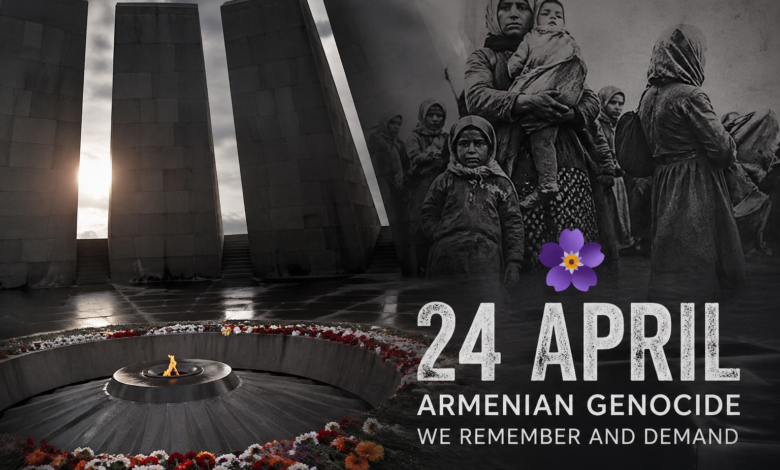
April 24 is a reminder of one of the darkest chapters in human history; a day when the memory of the suffering, exile, and destruction of a large portion of the Armenian nation challenges the conscience of the world. On this day, Christians and freedom lovers around the world commemorate those who lost their lives during events that many historians consider the Armenian genocide. This event is not only a human tragedy, but also a profound wound on the body of Christian history; for Armenians are one of the oldest Christian nations in the world.
What made this tragedy deeper and more enduring was not merely the dimensions of its violence, but the limited, scattered, and in many cases passive response of the global community at that time. At the beginning of the twentieth century, the world was consumed by widespread geopolitical upheaval, wars, and competition between great powers. In such an atmosphere, the suffering of a nation, however immense, was relegated to the margins of attention. This indifference was not merely a historical error, but led in a way to the formation of a dangerous pattern: a pattern in which, if a crime does not receive sufficient attention or does not carry political costs, it can continue without serious consequences.
From a Christian perspective, this event is a reminder of a fundamental moral responsibility: “standing with the oppressed and bearing witness to the truth.” The teachings of Christ call his followers to defend human dignity and confront injustice. Within this framework, silence in the face of injustice is not neutrality, but rather a form of distancing oneself from the truth. The Church and religious institutions, in such critical moments, play an important role in shaping public conscience; a role that, if not fulfilled properly, can lead to the normalization of suffering and injustice.
From an analytical perspective, many researchers believe that the way the world dealt with events in the early twentieth century, including what happened to the Armenians, had a direct impact on the formation of human rights systems in subsequent decades. For example, after tragedies like the Holocaust, the international community gradually moved toward drafting conventions and mechanisms to prevent genocide and crimes against humanity. This difference in responses shows how much recognizing and naming a tragedy can play a role in preventing its recurrence.
In this framework, if the international community had taken a more decisive, unified, and transparent position regarding the massacre of Armenians, and if this event had been recognized internationally earlier and without doubt, it was possible that international standards for dealing with state violence would have been formed sooner. Such a situation could have significantly increased the political, legal, and moral costs of suppression and killing of people for governments in different parts of the world and could have acted as a deterrent.
This analysis, of course, does not mean oversimplifying history or directly attributing today’s events to a single past factor, but rather emphasizing an important principle: “global indifference can create the ground for the repetition of violence.” In a world where responses to human tragedies are unequal and selective, the implicit message to human rights violators is that there is always a possibility of escaping accountability.
Today, the world faces similar questions: “Does the international community respond in a timely, just, and effective manner to human suffering? Have historical experiences, especially tragedies accompanied by silence, been able to increase global sensitivity to human suffering? And most importantly, have religious, civil, and media institutions been able to fulfill their role properly in preventing the recurrence of such tragedies?”
Commemorating April 24 is not merely a return to the past; it is an effort to reread today’s responsibilities. This day calls upon the conscience of humanity to not remain silent in the face of any injustice, regardless of borders, politics, and short-term interests. Because history has repeatedly shown: silence in the face of others’ suffering is never without cost; neither for the victims nor for the future of the world.
Author: M.R