Uncertainty at the Top of Power and Controversial Ceasefire; A Society Between Hope and Anger
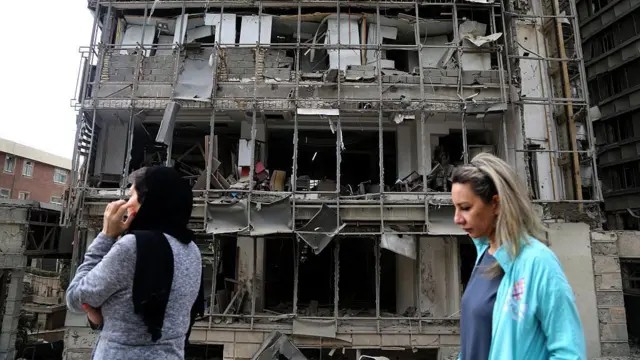
Uncertainty at the top of power and ceasefire, simultaneously with new American pressures and contradictory public reactions, has painted a complex picture of Iran’s political future.
While Iran’s political landscape faces unprecedented ambiguities in leadership and decision-making structures, diplomatic and field developments have simultaneously added to the complexity of the situation. Claims about shifts in the balance of power at the top of governance (including attributing pivotal roles to certain figures) alongside new conditions set by the United States for any agreement indicate that doubts about coherent decision-making in Iran have increased not only domestically but also internationally.
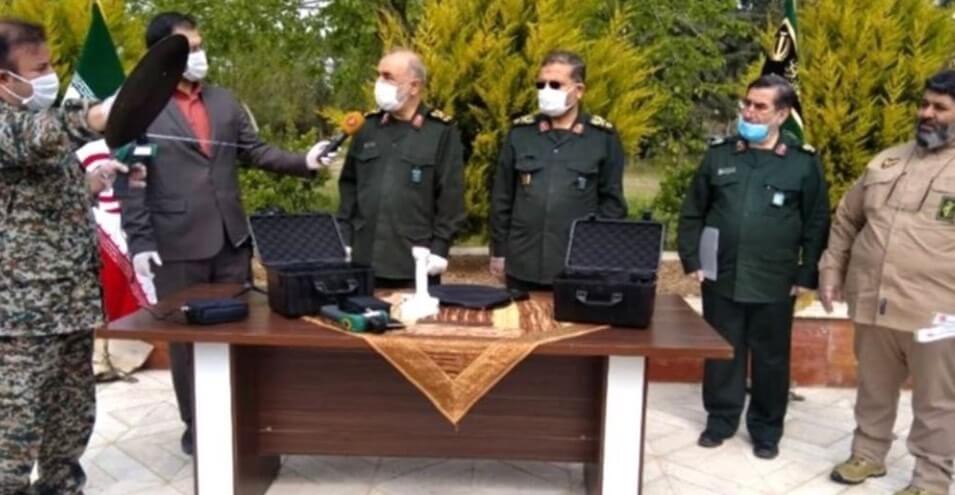
Within this framework, reports on Washington’s new positions suggest that for resuming negotiations, the official Iranian government alone is no longer the sole counterparty, and influential institutions, particularly military structures, must also have direct roles and practical commitments in any potential agreement. Such an approach, in a way, reflects the perception that power in Iran operates on multiple layers and is dispersed.
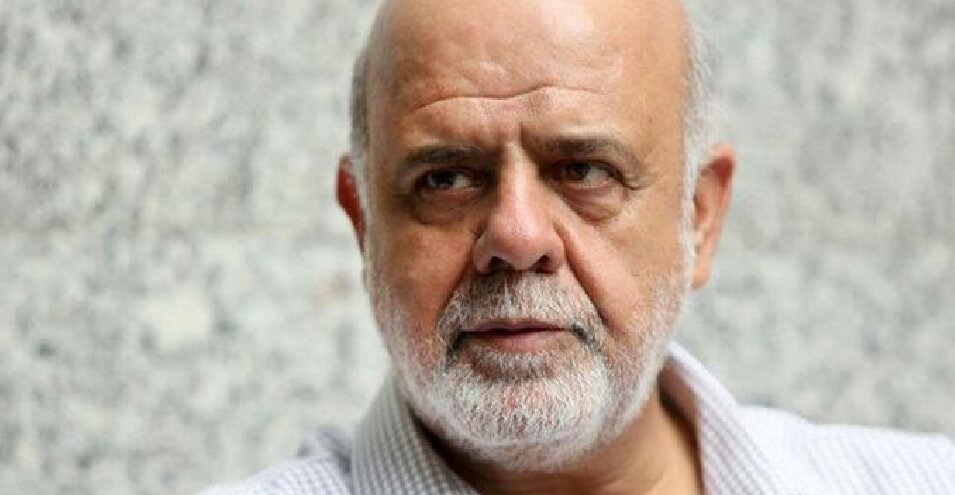
Simultaneously with these developments, the arrival of foreign delegations in Tehran, including a regional delegation, indicates that efforts to manage the crisis continue, but in an atmosphere of mistrust and ambiguity.
Analysis of thousands of messages sent from within Iran following the recent ceasefire announcement presents a multi-layered picture of public opinion. These messages, sent from various cities, show that society is not only suffering from deep exhaustion but is simultaneously oscillating between hope, anger, and despair.
Some citizens view the ceasefire not as an end but as a temporary pause. The repetition of phrases such as “light shall triumph over darkness” in this category reflects a kind of hope for fundamental changes in the future. In this regard, some also emphasize the role of domestic forces in determining fate and believe that the final path will depend on collective action.
In contrast, another group views these developments as signs of failure or halting of a process that, according to them, should have led to fundamental changes. One citizen wrote: “My world has collapsed. We didn’t endure all this hardship just for a ceasefire.”
Alongside political analyses, a significant portion of reactions relate to economic and livelihood conditions. Rising prices, unemployment, medicine shortages, and the heavy costs of accessing free internet have been among the most pressing concerns raised.
One citizen writes: “I paid one million tomans for one gigabyte of internet. My business was destroyed.” Another reports on the medicine situation: “Cancer medications have become scarce and multiplied in price. People are not doing well.”
These narratives show that even amid political and security developments, economic pressure remains one of the primary axes of public discontent.
Another section of messages is directed at the role of foreign powers. Among these, some users have explicitly spoken of feeling betrayed. One message states: “Mr. Trump, ceasefire means betraying the blood of thousands of immortals.”
Another user wrote: “You promised you wouldn’t leave people alone, why did you abandon us?” These sentences show that part of society analyzes recent developments not only within a domestic framework but in the context of international decisions and takes a critical stance toward them.
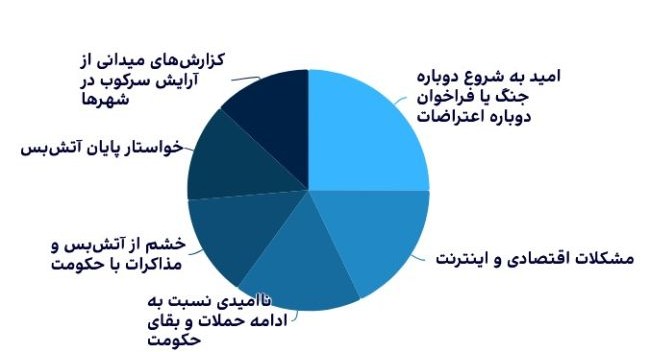
The sum of this data, whether at the political level or the social level, points to a key reality: “Iran is at a point where uncertainty at the top of power, external pressure, and domestic discontent are simultaneously having their effects.”
Neither official narratives have been able to present a clear picture nor have unofficial narratives reached certainty. In such circumstances, society too has become a reflection of this condition: “Both hopeful, both angry, and both exhausted.”
Perhaps the most precise description of the current situation can be found in that oft-repeated phrase among the messages: “We won’t give up. Light shall triumph over darkness.”