20-Day Internet Blackout in Iran; Digital Darkness to Conceal Repression
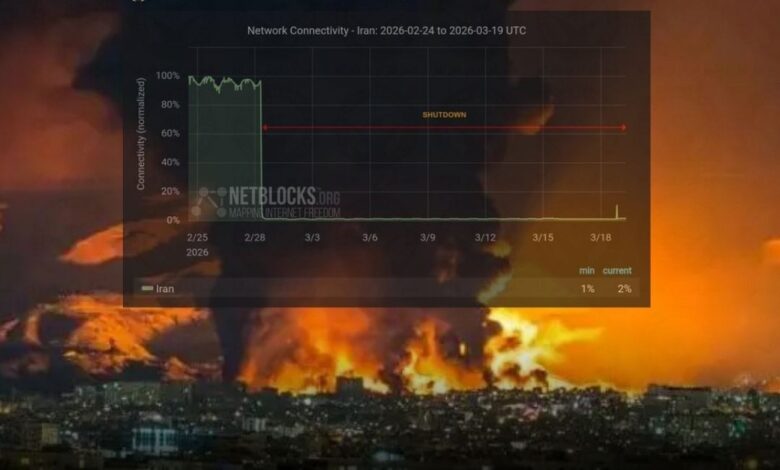
Iran’s internet blackout has exceeded the 20-day mark. A digital darkness orchestrated by the Islamic Republic to conceal repression and completely cut off people’s communication with the world.
While free access to information is considered one of the most basic rights of citizens in today’s world, Iran has once again witnessed one of the most severe and longest internet outages in its history; a situation that has not only disrupted the daily lives of millions but has been widely used as a tool for repression and concealment of realities.
According to the latest report released by “NetBlocks,” the global internet monitoring organization, Iran’s internet outage has exceeded the 20-day threshold, with international internet access for the general public completely cut off for over 456 hours. This unprecedented figure has made this event the longest recorded internet blackout in the country’s history; even longer than the widespread restrictions imposed during December protests.
This widespread outage is not merely a technical glitch or simple management decision, but according to many analysts, part of a deliberate policy to cut off people’s communication with the outside world and prevent the dissemination of news and images related to domestic developments. In circumstances where social networks and online media play a vital role in information distribution, a complete internet shutdown effectively means silencing the voice of society.
The consequences of this measure are also widespread and multifaceted. On one hand, online and digital businesses, which have become one of the pillars of the economy in recent years, have suffered severe losses; on the other hand, ordinary citizens have been deprived of access to basic services, communication with family, and even educational and medical resources.
But what is most concerning is the use of this “digital darkness” as a cover for intensifying repression. In the absence of media oversight and free access to information, the ability to document and publish what is happening in streets and detention centers is severely limited. This situation effectively opens the hands of security agencies to act without accountability.
Critics argue that this approach demonstrates a deep fear of free information flow; a flow that can challenge official narratives and expose hidden realities. For this reason, internet shutdowns are considered not only a technical measure, but a political tool for controlling public opinion.
With the internet blackout now exceeding the 20-day mark, the question is now more pressing than ever: how long can realities be concealed by cutting off a nation’s communication with the world? Global experiences have shown that even the longest silences cannot prevent the truth from emerging, but the cost borne by people in the process is heavy and sometimes irreparable.