Crackdown in Universities, Student Suspensions, and Expansion of Nationwide Protests in Academic Centers
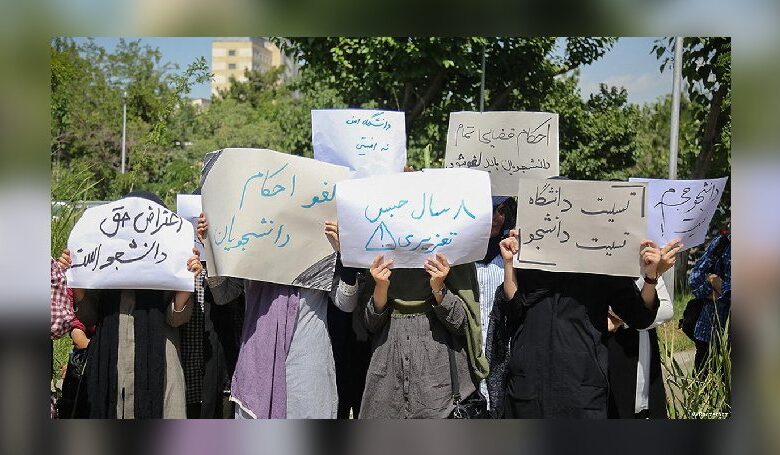
The crackdown in universities, concurrent with student suspensions and escalating nationwide protests in Iran’s largest higher education institutions, reflects students’ rejection of the current government and their continued protests despite severe repression.
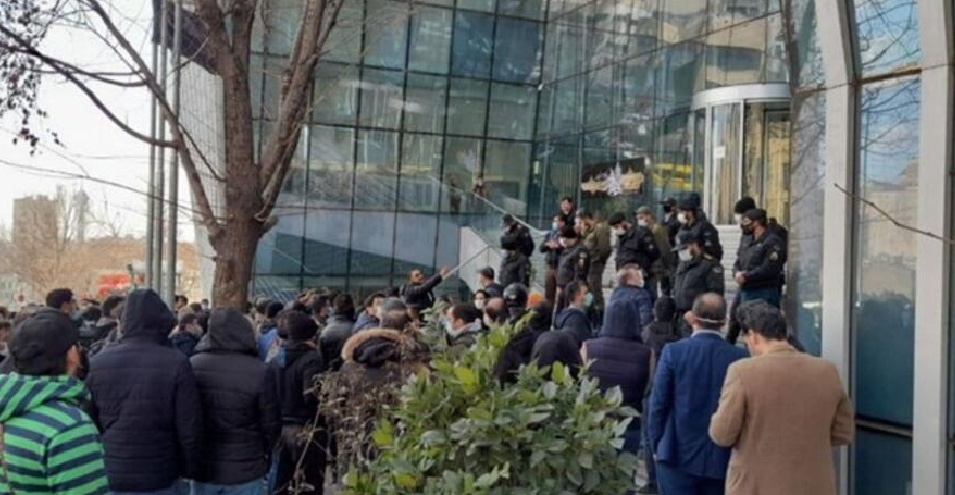
With the reopening of universities across Iran, many of the country’s major universities have once again witnessed the formation of protest gatherings; protests that have spread from Tehran to Mashhad and Isfahan and have been accompanied by summonses, suspensions, arrests, and academic penalties. In the latest case, three Tehran University students have been temporarily banned from studying and entering the university; a measure that observers assess as an indication of intensified disciplinary pressures on the student movement.
According to published reports, three Tehran University students have been temporarily suspended from studies by order of the university’s administration, allegedly for what was described as “insulting the flag and national symbols” during protest gatherings. According to this report, based on Article 117 of the disciplinary regulations, these students will be barred from entering the university until the disciplinary committee holds a hearing. The identities of these students have not been officially announced, and further details about the review process have not been released.
Critics argue that the use of vague and interpretable terms opens the way for swift actions without legal transparency; an approach that has been employed repeatedly against student activists in recent years.
Additionally, in recent days, protest gatherings have been held at several higher education institutions, including Sharif University of Technology, Amirkabir University of Technology, Allameh Tabatabai University, Al-Zahra University, Ferdowsi University of Mashhad, and several other universities. In these gatherings, students have protested the security situation, summonses of union activists, cultural restrictions, and disciplinary measures.
Reports published on social media indicate that some gatherings ended with the presence of security personnel and that a number of students were detained or summoned to provide explanations. Human rights organizations have reported in recent years on the issuance of hundreds of suspension sentences, dormitory exclusions, and even expulsions for protesting students.
During widespread protests in 2022, human rights organizations reported that hundreds of students were arrested at various universities across the country. Reports also emerged of several students being killed in street protests that year, with the names of some announced by families and independent media. However, exact figures remain ambiguous due to the lack of official transparency.
Furthermore, in addition to recent arrests, university disciplinary committees have issued multiple rulings including semester suspensions, academic transfers to other universities, and permanent expulsion. Some students have also been barred from continuing their studies at higher levels.
Universities in Iran have always played a prominent role in social and political developments. From the events of June 1999 to protests in 2009, 2017, 2019, 2022, and recent protests in Iran, students have been at the forefront of demonstrations. This historical precedent has meant that student movements are always met with particular sensitivity by security agencies.
In recent days, reports have also emerged about increased security surveillance, installation of additional cameras, summonses of union activists, and pressure to sign commitment letters. In some universities, students have reported restrictions on holding cultural meetings and critical programs.
Although the suspension of three Tehran University students appears on the surface to be a limited disciplinary case, it takes on meaning within the broader context of pressure on the academic environment. Many students believe that disciplinary measures have not only failed to silence protests but have deepened the rift between university administrations and the student body.
The question now arises: Can the policy of suspension, expulsion, and security measures contain the wave of student demands, or will universities once again become determining centers of social change in the country? The answer to this question depends on how officials respond to student demands and the degree of tolerance for critical voices in academic environments.