US on the Brink of ‘Major War’ in the Middle East
Axios reported that the Trump administration is moving closer to a major war that could start very soon in the Middle East.
While American public attention is largely focused on electoral competition and domestic issues, news outlet Axios reported in a recent investigation that the Donald Trump administration has moved closer to a major war in the Middle East; a war that, according to the report, could begin very soon.
According to the report, what is being considered is not merely a limited strike or short-term deterrent operation, but rather a scenario described as a multi-week and extensive campaign; operations that closely resemble a full-scale conflict rather than a pinpoint action.
According to informed sources, the potential plan could be executed as a joint U.S.-Israeli operation; an operation whose scope would far exceed the recent 12-day war. The outlet concluded that the upcoming war would have significant impact on the entire region and would bring major consequences for the remaining three years of Trump’s presidency.
Notably, there has been no extensive debate in Congress about such intervention, and the American public has not seriously engaged with the issue; while this action could be the most significant U.S. military intervention in the Middle East in at least the past decade.
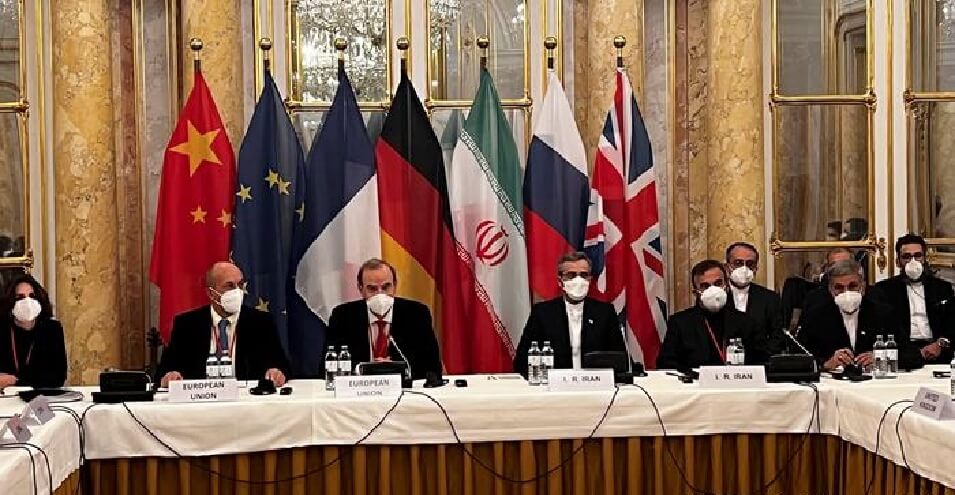
Tensions have risen even as diplomatic channels are being pursued simultaneously. The second round of indirect negotiations between Iran and the U.S., held last Tuesday, lasted three hours. In these talks, Abbas Araghchi represented Iran while Steve Witkoff and Jared Kushner represented the United States.
Although both sides spoke of progress, reports indicate that serious gaps remain. In this context, JD Vance stated in an interview with Fox News that negotiations progressed well in some respects, but it was absolutely clear in other respects that the President had set red lines that Iranians are still unwilling to accept and work on.
He also stated: “Although Trump wants a deal, he may come to the conclusion that diplomacy has reached its natural end.” These statements, combined with the two-week deadline set by American officials for Iran to present a detailed proposal, have further intensified the political atmosphere.
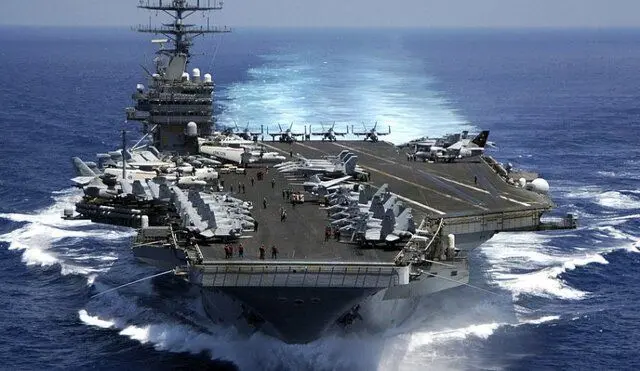
Coinciding with uncertainty in the negotiation process, U.S. military operations in the region have intensified. According to reports, the new military deployment includes two aircraft carriers, twelve warships, hundreds of fighter jets, and several air defense systems. Additionally, more than 150 military cargo flights have transferred weapons systems and ammunition to the Middle East.
In just the past 24 hours alone, 50 additional fighter jets including F-35, F-22, and F-16 have been deployed to the region. Axios sources warned that a war with Iran could happen sooner and far more extensively than most people imagine.
According to Trump’s advisors, this level of force deployment is not merely a bluff. One of the U.S. President’s advisors stated: “The President is tired. Some of his aides are warning him against war with Iran, but I think there is a 90 percent chance we will see military action in the coming weeks.”
Two Israeli officials also stated that the Israeli government is preparing for a maximum scenario; a scenario that goes beyond simply targeting the nuclear program and could include broader dimensions, including missile infrastructure and even regime change.
However, some American sources believe Washington may need more time for decision-making. Republican Senator Lindsey Graham stated: “Strikes could occur in a few more weeks, although some sources consider a shorter timeline more likely.”
Trump’s intensified rhetoric and expanded military presence have complicated the decision-making landscape. Backing away from the military option without receiving major concessions on the Iran nuclear file could be politically costly for the White House. At the same time, entering into a large-scale war in the Middle East would have heavy security, economic, and geopolitical consequences.
The experience of “Midnight Hammer” operations, which began only three days after a two-week decision timeline was set, shows that announced timelines can lead to military action much faster than expected.
Under current circumstances, there is no clear sign of diplomatic breakthrough, but signs of increasing military readiness and harsh political rhetoric are escalating. Although no final decision has been announced, the combination of short deadlines, widespread deployment of equipment, and statements by senior U.S. officials have transformed the conflict scenario from a remote possibility to a near option.
The Middle East stands once again at a point where a political decision could change the course of regional developments for years to come; a decision that will not only affect the fate of Tehran-Washington relations, but will impact the security equations of the entire region.