Empire of Hidden Money; Exposing Network Transferring Hundreds of Millions of Dollars to Hezbollah
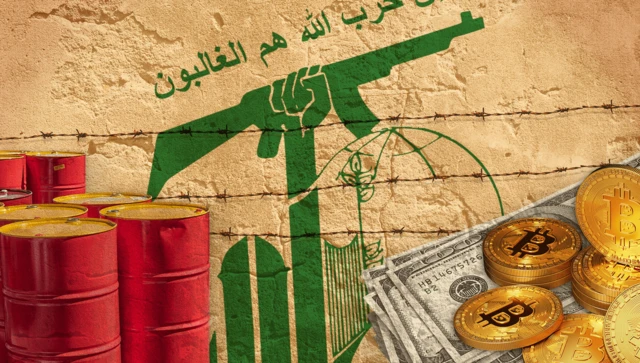
An examination of the pathways reveals the role of Islamic Republic officials and the extensive dimensions of financial support to Hezbollah, which bypasses the formal banking system, from diplomatic suitcases to hawala networks.
In recent weeks, reports from multiple media and investigative sources have been published revealing the existence of an organized mechanism for transferring massive financial resources from the Islamic Republic to Lebanon’s Hezbollah; a network that, according to these reports, has used diplomatic cover, informal banking routes, and complex financial mechanisms to transfer hundreds of millions of dollars to Lebanon.
Based on this information, some senior Islamic Republic officials have used diplomatic passports and commercial flights to Beirut to transport “suitcases containing large sums” of money. The reports name Abbas Araghchi, Ali Larijani, and six other Islamic Republic officials as people involved in these operations.
Mohammad Ibrahim Taheriyanfard, Mohammad Reza Shirkhodaei, Hamid Reza Shirkhodaei, Reza Nadaei, Abbas Asgari, and Amirhomayoun Shirani Rad are six diplomats who have been involved in operations transferring hundreds of millions of dollars in cash to Lebanon.
This action took place at a time when Hezbollah, after suffering heavy blows to its command structure, weaponry, and financial infrastructure in recent months, has been seriously engaged in rebuilding its capabilities, and the transfer of suitcases of money from Iran to Lebanon using civilian aircraft or cryptocurrencies is not a new phenomenon.
Israel, for a long time, by controlling Lebanese airspace and pressuring the Lebanese government, prevented Iranian Republic aircraft from landing at Beirut airport, but gradually these controls were reduced.
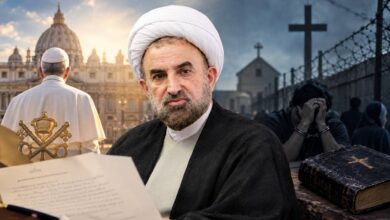
Last year, supporters of Hezbollah held protest gatherings in front of Beirut airport because the Lebanese government prevented an Iranian aircraft from landing, which according to reports carried significant amounts of cash for Hezbollah. Israel had previously warned that if the process of transferring money from Iran to Lebanon continued, it would take action against Beirut airport.
One of the diplomats involved in smuggling cash is Mohammad Ibrahim Taheriyanfard, who accompanied the Islamic Republic’s foreign minister on a trip to Beirut on December 8. Taheriyanfard is a 70-year-old diplomat who previously served as the Islamic Republic’s ambassador to Turkey, special assistant to Mohammad Javad Zarif at the Foreign Ministry, and the government’s special representative in Afghanistan.
Shirkhodaei is another veteran of the Islamic Republic’s Foreign Ministry who has played a role in smuggling hundreds of millions of dollars in cash for Hezbollah. This 69-year-old diplomat previously served as Iran’s vice-consul in Peshawar and Islamabad, Pakistan, and as special assistant to the foreign minister in Hassan Rouhani’s first government. He is now the chairman of the board of a cooperative company called “International Vafa Veterans” which operates in money laundering on behalf of the Islamic Republic’s Foreign Ministry.
Another diplomat involved in transferring cash to Hezbollah is Shirani Rad. He was an employee of the Islamic Republic’s embassy in Canada until 2012, but after Ottawa and Tehran cut diplomatic ties, he was deported to Iran.
However, cash transfers are only part of the story. Reports published in Western media show that over the past year, hundreds of millions of dollars in Iranian oil revenue have been transferred through money exchangers, private companies, and hawala networks in Dubai to Lebanon’s Hezbollah.
Hawala networks, known as “Hawala,” are one of the key tools in this process. In this system, money is transferred without physical movement through settlement between money exchangers and intermediaries; a method that is more difficult to trace for the international banking system and helps bypass sanctions.
Some reports also mention the use of shell trading companies, import-export covers, and oil-for-goods barter to secure financial resources. In this pattern, foreign currency revenues from the sale of oil or petroleum products in third countries are collected and then transferred to Lebanon through intermediaries.
Israel’s Kan network reported in early December that the Islamic Republic had agreed to pay one billion dollars to Hezbollah. The Wall Street Journal also reported that the Islamic Republic has transferred hundreds of millions of dollars in oil revenue over the past year through money exchangers, private companies, and hawala networks in Dubai to Lebanon’s Hezbollah.
In response to this process, the United States and some European countries have placed individuals and entities involved in financing Hezbollah on sanctions lists. The aim of these sanctions has been stated as freezing assets, restricting access to the international financial system, and cutting off money transfer channels.
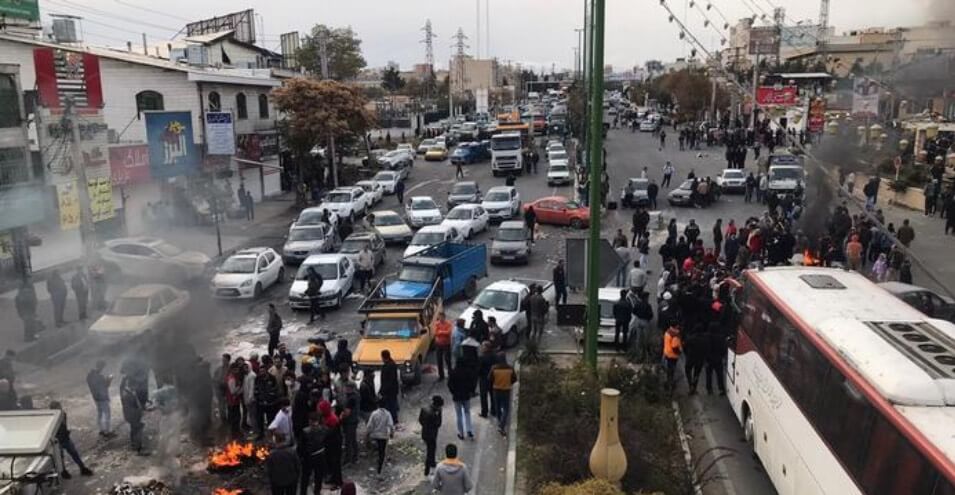
The continuation of this process, concurrent with Iran’s deep economic crisis, nationwide protests, and suppression of the Iranian people, has provoked criticism within the country. Opponents say that allocating massive resources to regional groups, at a time when the domestic economy faces inflation, currency depreciation, and lack of investment, exacerbates social divides.
At the regional level, these financial transfers have also increased tensions between Iran and Israel and raised the risk of conflict spreading to civilian infrastructure such as Beirut airport.
The sum of published reports paints a picture of a multi-layered money transfer network; a network that spans from diplomatic suitcases to Dubai money exchangers and hawala systems. If these claims are true, we are facing one of the most extensive and complex sanctions-evasion mechanisms; a mechanism that has affected not only Lebanon’s financial equations but also the region’s security balance.
In contrast, Islamic Republic officials have consistently denied sending cash or organizing such a network and consider these reports to be politically motivated.