EU’s New Sanctions Package Against Suppressors on the 33rd Day of Iranians’ National Revolution
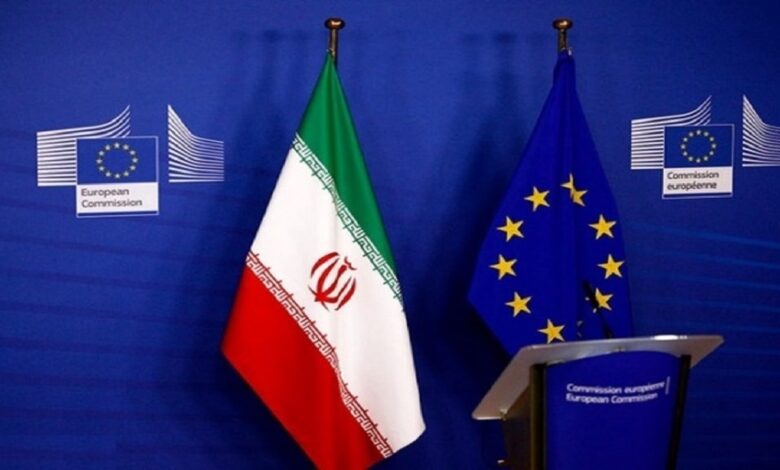
The European Union, by sanctioning 15 officials and 6 institutions of the Islamic Republic, due to serious human rights violations and adding the Islamic Revolutionary Guard Corps to its list of terrorist groups, demonstrated an unprecedented response to the suppression of protesters in Iran.
In response to the bloody suppression of protests in Iran that began in late last month and is known as the “Iranians’ National Revolution,” the European Union decided to take more decisive measures at a meeting of foreign ministers of member states on Thursday, January 29, corresponding to February 9, 2025. This action came at a time when the death toll from the protests has reached over 30,000 according to reports from media outlets and human rights organizations, creating a wave of domestic and international protests against Tehran.
The European Union in this sanctions package sanctioned 15 officials of the Iranian Islamic Republic government for their direct role in suppressing protests and human rights violations. Additionally, 6 other institutions were targeted by sanctions which, according to the European Union’s statements, played a role in the “violent” suppression of protesters and restricting internet access, censorship, and suppression of information.
According to the European Union’s announcement, these sanctions include: “freezing of assets within the European Union, prohibition of travel to European Union member states, and financial and economic sanctions against related individuals and organizations.”
The list of sanctioned individuals in this package includes prominent security and government figures, some of whose names were described in the European Union’s preliminary report, including:
- Eskandar Momeni, Minister of Interior
- Mohammad Mohadesi Azad, Attorney General
- Majid Faiz Jaafari, Chief of Public Security Police
- Ahmad Ali Faizollahi, Commander of Special Forces
- Iman Afshari, Judge of Branch 26
- And several commanders of law enforcement and Islamic Revolutionary Guard Corps in provinces and cities.
In a very important and unprecedented step, the European Union agreed to place the name of the “Islamic Revolutionary Guard Corps of Iran” on its list of terrorist organizations. This decision, which had been under discussion for several months, was finally adopted at a meeting of the European Union’s foreign ministers with the support of all 27 member states, and its final legal process will be implemented shortly.
This terrorist list means that the Islamic Revolutionary Guard Corps is considered alongside groups such as ISIS, Al-Qaeda, and other terrorist organizations, and all official members of the Guard will also be subject to extensive sanctions.
The Islamic Republic of Iran strongly reacted to this decision, calling it a hostile, illegal, and harmful act against European interests. Iranian officials have threatened that they may take retaliatory measures, including adopting policies against countries that approved these sanctions.
Meanwhile, some European governments welcomed this decision. The Prime Minister of the Netherlands described it as a decisive response to the bloody suppression of protesters.
The European Union’s decision is in line with similar sanctions by the United States, Canada, and Australia, which have previously designated the Islamic Revolutionary Guard Corps as a terrorist group or subject to extensive sanctions.
Political observers say this step could lead to increased diplomatic and economic pressure on Tehran and weaken the position of the Islamic Revolutionary Guard Corps in international relations, though its exact implications in other areas (including energy and regional security) remain uncertain.
On the 33rd day of the Iranians’ National Revolution, the European Union took one of its most severe collective responses to the suppression of protests in Iran; a sanctions package against officials and institutions associated with the suppression of protesters was approved, and the Islamic Revolutionary Guard Corps was formally placed on the European Union’s list of terrorist groups, a symbolic and impactful step in political and human rights developments in the region.