“Sarafrazi” Admits to Exposing the Truth of Repression and Massacre and the Islamic Republic in Crisis
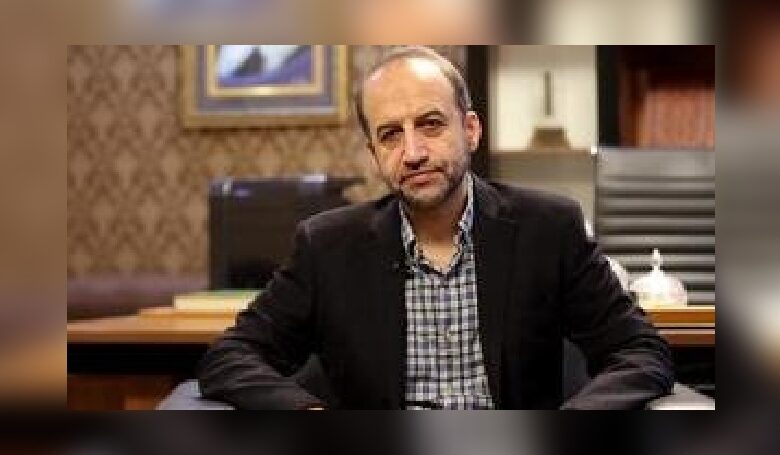
When one of the former faces of the system says: “So much blood has been shed that truths cannot be concealed with fabricated narratives,” a more realistic picture of massacre and repression in Iran emerges.
“Mohammad Sarafrazi,” former head of Islamic Republic of Iran Broadcasting (IRIB), in an unprecedented and unvarnished confession about the state of repression in Iran, has formally spoken of the volume of “blood shed” and made public this reality that can no longer be concealed with government narratives.
This statement, made by one of the individuals who was once responsible for one of the most important media tools of the system, severely questions the credibility of the official narrative regarding protests and repression.
“So much blood has been shed that truths can no longer be concealed with fabricated narratives.”
Mohammad Sarafrazi
This sentence, posted on his official account on the social network X, is not merely a simple criticism, but a bitter testimony to what government media outlets have tried for years to downplay or even portray as unreal. Sarafrazi, who served as head of the Islamic Republic of Iran Broadcasting Organization from November 2014 to May 2016 and later became a critic of government policies, with these statements, has pointed to one of the most sensitive wounds: “The high number of victims and efforts to conceal reality.”
Sarafrazi’s statement was published at a time when, according to independent sources and international media reports, the number of deaths during nationwide protests in Iran is far higher than the officially announced figures. Media and data-driven groups, including reports from “Iran International” and independent sources, have confirmed or announced the death of thousands of people in recent months, which is significantly higher than the official figure of “3,117” deaths announced by the Foundation for Martyrs and Veterans Affairs.
Some of these reports have even cited figures of 12,000 to 17,000 deaths in Iranian popular protests and then over 36,000 deaths, though they are unable to independently verify these figures.
Eyewitness accounts also highlight the deadly violence of security forces; people who, even in urban areas such as Rasht, Sari, and Yazd, according to local witnesses, have attacked protesters and civilians with direct gunfire and the use of war ammunition.
Sarafrazi does not speak merely as an external analyst, but as someone who has spent years at the head of government media and has a precise understanding of systematic efforts to control and manipulate information. Media outlets such as IRIB and networks he had a role in managing, as official government information tools, have repeatedly been accused of broadcasting forced confessions and biased narratives, which are among signs of broader media control and censorship in Iran.
This criticism from someone who was once a key player in government media shows that even within the system’s structure there is doubt about the official narrative, especially when the volume of “blood shed” and repression has reached a level where it cannot be denied.
Alongside internal confessions, external political tensions have also intensified. Russia still speaks of the possibility of negotiations between Tehran and Washington, but observers have also warned that resorting to force could plunge the region into chaos and bring more dangerous consequences.
On the other hand, the United States has explicitly stated that if no agreement is reached, subsequent military actions would be “much worse,” and Iran has also described any response to aggression as “more painful than before,” statements that reflect an extremely critical situation in the region.
In conclusion, when a former media manager of the system says that the truth of bloodshed cannot be concealed with fabricated narratives, this is no longer merely a critical statement; it is an exposure of the depth of the crisis and the government’s inability to control reality.
These remarks, alongside independent information about the scope of repression and deaths, show that: “The repressions are more real and widespread than the official narrative, the Iranian government has tried to conceal the truth, but even former members of its media reject this concealment, and simultaneous internal crisis and external pressure have placed Iran in an unprecedented position.”