Iran in the Illusion of Foreign Sedition, When the Government Conceals the Reality of Repression
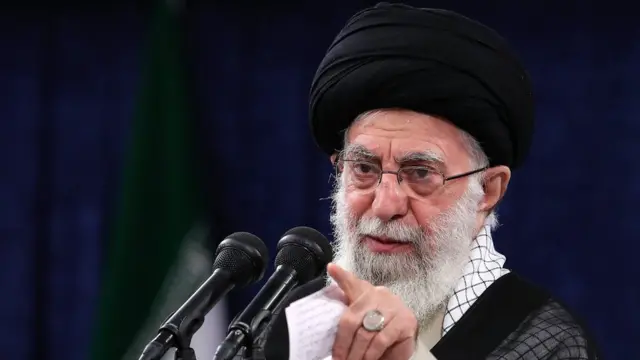
Ali Khamenei blamed America and protesters for the chaos inside Iran, but ignored thousands of deaths and the role of government officials.
Ayatollah Ali Khamenei in his recent official speech, while making direct and unprecedented accusations against the US president, claimed that Washington was directly involved in recent protests in Iran and called them “American sedition.” He said: “I say decisively that America’s goal in this sedition was to devour Iran.” He also added that Washington’s policy throughout successive governments has been to dominate the independent nation of Iran, a claim that is baseless and a repetition of Tehran’s official narrative.
Khamenei called Donald Trump a criminal, not merely because of sanctions, but because of “slander, damages and casualties” of the protests, a claim that is subject to interpretation and criticism based on independent media and human rights analyses.
He not only did not deny the government’s role in the massacre of protesters, but tried to blame the protesters for the deaths of thousands and accused them of connection with “America and Israel,” a claim that is still undocumented and not independently verifiable.
Khamenei also said: “We do not intend to lead the country toward war, but we will not spare domestic criminals,” a position that both threatens and justifies internal repression.
Contrary to what Iranian officials say, independent data shows a different situation:
- Human rights groups have reported that the death toll from protests may have reached thousands, an issue that even Khamenei indirectly acknowledged.
- Independent sources have estimated the number of deaths at far more than 15,000 people and emphasize that these numbers could be much higher, since due to internet blackouts and information suppression, accurate verification of figures is not possible.
- Human rights reports also indicate thousands of arrests, torture and threats of execution, including cases of individuals condemned to death whose sentences have not yet been carried out and remain unclear.
In contrast, the United States government under Trump leadership has repeatedly acknowledged that it does not have accurate information about the extent of violence, but has warned about continued repression and reported halting the execution of sentences against protesters, which has itself faced reactions from Iranian judicial officials.
In recent days, Trump has repeatedly said that if repression continues, there will be a severe response. According to him, over 800 execution sentences have been canceled (although Iran has denied this claim). However, an explicit military threat has not materialized so far and he has engaged in diplomatic theatrics.
In response to these threats, Iran has not only repeated accusations against America and Israel, but has warned that any attack will be met with a “severe response,” a threat that could bring the region to the brink of a widespread military crisis.
Khamenei took a stance against America in his speech, but simultaneously denied or downplayed the role of Iran’s security forces in the massacre of protesters. This type of narrative, known as “reality reconstruction for legitimacy-making,” is when the government attempts to attribute actual responsibility for repression and violence to external factors or to the protesters themselves, rather than to the structure of power.
Creating the image of “American sedition” effectively removes domestic popular protests from legitimate demands and reduces them to foreign political projects. This tactic has been seen repeatedly in the official literature of the Islamic Republic in the past.
The accusation that Trump “incited seditionists” or “America sought to devour Iran” is merely a repetition of the government’s propaganda narratives and not analysis based on documented evidence. Although American media and political interventions existed during the course of the protests, claiming that these protests are solely a product of foreign conspiracy does not match field realities and independent reports.
Iran’s leader’s acknowledgment of thousands of deaths in the protests is, in a sense, an indirect admission of the severity of repression; but while not accepting responsibility directly, he tries to attribute it to “rioters” and “foreign enemies.”
This speech and international reactions show that Iran’s crisis has now become more than ever a battle of narratives, denial of responsibility and propaganda power games, where ground truth (deaths, repression, arrests) is caught in the games of media and politics.
If we were to summarize this situation in one sentence: “In the midst of public protests, the Iranian government, instead of being accountable for repression, by repeating undocumented claims against America and protesters, tries to hide the bitter domestic reality behind accusations of foreign conspiracies.”