Mandatory In-Person Schools in Iran; An Expert Says Government Has Not Provided Facilities to Schools
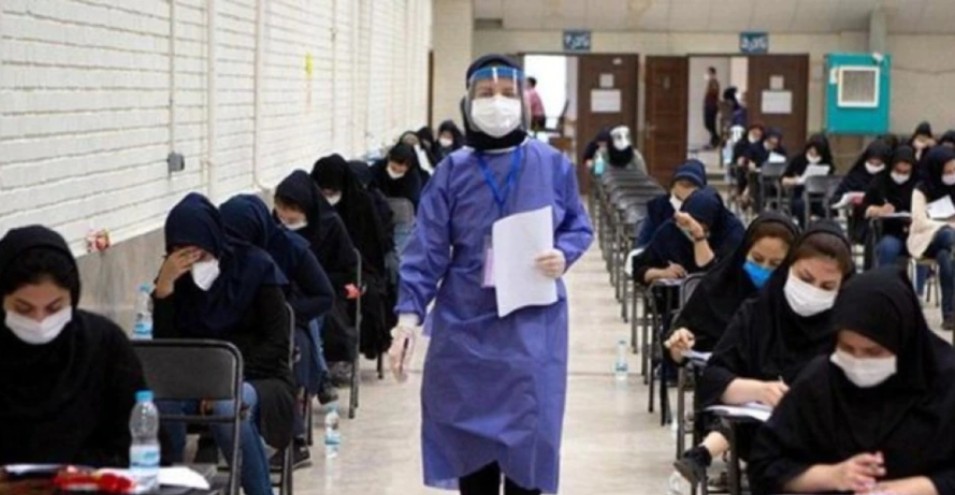
With about a month remaining until the end of the current academic year, the Ministry of Education announced in a directive that classes must be held in person starting from April 4 (14 Farvardin). Simultaneously, an educational expert says the government’s request comes while facilities still have not been provided to schools.
Iran’s Ministry of Education announced that with the aim of “compensating for academic decline resulting from school closures during the coronavirus period and preventing irreversible consequences of the current situation,” classes in schools during the remaining time of the current academic year after the Nowruz holidays should be held in person.
According to news agencies in Iran on Tuesday, April 3 (9 Farvardin), based on the Ministry of Education directive, the attendance of administrative staff according to schools’ weekly schedules is “mandatory” and all educational and training activities of teachers and students at all educational levels must be “held in person while observing personal hygiene and environmental sanitation.”
This directive emphasizes the proper use of masks and ventilation of classrooms.
- Makarem Shirazi: Education Should Become In-Person as Soon as Possible
Ayatollah Nasser Makarem Shirazi called virtual space a “Satan’s stronghold” and called for in-person educational environments. In a meeting with Hossein Ashtari, commander of the country’s law enforcement, he stated that “virtual space is a major curse of our time and many corruptions stem from virtual space, and in fact, virtual space has become Satan’s stronghold.”
Makarem Shirazi considered reopening universities and schools “necessary” and added: “Students and university students should attend classes as soon as possible. In the seminary, we also insist that lessons be held in person.”
- Teachers’ Union Spokesperson: Ministry of Education Decisions Are Trial and Error
Mohammad Habibi, member and spokesperson of the Teachers’ Union, regarding the mandatory in-person attendance at schools, stating that this issue is worth examining from several angles, says: The quality of education in Iran has been severely damaged over the past three years due to the coronavirus outbreak, and we especially see a decline in primary education.
Referring to the fact that with the virtualization of education, despite poverty and lack of resources, a considerable number of students were excluded from the education cycle due to lack of internet access and educational resources.
The former Minister of Education announced in June 2021 that three million students in Iran dropped out over the past year. A figure that according to an educational expert could have been double without scattered philanthropic aid.
Mr. Habibi believes that virtual education in developed countries was possible by providing facilities for teachers and students, but in Iran virtual education placed the entire responsibility on the teachers themselves, and they taught through their personal resources.
Regarding the directive for forming in-person classes after April 4, referring to the possibility of another coronavirus outbreak, he says: In crowded areas of the country like Tehran where educational environments have high student concentration, and due to students’ lack of access to necessary health facilities and schools’ lack of facilities to observe health protocols, this decision could be dangerous and lead to another coronavirus outbreak in Iran.
According to Mohammad Habibi, the state of education in Iran is such that in relation to the circulars issued for schools and the requirements it creates, it actually provides no resources to schools, and it is these schools themselves that must provide these facilities through various methods including generating income outside educational protocols or collecting mandatory tuition from parents, which usually fail. As a result, whether education in Iran remains virtual, we suffer damage from one perspective, and whether it is pursued in person based on education circulars, we still face damage.
According to the Teachers’ Union spokesperson, based on available statistics, the majority of teachers are dissatisfied with the current situation where education is conducted simultaneously in-person and virtually, in a combined manner, because they must teach one group of students in person in school and another group virtually, which is a double burden and exploitation of teachers’ situation in the current conditions over the past few months, and despite dangerous coronavirus conditions, many teachers prefer the situation to be settled one way or another. Either education becomes completely virtual or in-person. Continuing this process only puts more pressure on teachers, which will certainly affect the quality of education in the country.
He considers the decisions of the Ministry of Education in both the previous and current governments to be without regard to experts’ opinions. Decisions that are made through trial and error and after some time are adjusted or stopped under media pressure.
- Parents’ Reaction: This Decision Results from “Mismanagement”
The sudden announcement of in-person school attendance in the middle of Nowruz holidays has prompted reactions in virtual spaces, with some users attributing it to “mismanagement.”
Some users, noting that parents received messages from schools stating that schools would return to in-person classes starting next week and they must solve the problems of clothing, transportation, haircuts, stationery and bags for students within a few days, and only for a month remaining until the end of the academic year which also coincides with Ramadan.
Source: Voice of America