Migration Dispute in America, Boundaries Between Humanity and Politics
The debate over borders and politics and the struggle over migration in America has caused humanity to be forgotten and created boundaries between humanity and politics.
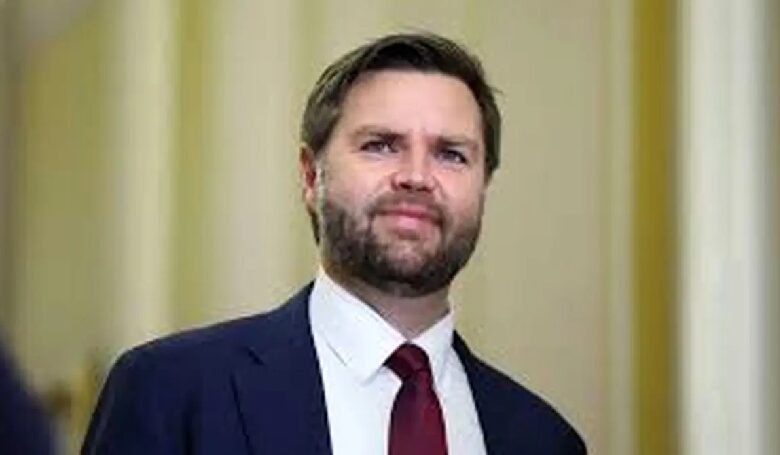
Recent statements by J.D. Vance, U.S. Vice President, have once again placed the issue of migration at the center of political and theological conflict in the United States. In defending the Trump administration’s strict policies, he has attempted to align the views of the Catholic Church and the Pope with this approach; a narrative that certainly has serious supporters and critics within the American Christian community.
Vance, in an interview with Breitbart, cited the words of Pope Leo XIV and said: “In my view, every country has the right to determine who, how, and when enters its country.” He, who identifies himself as a devout Catholic, explained the Church’s official position thus: “You must treat migrants with respect for human principles, and at the same time, every nation has the right to control its borders.”
Vance added: “How you create this balance is very important. There is plenty of room where you can really control your borders for your own people.”
Although Pope Leo XIV has emphasized: “No one said the United States must have open borders,” at the same time he warns that “very disrespectful” treatment of migrants who have lived in America for years is unacceptable. The Pope reminds: “These people have good lives and have been in the United States for 10, 15, 20 years.”
These statements highlight an obvious rift between the right to control borders and the moral duty of Christians to preserve human dignity, a rift that is now strongly active within American politics.
Vance continued the conversation, emphasizing with a warning tone that open borders are not good even for undocumented migrants themselves. He presented examples of human trafficking and child exploitation and claimed: “We had young children being trafficked for sexual purposes. During the Biden administration, we had 300,000 missing children, and in some cases, cartels were using 9 and 10-year-old children as drug traffickers.”
He concludes: “When you empower cartels and human traffickers, whether in the United States or anywhere else, you are strengthening the worst people.”
This rhetoric, which is often heard in right-wing media, presents illegal immigration not only as a security problem but as a moral and humanitarian threat.
In contrast, the recent message from the United States Conference of Catholic Bishops (USCCB) had a completely different tone. The bishops warned that the atmosphere created around migrants is filled with fear, humiliation, and cruelty. They wrote: “We are concerned about the conditions in detention facilities and lack of access to spiritual care. When we see parents who fear arrest when taking their children to school, we are saddened.”
They also called for an end to “mass and careless expulsions of people” and “inhumane rhetoric and violence” against migrants. In fact, the Church’s view has boundaries, but these boundaries are made of Christian morality, not barbed wire.
These teachings dictate that migrants, especially the vulnerable, are not merely an administrative matter but an image of humanity in need of love and justice.
Today’s debate is between two approaches: “A security-political approach, which emphasizes border control, prevention of trafficking, and protection of citizens. A theological-moral approach, which focuses on human dignity, family, asylum, justice, and Christian compassion.” These two approaches can either align or contradict each other. The problem arises when politics reduces humans to a “threat.”
It appears that America’s main challenge is not in “controlling borders,” but in how to treat people while controlling borders.
J.D. Vance’s statements show that part of the government views migration as a security issue. The bishops’ statement and the Pope’s words clearly show that the Church views migration as a humanitarian and moral issue.
Now the question for the Christian community, many of whom are themselves migrants, is: Can border security be maintained while still treating migrants with the dignity that Christ asked his followers to provide?