Extension of ‘Mai Sato’ Mandate and International Independent Fact-Finding Committee on Iran
Extension of ‘Mai Sato’ Mandate and International Independent Fact-Finding Committee on Iran
In recent months, numerous requests from human rights organizations have been sent to the UN Human Rights Council for the extension of the mandate of the Special Rapporteur on human rights and the independent international fact-finding committee on Iran. The UN Human Rights Council approved a resolution on Thursday, April 3, corresponding to 14 Farvardin, extending the mandate of ‘Mai Sato’, the Special Rapporteur on human rights in Iran, and the independent international fact-finding committee.
The final reports presented to the UN Human Rights Council by the fact-finding committee were prepared based on 38,000 judicial and medical documents and more than 285 interviews across 252 pages. The report emphasized widespread and severe violations of human rights by the Islamic Republic during the suppression of nationwide protests in 2022, which intensified following the death of Mahsa Amini, and some actions by the Islamic Republic were assessed as crimes against humanity.
Sara Hossein, chair of the fact-finding committee, which was formed in 2022 for a two-year period to focus on the ‘Woman, Life, Freedom’ protests, accused the Iranian government in her final report of creating a systematic climate of terror and impunity.
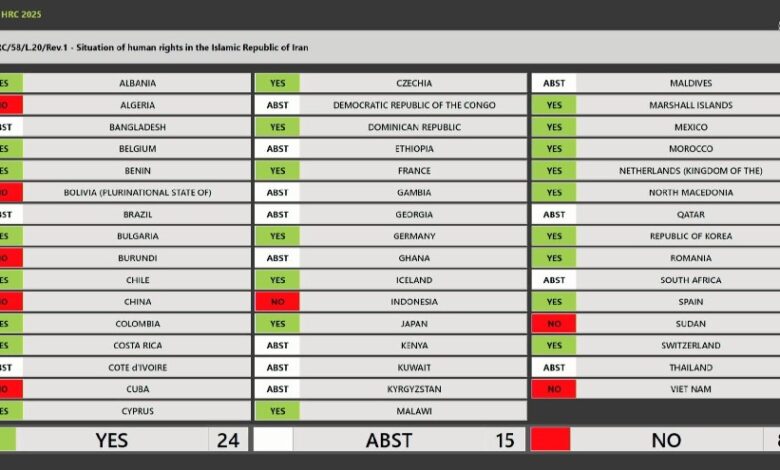
The UN Human Rights Council, after reviewing the reports and requests from human rights organizations and bodies, passed the resolution with 24 votes in favor, 8 against, and 15 abstentions. Additionally, the previous time limitations on these mandates were removed to provide more time and opportunity to investigate cases of human rights violations in Iran.
Representatives of Spain, Mexico, Belgium, Switzerland, the Netherlands, Costa Rica, and Brazil spoke in support of the resolution, while delegations from the Islamic Republic of Iran criticized the resolution as discriminatory. Countries including Indonesia, China, and Cuba opposed the resolution.
Ali Bahrini, Iran’s permanent representative in Geneva, after the reports were presented, described the fact-finding committee as a creation of ‘global arrogance’ and left the session. While rejecting international reports of widespread human rights violations in Iran and denying victims’ testimonies, the Iranian government claims that Iran has no political and ideological prisoners.
The representative of Iceland, who presented the resolution, also emphasized: ‘Iranian officials may not agree with this resolution, but it is the Iranian people who are demanding accountability. They want their voices to be heard.’