Iranian Government Propaganda on Minority Rights at Geneva Meeting
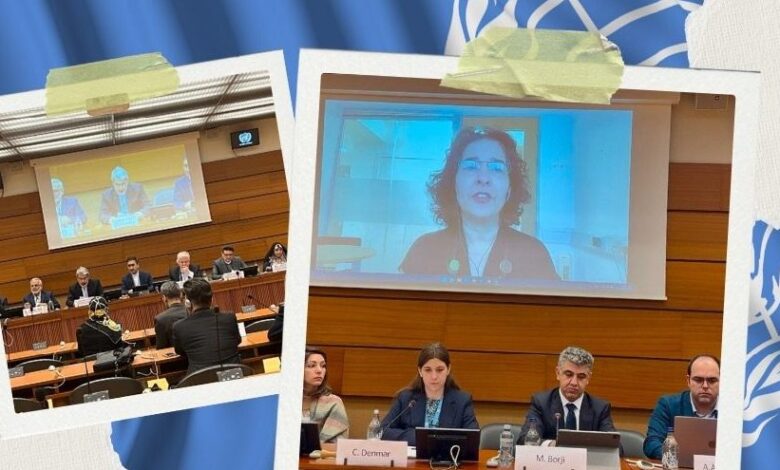
The speech by the Assyrian representative at the Geneva meeting on equal rights for minorities was considered government propaganda by attendees.
Following the Geneva meeting, the Assyrian representative in parliament appeared as part of the Islamic Republic’s delegation and delivered a speech on equal rights for minorities in Iran, a claim that provoked reactions from Christians present in the session.
At this meeting, three international Christian organizations and Article 18 organization were also present and reviewed the situation of Christians in Iran. In addition to the aforementioned Christian organizations, two UN special rapporteurs presented their statements via video at the meeting.
“Charlie Enwiyeh,” the Assyrian representative in the Islamic Consultative Assembly, also attended a separate session where he presented his remarks on behalf of the Islamic Republic. In his speech, he said: “According to the constitution of the Islamic Republic of Iran, three religious minorities—Christians, Jews, and Zoroastrians—are officially recognized, and these minorities freely conduct their religious ceremonies and have representatives in parliament, which demonstrates the acceptance of religious diversity and respect for minority rights in the country’s legal system.”
The Assyrian representative’s claim was made while not only Christians (individuals who have converted from Islam to Christianity) but also Armenians and Assyrians are suppressed for participating in joint worship ceremonies with other Christians. Charlie Enwiyeh, the parliamentary representative selected through Guardian Council oversight, cooperated with the Ministry of Intelligence during the “Woman, Life, Freedom” movement and, while contacting Assyrian protesters, had asked them not to participate in the protests.
He also spoke of equal rights for minorities with the majority and the economic, cultural, and scientific activities of minorities in Iran and “solidarity between minority and majority,” but did not explain why the number of officially recognized religious minorities has declined to one-third of the pre-revolution figure, given that the country’s population has doubled.
The representative of Article 18 organization at the Geneva meeting asked Charlie Enwiyeh: “Do the equal rights you speak of include Christian converts and members of religious minorities that are not officially recognized and seek to practice their faith with others, or not?”
In response to this question, Charlie Enwiyeh, while accusing “Victor Bet-Tamraz” and “Afshar Naderi” of supporting evangelical Christians and affiliation with Zionist Christianity, said: “We real Christians in Iran have no problems. These are programs from the Zionist regime that distort Iran’s true face and nurture such individuals who have no Christian nature or reality.”
Charlie’s remarks were made while the Islamic Republic regime has repeatedly detained and imprisoned Christian citizens on charges of promoting evangelical Christianity and affiliation with Zionist Christianity without presenting any evidence or documents. However, he provided no explanation regarding discriminatory laws ranging from employment to court testimony and inheritance affecting Assyrians and other official minorities, while discrimination against them in Iran has been so extensive that “Jonathan Betkhelia,” the former Assyrian representative who was himself considered a government supporter, had protested some of these discriminations.