Iran Says It Will Respond to EU’s Proposed Text “in Less Than 12 Hours”
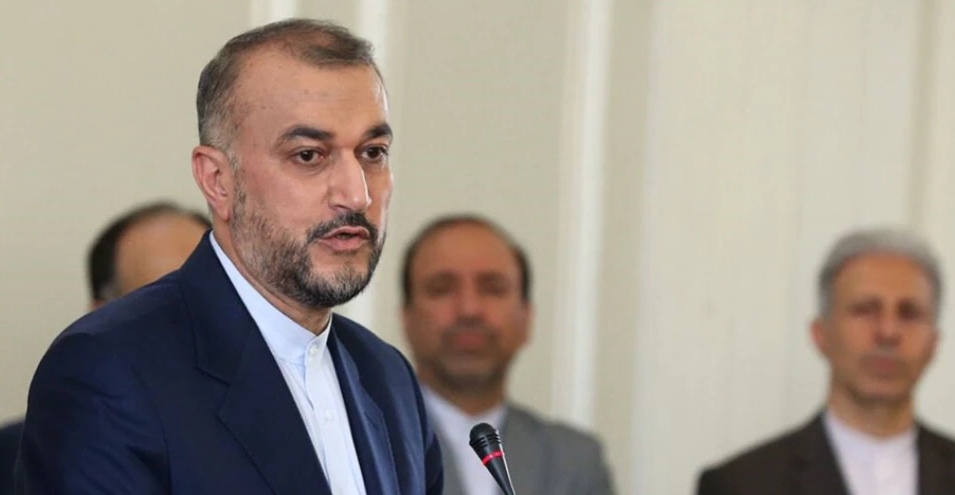
Iran’s Foreign Minister announced on Monday, August 24, that the United States has given “verbal and partial” agreement to two requests made by the Iranian government in the JCPOA revival negotiations, adding that the U.S. administration “must show flexibility on one more issue.”
Hosein Amirabdollahian, speaking at a press conference, further stated that “we will submit our final proposals in writing by 12 tonight.”
Earlier reports had indicated that the European Union granted the Islamic Republic until August 15 (August 24) to present its final response to the proposed text.
The Iranian Foreign Minister’s remarks were released hours after a spokesperson for Iran’s Foreign Ministry reported “partial progress” in the negotiations while emphasizing that “this progress does not fully satisfy Iran’s legal demands.”
These statements come as Iran’s counterparts in the JCPOA revival negotiations await Tehran’s response to the European Union’s proposed text—a text that, according to Politico, would reduce pressure on the Islamic Revolutionary Guard Corps and pave the way for Tehran to prevent further inspections of its suspected nuclear sites.
In his remarks today, Iran’s Foreign Minister, stating that economic issues have not “held up negotiations,” stressed that “we are specifically exchanging views with the Americans on three issues and will present our opinions over the coming days.”
Neither the Foreign Minister nor the Foreign Ministry spokesperson provided details about these issues. However, Mohammad Jamshidi, a political deputy to President Ibrahim Raisi, claimed in a Twitter post that “America has backed away from its strategic objective of withdrawing from the 2015 agreement and pursuing maximum pressure policy.”
Mohammad Jamshidi, without citing a source, also wrote: “America was seeking 1- a permanent JCPOA and 2- regional and missile negotiations, but ultimately was forced to abandon its ambitions.”
Beyond what Politico reported regarding reduced pressure on the IRGC and prevention of further inspections of Iran’s suspected nuclear sites in the EU’s proposed text, the Wall Street Journal also reported that the European Union has offered Iran “significant new concessions” to revive the JCPOA.
However, Robert Malley, U.S. Special Envoy and the country’s senior negotiator, rejected these reports, only stating that “we have not committed in any negotiations to changing inspections, customer due diligence, or other standards consistent with U.S. sanctions, which will remain in place upon mutual return to full JCPOA implementation.”
The European Union’s proposed text for reviving the JCPOA was presented to negotiating delegations in the latest round of Vienna talks, and these delegations returned to their capitals on August 17 to consult with their country leaders on possible agreement regarding this text.
European Union officials had previously stated that the text drafted in Vienna negotiations was “the final text” and the parties present must decide on it.
Yesterday, Sunday, August 23, Russia’s representative in these negotiations announced that the United States has agreed with the proposed text, but Iran has not yet responded on this matter.
Mikhail Ulyanov also predicted that if everything goes well, a final agreement on reviving the JCPOA and Iran’s nuclear program will be reached within the coming days.
Previously, the Islamic Republic had sought the removal of the Islamic Revolutionary Guard Corps from the list of terrorist organizations designated by the U.S. State Department—a demand that Washington has repeatedly rejected.
Meanwhile, a U.S. State Department spokesperson said on August 12, in response to Radio Farda regarding a recent Wall Street Journal report on the controversial issue of IAEA safeguard arrangements in the JCPOA revival discussion, that “Iran must answer the IAEA’s questions, and Washington’s approach in supporting the preservation of the Agency’s independence and original mandate will not change.”
Western officials have emphasized that the prepared text is the final proposal from the negotiating countries, and Iran must, by making a political decision, declare its final position.
Source: Radio Farda